
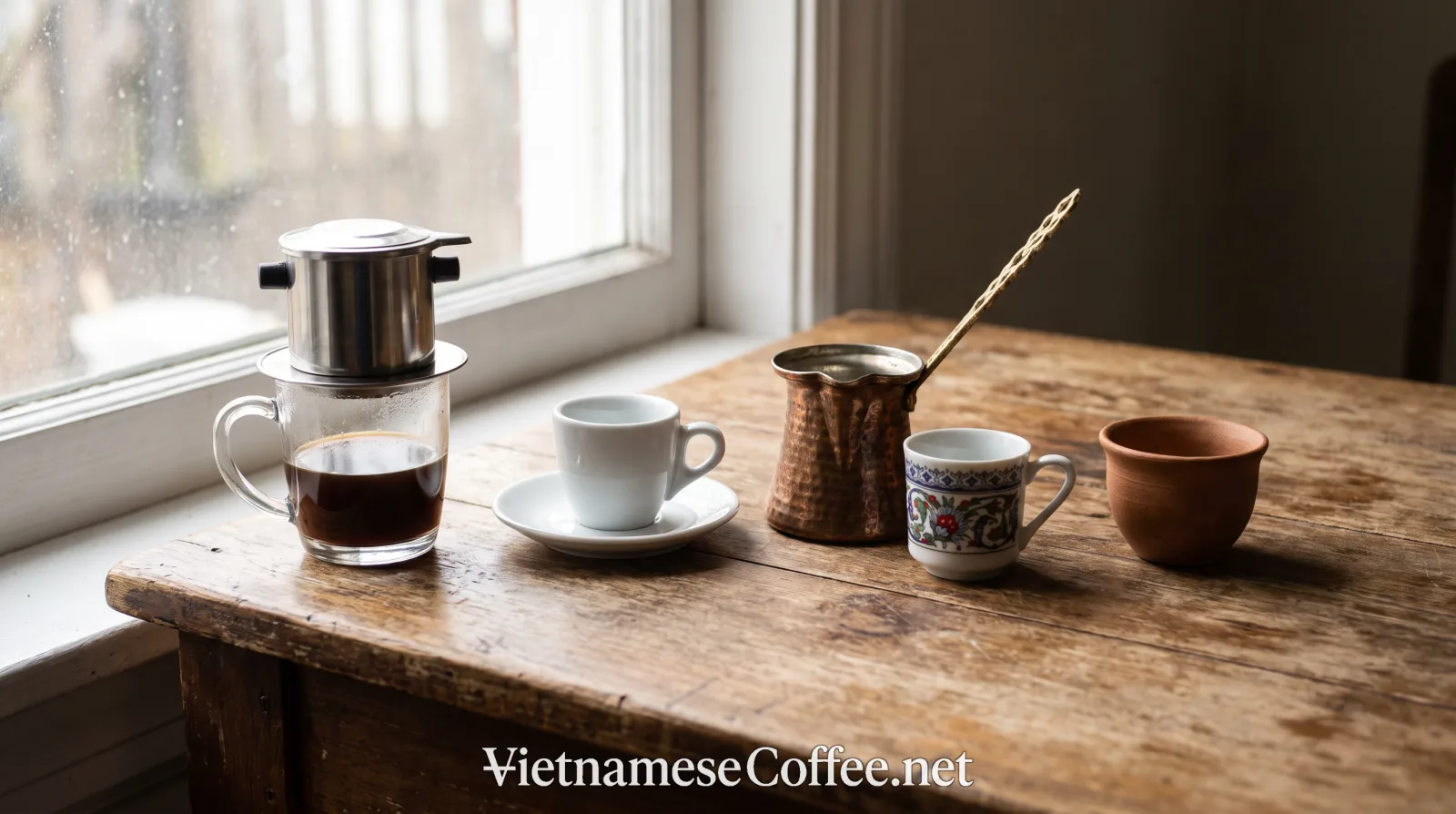
Quick guide to all comparisons
| Compared with | Main contrast with Vietnamese coffee | Read the comparison |
|---|---|---|
| Ethiopian | Predominantly robusta vs. arabica's native home; phin vs. the jebena ceremony | Vietnamese vs Ethiopian |
| Brazilian | Both have important natural-processing traditions but different species mixes, plus the cloth-filter cafezinho tradition | Vietnamese vs Brazilian |
| Colombian | Predominantly robusta and natural (dry) processing vs. overwhelmingly arabica and washed processing; phin vs. tinto | Vietnamese vs Colombian |
| Indonesian | Both robusta-heavy by volume; wet-hulling and unfiltered kopi tubruk | Vietnamese vs Indonesian |
| Filipino (Kapeng Barako) | Robusta vs. liberica, a rare third species | Vietnamese vs Filipino |
| Italian | Gravity drip vs. espresso under pressure, and the standing bar | Vietnamese vs Italian |
| Turkish | Filtered gravity drip vs. powder-fine, unfiltered cezve coffee | Vietnamese vs Turkish |
| Greek | Domestically grown beans vs. imported beans and blends; phin vs. briki | Vietnamese vs Greek |
| Cuban | Condensed milk added after brewing vs. sugar whipped into espuma | Vietnamese vs Cuban |
| Thai | Straight coffee vs. oliang's coffee-and-roasted-grain blend; metal vs. cloth filter | Vietnamese vs Thai |
| Laotian | Closely related iced-coffee preparation, with a different colonial history and filter | Vietnamese vs Laotian |
Compared by origin and bean
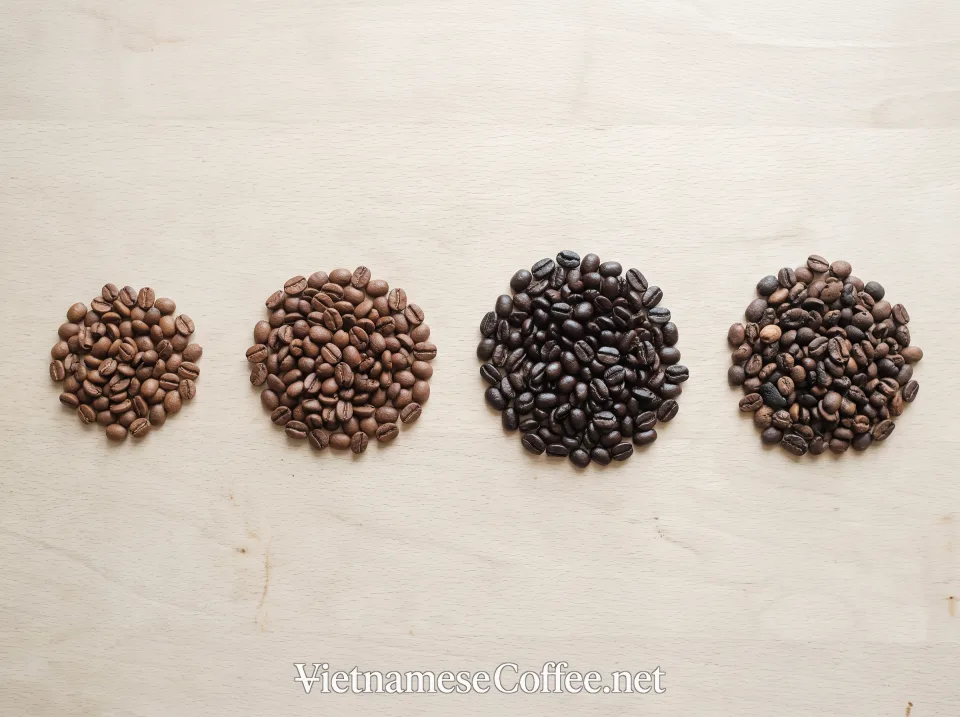
Several comparisons start with the bean. Vietnam is predominantly a robusta producer, and these pages show how other origins differ in species, genetics, and processing.
- Ethiopian coffeeArabica's native home and a center of its genetic diversity, with both natural and washed processing.
- Brazilian coffeePredominantly arabica with a substantial conilon share, and an important natural-processing tradition that Vietnam also has.
- Colombian coffeeVietnam is predominantly robusta and led by natural processing, while Colombia is overwhelmingly arabica and strongly associated with washed processing.
- Indonesian coffeeAlso robusta-heavy by national volume, but known for wet-hulling, a method strongly associated with Sumatra and some other regions.
- Filipino coffee (Kapeng Barako)Made from Coffea liberica, a distinct third species, rather than robusta or arabica.
For background, see What Is Robusta? and What Is Natural Process?.
Compared by brewing tradition
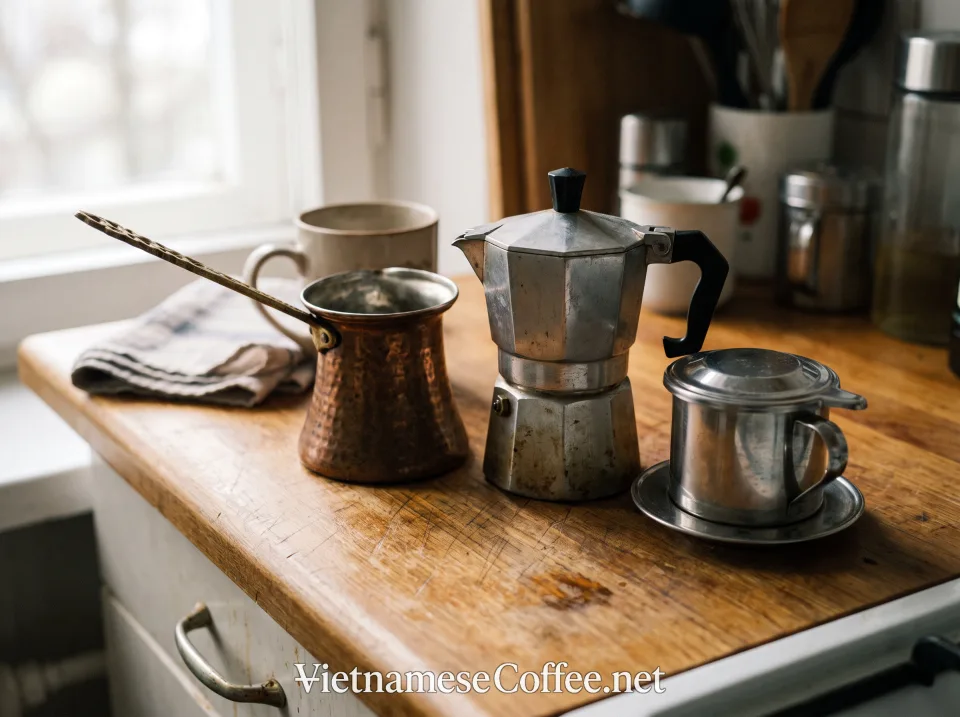
Other comparisons start with the brewing method. The phin uses gravity alone; these pages set it against traditions that rely on pressure, direct heat, or different filters.
- Italian coffeeEspresso extracted under pressure in seconds, set against the phin's slow gravity drip, plus Italy's standing-at-the-bar culture.
- Turkish coffeePowder-fine coffee simmered in a cezve and served unfiltered, with its fortune-reading tradition.
- Greek coffeeBriki-brewed coffee made from imported beans, served with a named sweetness level.
- Cuban coffeePressure-brewed coffee sweetened by whipping the first drops with sugar into espuma, versus condensed milk poured into a finished phin brew.
- Colombian coffeeThe phin's slow gravity drip against tinto, a small sweetened black coffee served daily by street vendors and in offices.
For the equipment comparison rather than the country comparison, see Phin vs AeroPress, Phin vs Moka Pot, and Phin vs French Press. For brewed versus instant, see Vietnamese Coffee vs Regular Instant Coffee.
Compared with neighboring traditions
Two of the closest comparisons are with Southeast Asian neighbors that also pair strong coffee with cloth or metal filters and sweet, milky finishes.
- Thai coffeeTraditional oliang is a black, sugar-sweetened blend of coffee and roasted grains brewed through a cloth sock, distinct from Thailand's milk-based iced coffee variants.
- Laotian coffeeSources describe Lao iced coffee as similar in spirit to Vietnamese coffee, built on a cloth filter and condensed milk, with a different species mix and colonial history.
How to use these comparisons
Each page follows the same structure: a short answer, a quick-comparison table, then sections on beans, processing, brewing, and serving. Where published sources disagree, such as on blend ratios, preparation steps, or production statistics, the pages say so instead of picking one figure. If you're new to Vietnamese coffee, start with How to Brew with a Phin Filter, then use the table above to jump to the tradition you're most curious about. For strength specifically, see Caffeine Content in Vietnamese Coffee Explained.