
Quick comparison
| Feature | Vietnamese coffee | Kapeng barako |
|---|---|---|
| Species | Commonly/predominantly robusta | Coffea liberica, a distinct third species |
| Growing region | Nationwide, especially the Central Highlands | Primarily Batangas and Cavite (its historic heartland); also documented in Bohol, Western Visayas, ARMM, and Bukidnon |
| National prevalence | Dominant Vietnamese coffee style | A national minority coffee (liberica historically well under 1% of Philippine coffee volume) |
| Traditional brewing | Phin (metal gravity filter) | Multiple documented methods: unfiltered kettle-boiling, a filtered percolator-style device, cloth-strained pour-over, or French press |
| Typical flavor | Bold, heavy, dark-roast robusta intensity | Woody, smoky, low-acid, jackfruit-like floral aroma; aniseed note reported by some, not all |
| Sweetener | Condensed milk (traditional) | Black, or sweetened with brown/muscovado sugar |
| Filtration | Metal mesh filter | Varies significantly by method: none (kettle), built-in filter basket (cafetera), cloth, or French press mesh |
Species: robusta versus a rare third species
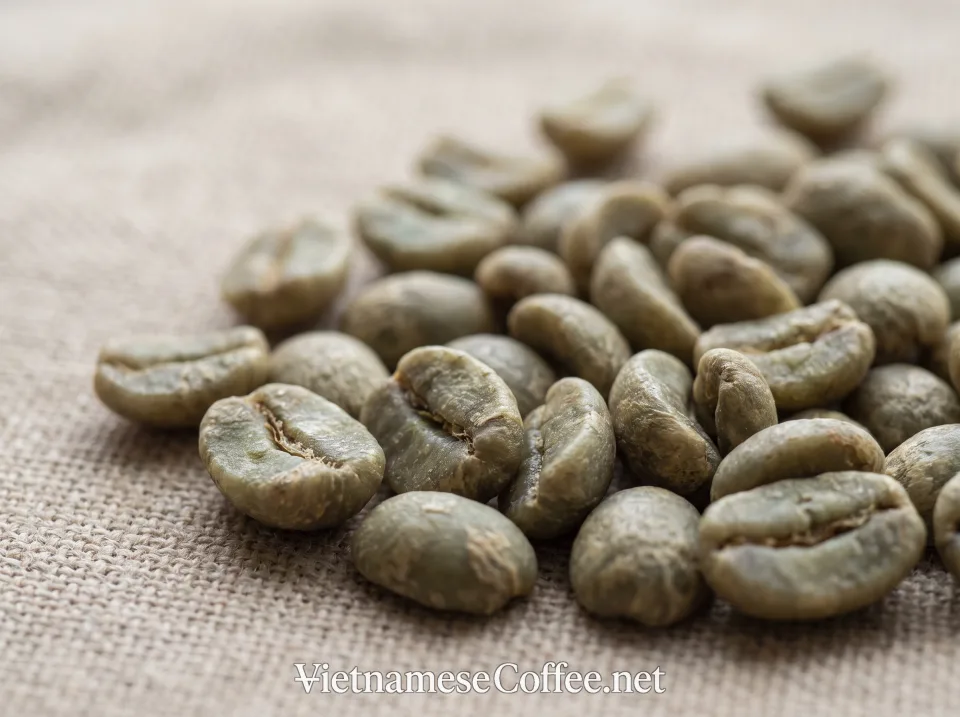
This comparison starts from an unusually stark species difference. Vietnamese coffee is commonly built around robusta, one of the two globally dominant coffee species. Kapeng barako is something else entirely: Cascara Cafe is explicit that barako is Coffea liberica, a genuinely distinct third species, not a roast level, blend, or regional style of arabica or robusta. Its cultivation is most closely and historically identified with Batangas and Cavite provinces, where the Philippine Coffee Board notes the first liberica seedlings were planted in Amadeo, Cavite, back in 1876, with Batangas remaining the crop's primary historical center. Coffee Studies adds further context: the Philippines was once the world's fourth-largest coffee producer before an 1880s leaf-rust outbreak devastated its arabica crop, a disaster that reshaped the country's coffee landscape and helped liberica persist as a regional specialty.
It's worth noting that Batangas and Cavite's status as barako's cultural heartland doesn't necessarily mean they're where the most liberica is grown nationally today. Philippine government industry roadmaps cite Western Visayas and ARMM (Bangsamoro) as the leading regions for liberica by national production volume in recent measured periods, and Bohol's provincial government documents an active, expanding liberica planting effort (roughly 12,000 trees on a single farm since 2019). Nationally, liberica remains a genuine minority coffee regardless of exact region, historically well under 1% of total Philippine coffee output across the periods measured by government statistics, underscoring just how much of a regional specialty this coffee remains even within its home country.
How each is brewed
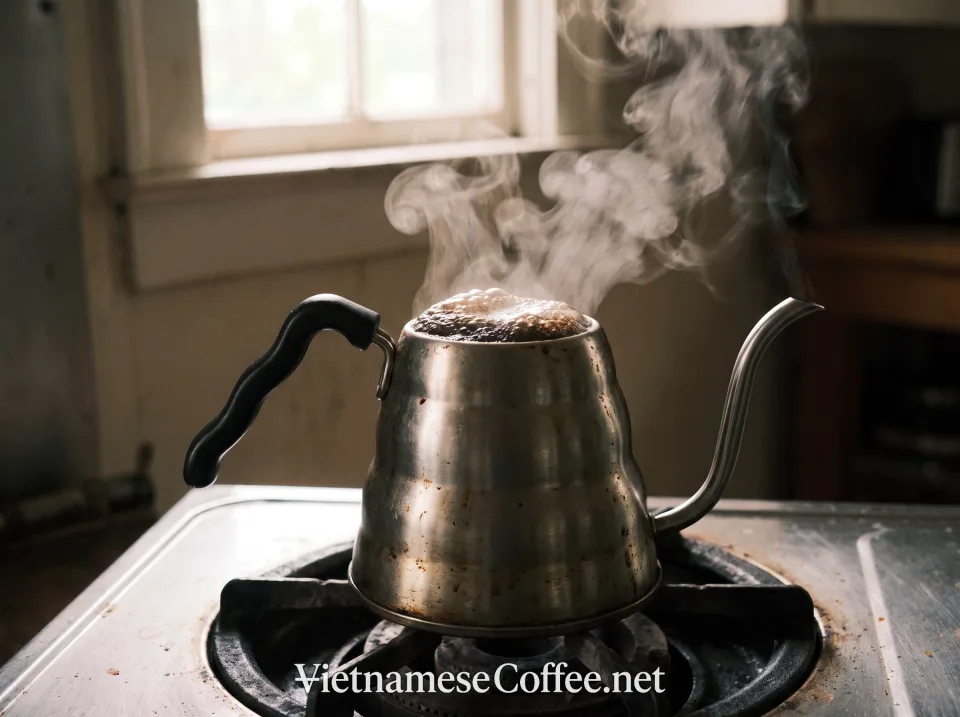
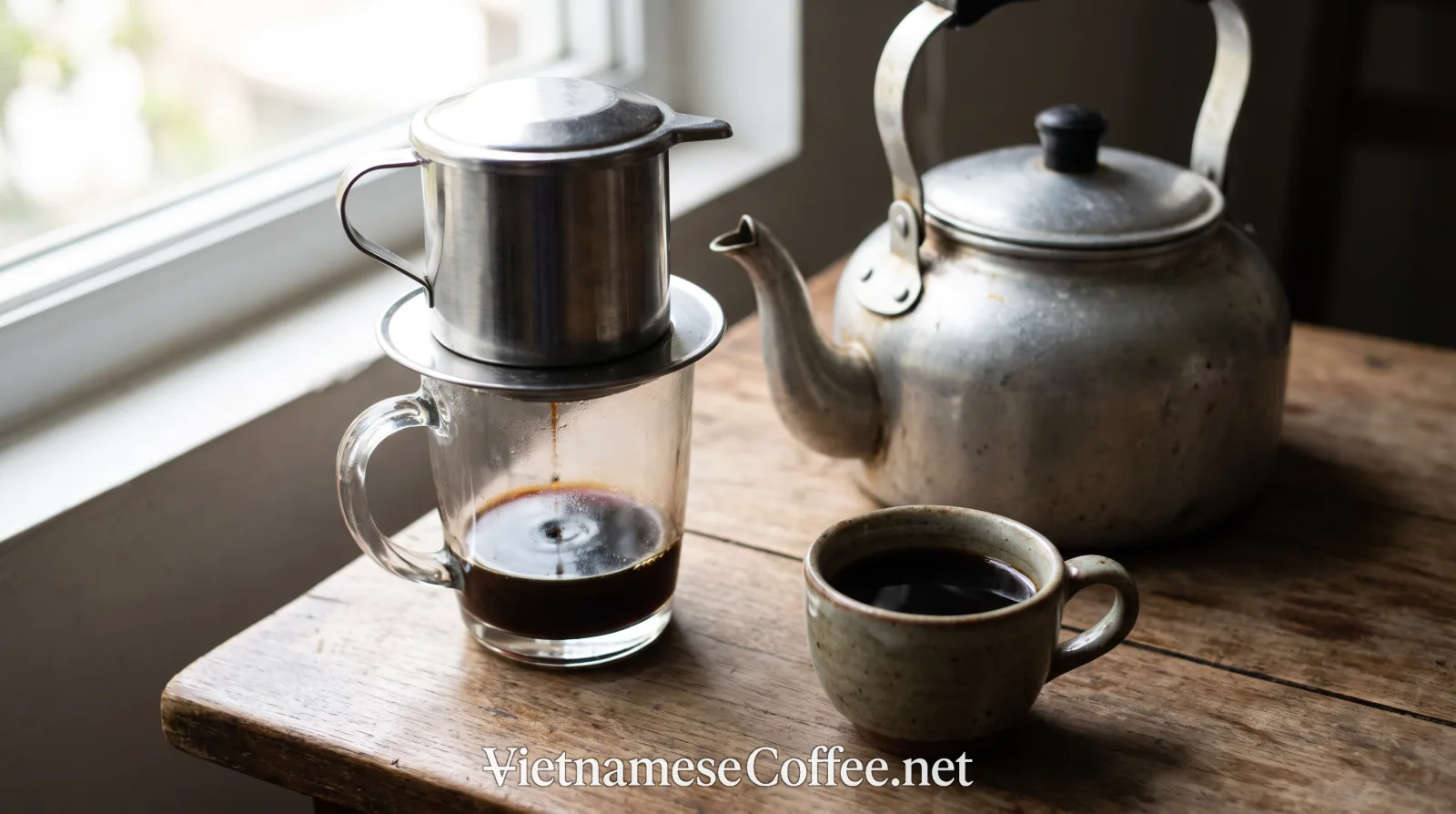
Vietnamese coffee's brewing method is fairly consistent across sources: hot water (90-96 degrees C) poured over robusta grounds in a phin, dripping by gravity alone for roughly 5 to 8 minutes, with the metal mesh straining the grounds out. Kapeng barako doesn't have one single defining traditional method; sources document genuinely different approaches. CoffeeHQ and Pana.ph both describe grounds, water, and brown sugar combined directly in a kettle called a takure, boiled together, then left briefly to settle before pouring, with the spent grounds simply left behind unfiltered, a method specifically associated with Batangas tradition. Route For Less instead describes a stainless-steel cafetera, a gravity-fed percolator-style device with a built-in filter basket, water heated separately and poured over the grounds to drip slowly. Wikipedia adds that drip devices, French press, and simple cloth-strained pour-over are also used in practice today.
Because these methods filter the coffee in genuinely different ways, from no filtration at all in the boiled-kettle method to a built-in filter basket, cloth, or French press mesh in the other approaches, the resulting texture and sediment level varies by method rather than following one uniform outcome; an unfiltered boiled cup will carry noticeably more sediment and body than a version brewed through a cafetera's filter basket or a French press's mesh.
Flavor
Vietnamese coffee, brewed hot and concentrated through the phin, produces a bold, heavy, dark-roast robusta cup, typically balanced with sweetened condensed milk. Kapeng barako's flavor is built around genuinely different compounds, given its different species: Cascara Cafe and Coffee Studies both describe a very heavy body with low-to-moderate acidity, woody and earthy core notes, and smoky, slightly nutty character. Route For Less adds more specific detail: a floral, fruity aroma at first, often compared to jackfruit or ylang-ylang, deepening into woody, leathery, and smoky tones as the cup develops, with moderate bitterness balanced by subtle sweetness.
One frequently repeated descriptor, an aniseed-like note, is worth a caveat: while multiple sources mention it, at least one enthusiast account explicitly states never detecting that particular flavor despite trying the coffee directly, describing it instead simply as strong, herbal, and earthy. This page treats the aniseed comparison as a commonly repeated but subjectively variable tasting note rather than a universally agreed-upon flavor descriptor, alongside the more consistently corroborated woody, smoky, low-acid, jackfruit-aromatic profile.