
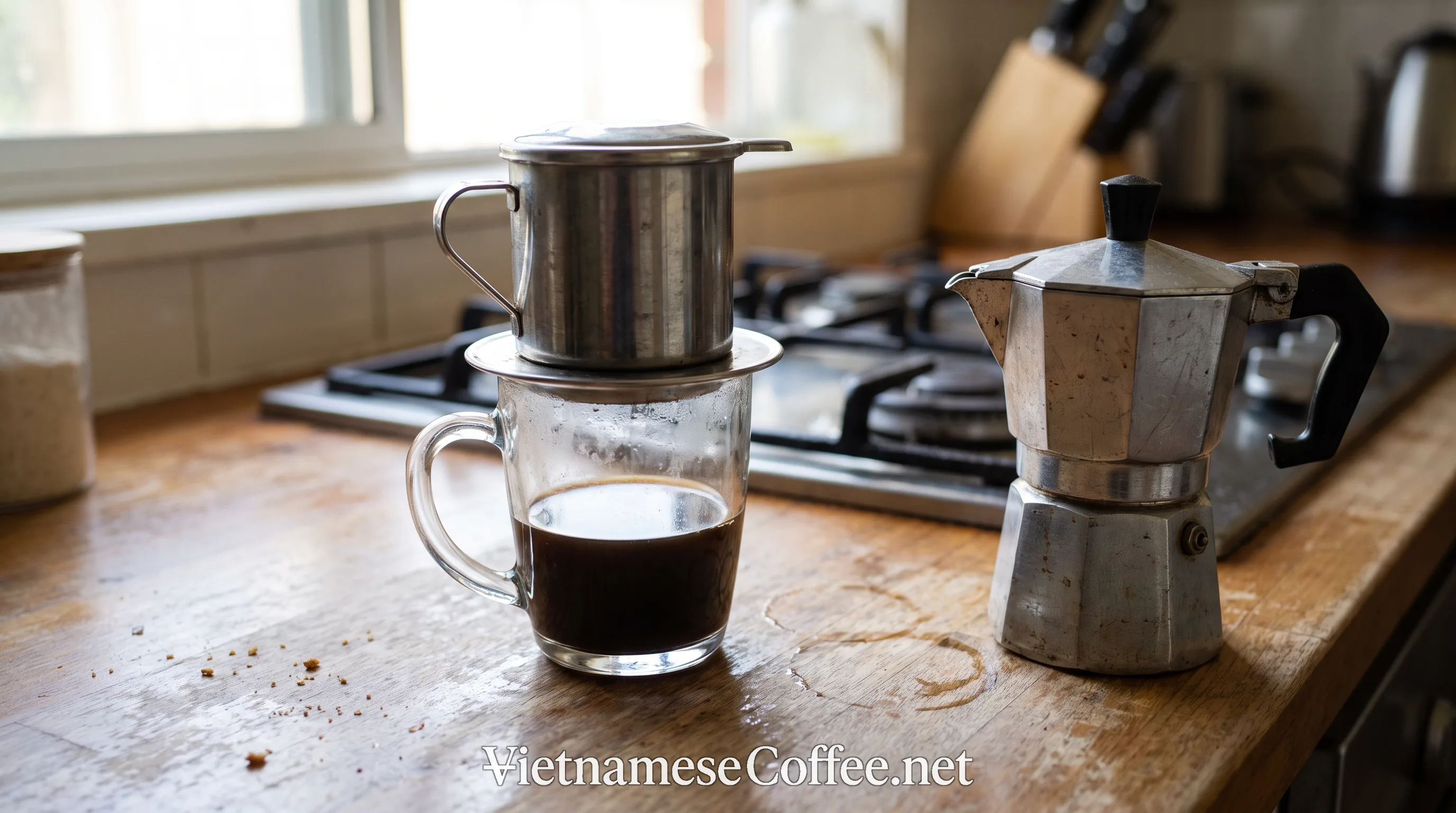
Quick comparison
| Feature | Phin filter | Moka pot |
|---|---|---|
| Brewing force | Gravity only | Steam pressure, roughly 1-2 bar |
| Heat source | Separate kettle, poured in | Stovetop or hob, heated directly |
| Typical grind | Medium-coarse per CoffeeHQ; varies by source | Medium-fine, finer than pour-over, coarser than espresso |
| Typical ratio | 150-200 g coffee per liter, about 1:5 to 1:6.7, per CoffeeHQ | Roughly 1:6 to 1:10, commonly 1:7-1:8 |
| Total brew time | 5-8 minutes | 3-6 minutes |
| Noise | Quiet | Bubbling and sputtering as it finishes |
| Closely associated with | Vietnamese coffee, iced coffee | Strong stovetop coffee, milk drinks |
How each one brews
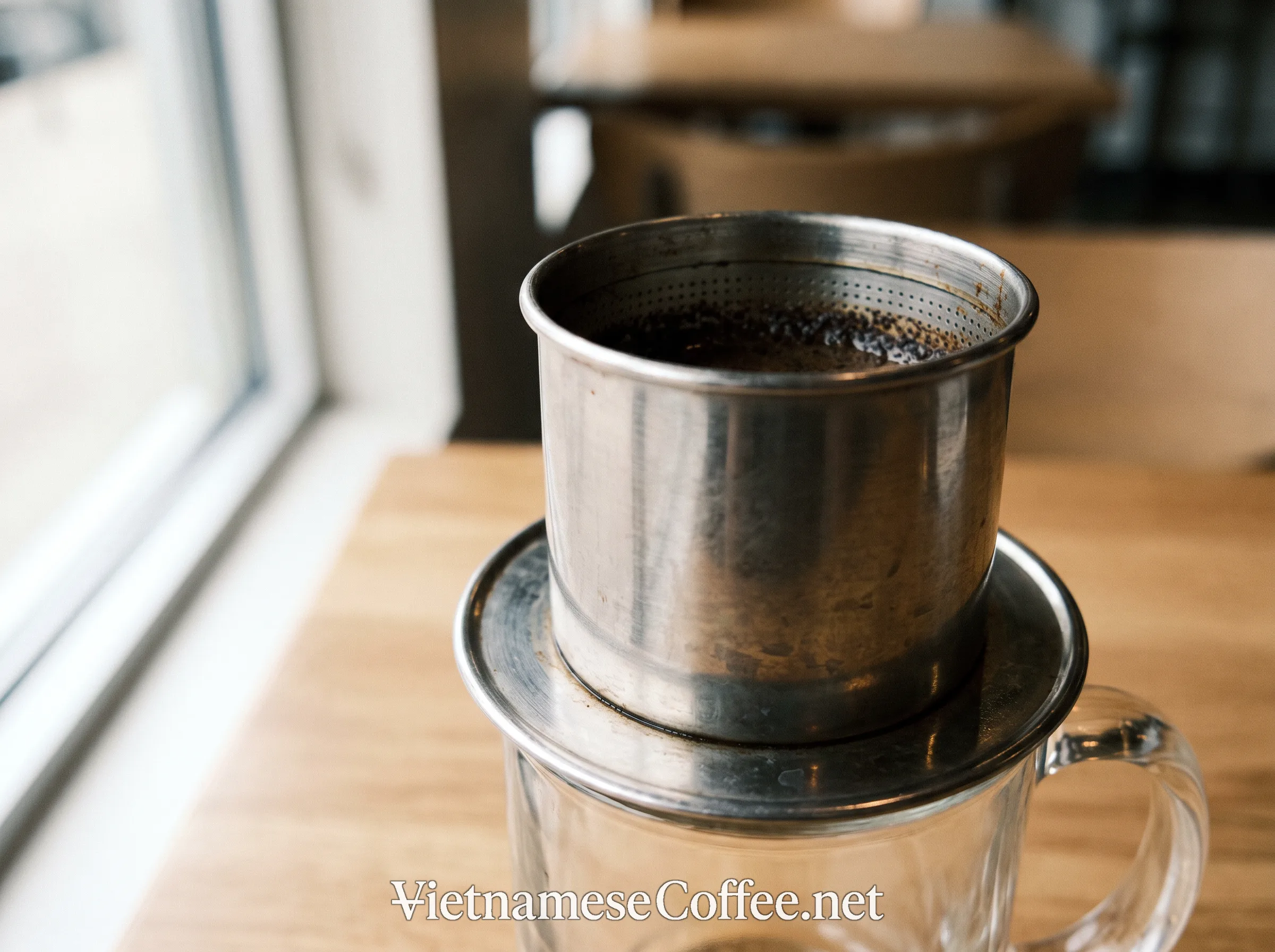
The phin works entirely by gravity, with no heat applied to the brewer itself. CoffeeHQ describes water boiled separately in a kettle and poured over the grounds, which then drip through a perforated metal plate into the cup below over roughly five to eight minutes, with no pressure involved at any stage.
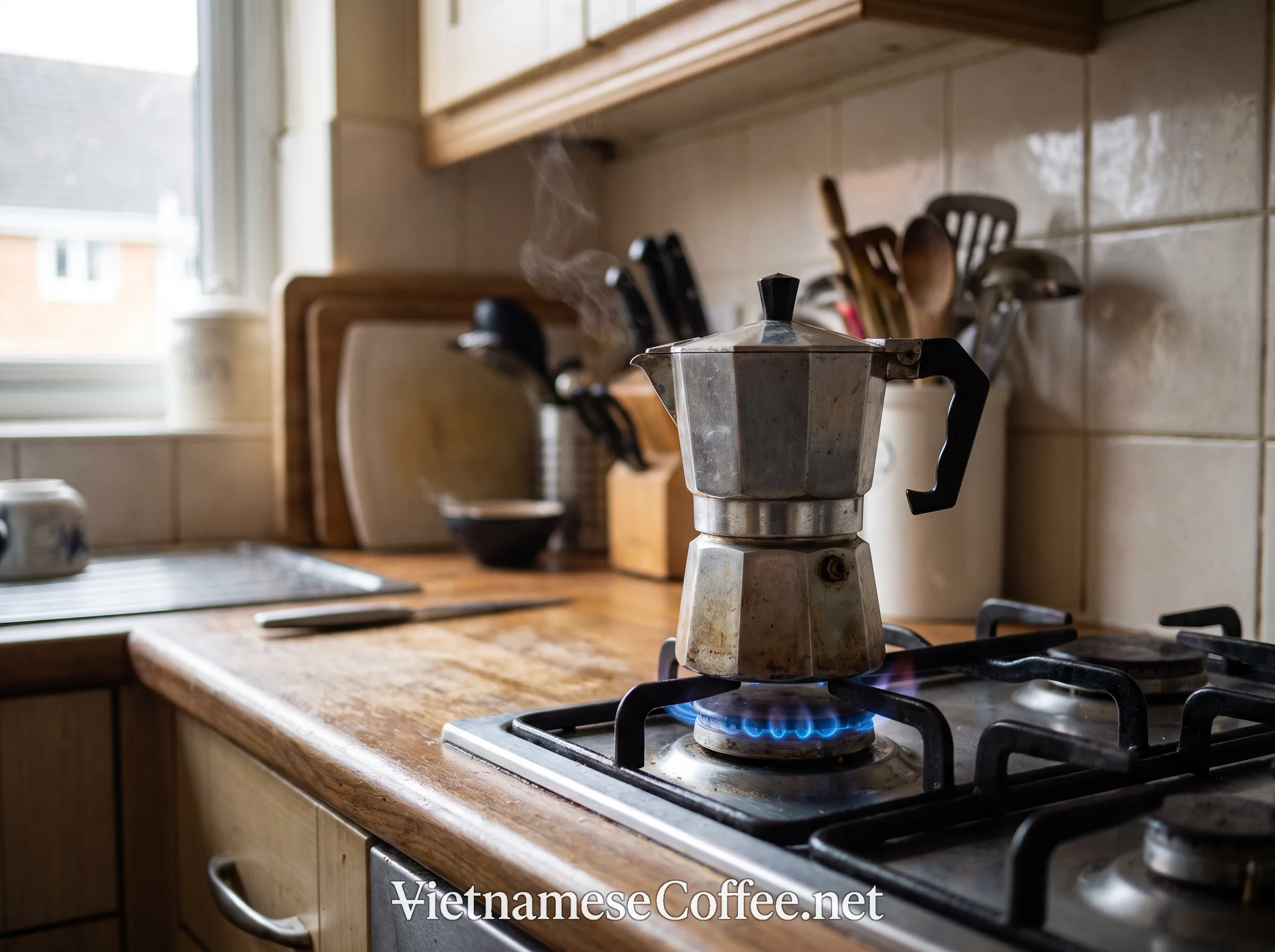
A moka pot works differently: it sits directly on a stove or hob and generates its own heat-driven pressure. Water in the bottom chamber heats until steam pressure pushes it up through a funnel-shaped basket of grounds and into the top chamber. Coffee Nutz UK and Brewed Barista both describe this as operating at roughly 1 to 2 bar of pressure, far below the roughly 9 bar used by an espresso machine but well above the phin's zero-pressure gravity drip. Expert Café and Coffee Gear HQ both note that the moment to remove a moka pot from heat is signaled by sound and color, a shift from a steady stream to gurgling, sputtering, or a paler color.
Grind, ratio, and heat management
Grind recommendations differ between the two methods, though phin recommendations specifically are not fully settled across sources: CoffeeHQ specifies medium-coarse, while other Vietnamese-coffee-focused sources reviewed elsewhere describe fine or medium-fine grinds for phin instead. Moka pot grind guidance is more consistent across the sources reviewed here: Expert Café, Brewed Barista, and Coffee Gear HQ all describe a medium-fine grind, finer than a typical pour-over grind but noticeably coarser than an espresso grind.
Ratio conventions also differ. CoffeeHQ's phin figures work out to roughly 1:5 to 1:6.7 by weight. Moka pot ratios run more diluted and vary more by source: Expert Café cites 1:6 to 1:8, Coffee Nutz UK cites roughly 1:7, and Coffee Gear HQ gives a wider window of 1:7-1:8 for a stronger, traditional-tasting brew or up to 1:10 for something cleaner and more balanced. Heat management differs sharply too: a phin needs no ongoing attention once water is poured, while a moka pot requires watching and adjusting heat throughout the brew.
Taste and texture
CoffeeXplore describes moka pot coffee as sharing some characteristics with espresso, notably a full body, while lacking espresso's crema and velvety texture. It is generally described as less intense than true espresso but stronger and heavier-bodied than drip coffee. Phin coffee, per CoffeeHQ, also produces a high-body cup, since its all-metal filter, like the moka pot's metal basket, passes oils that a paper filter would catch. The phin's flavor and strength lean heavily on the specific bean and roast, commonly dark-roast robusta, used rather than on the brewing mechanism itself.
Cleanup and everyday use
Coffee Balcony's direct comparison describes the phin's cleanup as very simple, a small number of metal parts that rinse quickly, versus the moka pot's larger part count, an upper chamber, lower chamber, funnel basket, and gasket, that take more time to disassemble, rinse, and dry between uses. The same comparison notes the moka pot's brewing process is audibly louder, involving bubbling and sputtering, while the phin's gravity drip is silent throughout. Both fit easily in small kitchens, but the moka pot specifically requires a working stovetop or hob, while the phin needs only hot water from a kettle.