
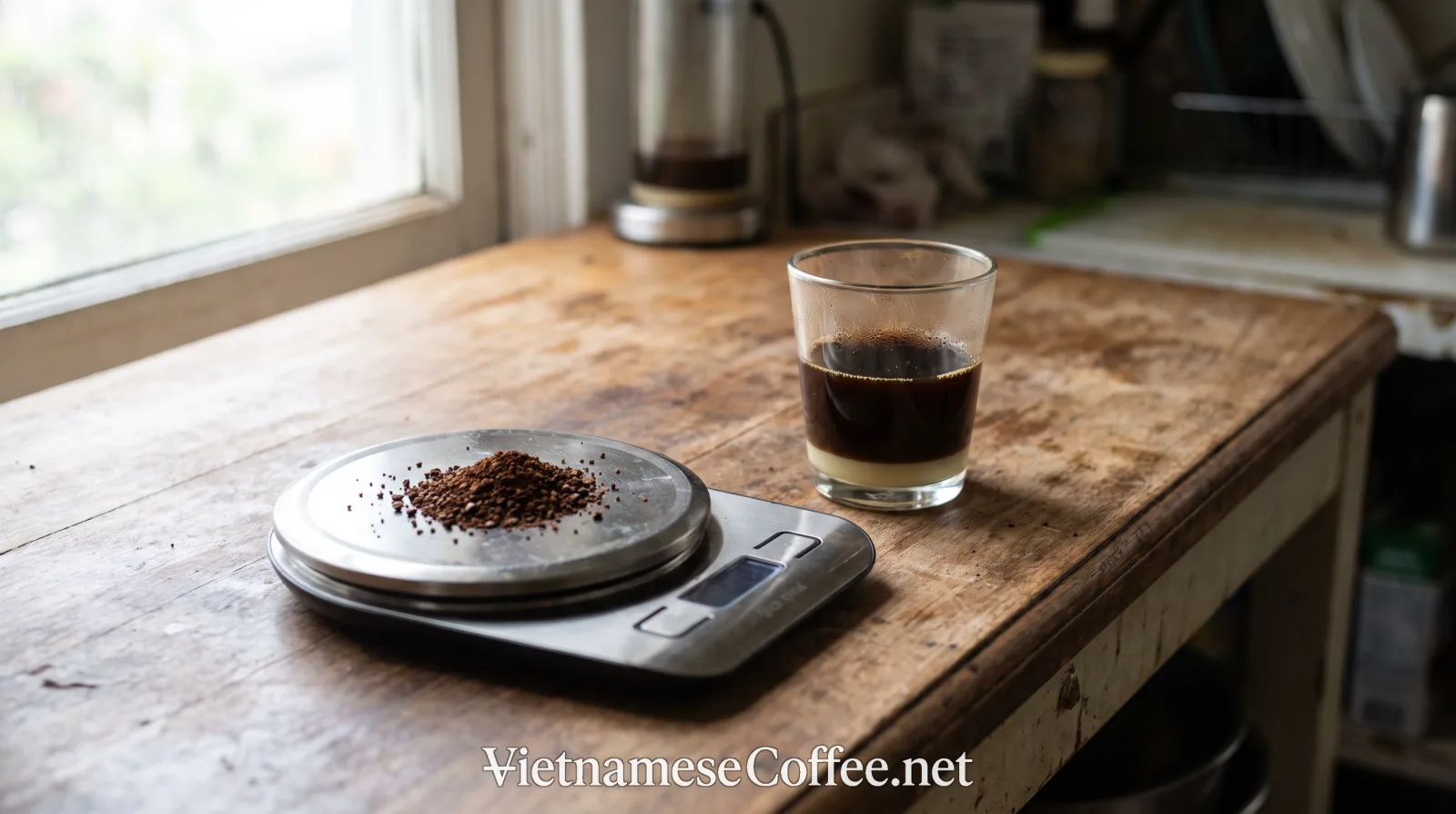
What actually drives caffeine content
Total caffeine in a cup comes down to three things multiplying together: how much dry coffee you use (dose), how much caffeine that coffee contains per gram (which depends heavily on species), and what fraction of that available caffeine actually gets extracted into the liquid. Coffee Bumper frames this arithmetic directly: dose in grams, multiplied by caffeine content per gram, multiplied by an extraction fraction commonly in the 75-95% range for hot brewing methods.
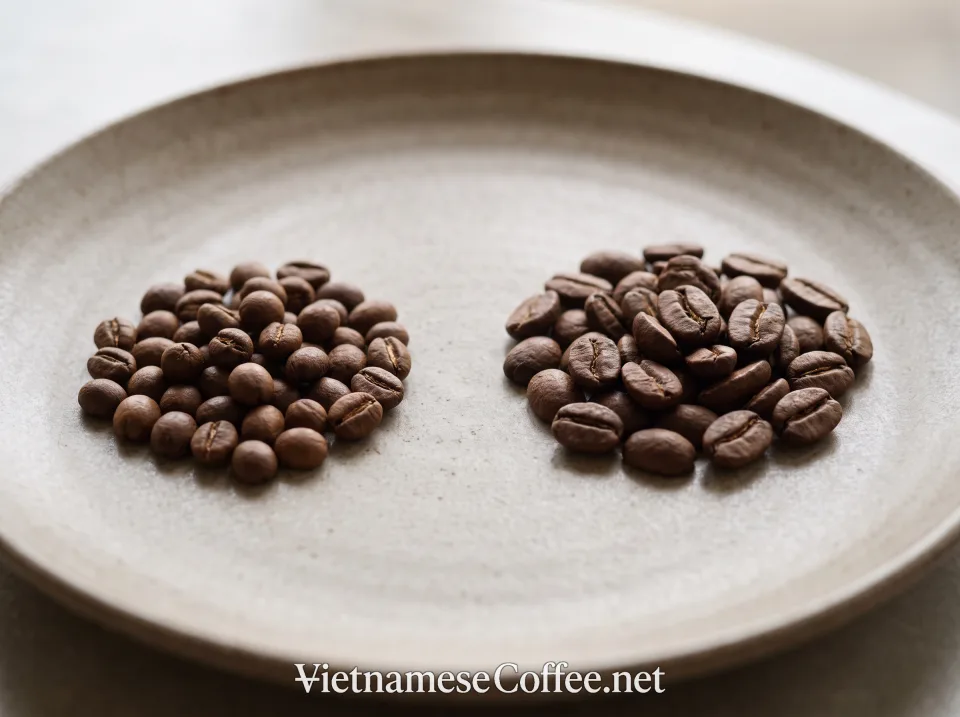
Species is a real, well-supported input to that second factor. Medical News Today cites a 2016 study finding arabica beans average 34.1-38.5 g of caffeine per kilogram of dry coffee, versus 68.6-81.6 g per kilogram for robusta, roughly double at the raw bean level. A peer-reviewed comparison of specialty and commercial coffee brews (Kolanowski et al., 2021) similarly found the single highest caffeine reading among all tested samples belonged to a robusta variety. But a review of brewing studies (Gorska-Warsewicz et al., 2021) shows this doesn't always translate into a fixed ratio at the level of a finished brewed cup: one cited study found a robusta brew containing roughly 1.4 times more caffeine than a comparable arabica brew under specific conditions, while a different study under different conditions found the opposite. Dose and extraction efficiency, not species alone, ultimately determine total caffeine in a given serving.
It's worth being precise about one common point of confusion: water or serving volume changes concentration, not total caffeine. Brewing a fixed dose of grounds with less water produces a stronger-tasting, more concentrated drink, but it doesn't by itself increase the total caffeine extracted from that dose of coffee; diluting a finished brew with ice or extra water lowers its concentration without removing any caffeine already in it. Total caffeine per serving is set by dose and extraction, not by how much water the finished drink is served in.
Why Vietnamese coffee is often described as high in caffeine
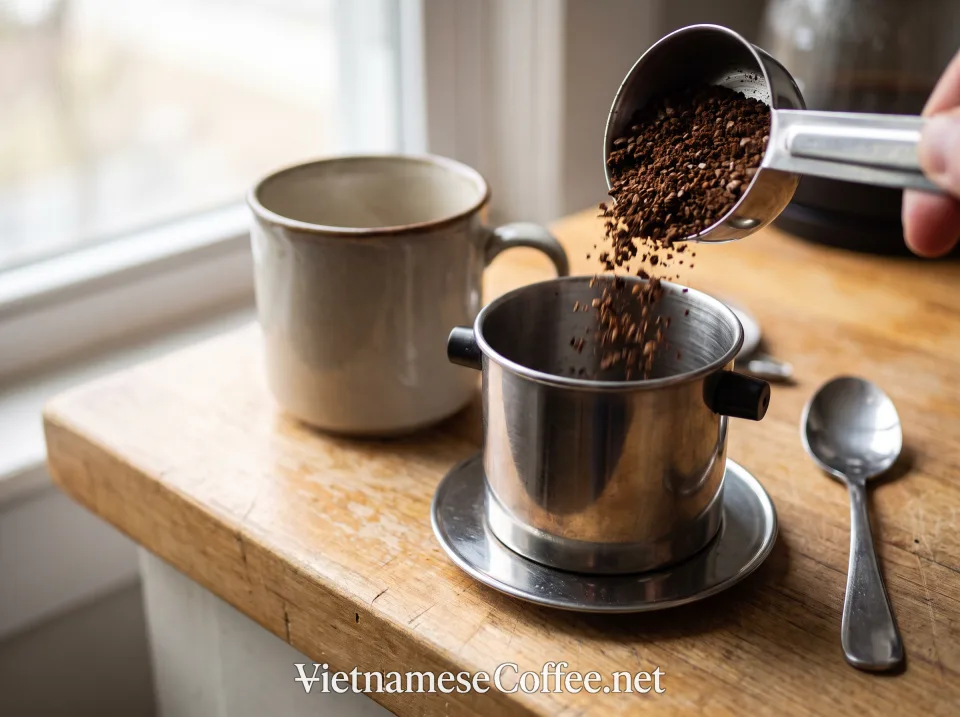
Traditional Vietnamese coffee is typically made from robusta, which, per the sources above, contains meaningfully more caffeine per gram than arabica at the raw bean level. This gives Vietnamese coffee a plausible, well-supported basis for its reputation as a high-caffeine style. What isn't established by the evidence reviewed for this page is a specific conclusion about total caffeine per serving compared with drip coffee, since that comparison depends on dose and extraction as well as species, and no source reviewed here demonstrates that a typical phin serving's dose and extraction combine with robusta's higher caffeine content to reliably exceed a typical drip serving's total caffeine.
A wide range of commercial and blog sources do publish specific figures for phin-brewed coffee's caffeine content, but these estimates disagree substantially with each other, some citing as little as 66-130 mg for a 4-6 oz serving, others citing 150-265 mg for a similar-sized cup, without a shared, checkable methodology or consistent assumed recipe behind the numbers. None of these sources appear to report an independently verifiable laboratory measurement specific to phin brewing. Given this, the most defensible summary is that Vietnamese coffee is widely described as high in caffeine, for a plausible and partly evidence-based reason (robusta's bean-level caffeine content), without treating any specific milligram figure, or the broader "more total caffeine than drip coffee" claim, as demonstrated fact.
How to think about your own cup
If you want a genuinely useful, practical sense of your own phin-brewed coffee's caffeine content, the variables that matter are the ones described above: how much dry coffee you use (dose), which bean you're using (robusta generally has a higher per-gram caffeine content than arabica), and how thoroughly it's extracted. Grind size and contact time can influence extraction under some brewing conditions, but this isn't a simple, guaranteed rule; peer-reviewed cold-brew research (Fuller & Rao, 2017) found grind size made no significant difference to equilibrium caffeine concentration in the conditions that study tested, and that extraction plateaued well before commonly recommended steep times. Don't assume a finer grind or a longer brew automatically means meaningfully more caffeine in your cup; it depends on the brewing method and conditions.
Separately, remember that adding ice or extra water changes how concentrated your drink tastes without changing the total caffeine already extracted into it. A small, strong 4 oz phin serving and a larger 8 oz iced glass built from the same brewed coffee contain the same total caffeine; the iced version is just more diluted. If caffeine sensitivity is a specific concern, the most reliable approach is adjusting your own dose, rather than relying on a specific milligram figure from an unverified online source, since the range of published estimates for Vietnamese coffee specifically is too wide and inconsistent to assume any one number applies to your particular cup.