
Quick comparison
| Feature | Vietnamese coffee | Ethiopian coffee |
|---|---|---|
| Dominant species | Predominantly robusta (31.4M of 32.5M total bags forecast, MY2026/27, USDA) | Predominantly arabica |
| Variety background | Comparatively few named cultivars in commercial use; robusta itself has substantial, still-underexplored genetic diversity per WCR | Native home of arabica; exceptional genetic diversity including landraces and JARC-released commercial varieties |
| Common processing | Natural (dry), traditional and widely used | Natural and washed both common; per one industry source, roughly 60% natural, 35% washed, honey emerging |
| Typical roast | Dark | Varies; often lighter to preserve floral/fruit notes |
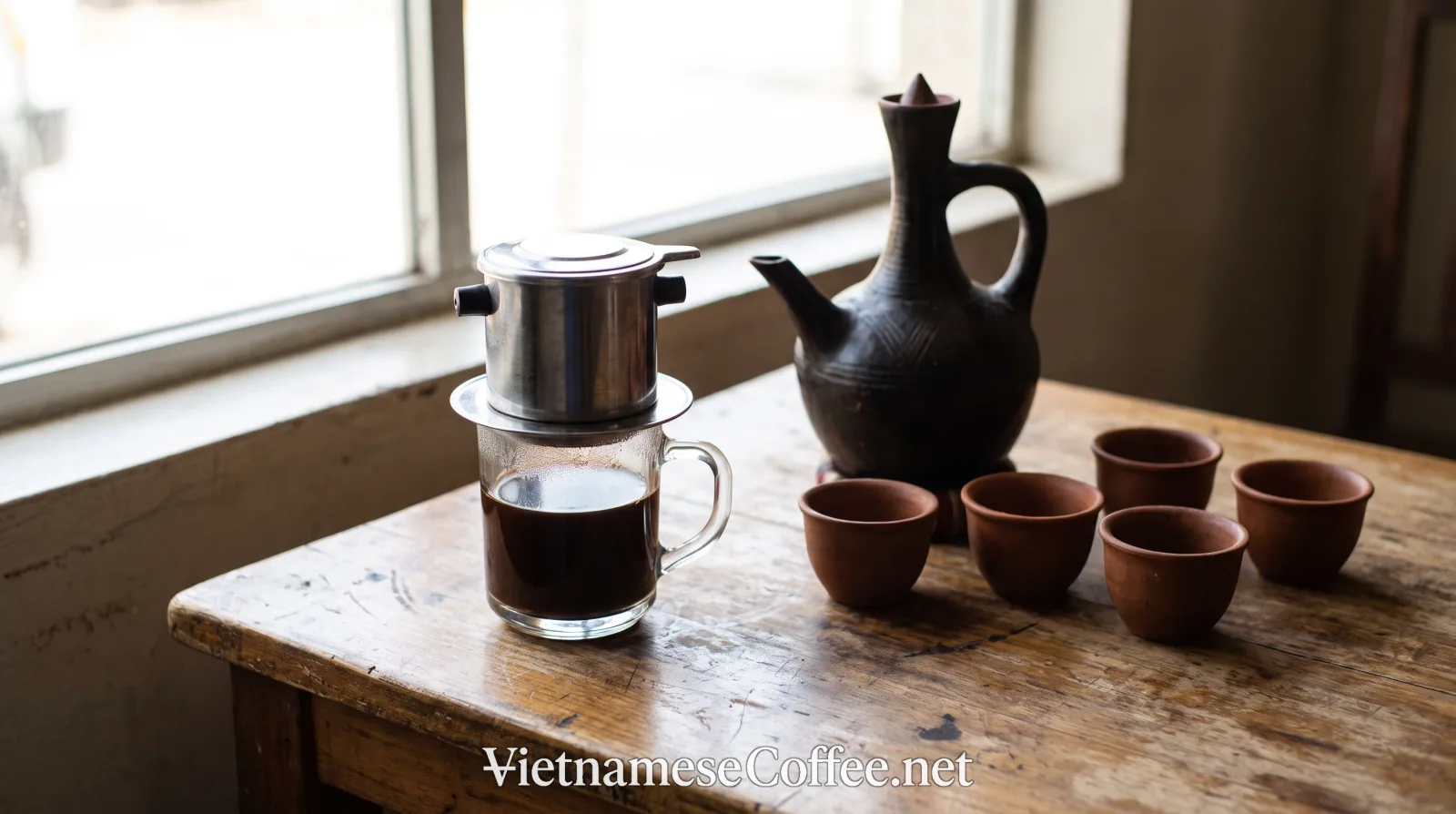
| Traditional brewer | Phin (metal gravity drip filter) | Jebena (round clay pot) |
| Brew time | 5-8 minutes | Ceremony often 1-3 hours total, including roasting |
| Typical flavor | Bold, heavy body, low-to-medium clarity | Floral, citrus, fruit-forward, lighter-to-medium body |
| Common addition | Sweetened condensed milk | Traditionally black; some regions add salt, butter, or herbs |
Species and beans
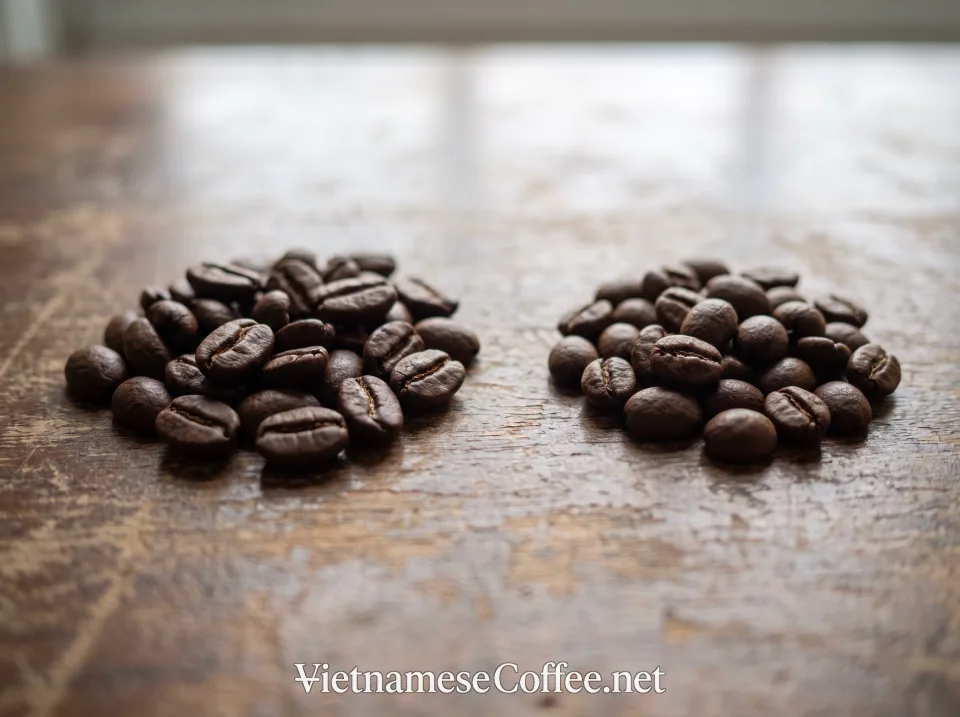
The most fundamental difference between these two coffee traditions starts with the plant itself, though it's worth stating precisely rather than absolutely. Vietnamese coffee production is overwhelmingly robusta: USDA's current 2026/27 marketing-year forecast puts Vietnam's production at 31.4 million bags of robusta against 1.1 million bags of arabica, meaning a small but real arabica sector exists alongside the dominant robusta crop. Ethiopian coffee production is predominantly arabica, and World Coffee Research identifies Ethiopia as the species' native home and the center of its major genetic diversity, from which farmers and breeders have created dozens of widely cultivated arabica varieties over time. Ethiopia also runs an active, ongoing varietal breeding program through its Jimma Agricultural Research Center, which has released dozens of named commercial varieties alongside the country's landrace diversity, so Ethiopian production isn't limited to uncharacterized, non-hybrid heirlooms alone.
It's a common misconception that robusta's lower cultivar-naming visibility in commercial channels implies it has less underlying genetic diversity, or that this translates into more consistent flavor. World Coffee Research's own published position states the opposite: robusta's genetic diversity is larger than arabica's, organized into two broad genetic groups (Guinean and Congolese) with further distinct subpopulations within each, much of which remains unexplored by breeders, including traits related to cup quality specifically. This page doesn't attribute any perceived flavor consistency in Vietnamese coffee to lower genetic diversity in the robusta species, since the evidence doesn't support that explanation; to the extent Vietnamese robusta coffee shows more consistent cup characteristics in practice, that would more plausibly reflect processing, roast level, regional growing conditions, or blending practices, not lower species-level genetic variation.
Processing and roast
Vietnamese Robusta is traditionally natural (dry) processed, meaning whole cherries dry intact in the sun before hulling, a method Roast.cafe describes as a long-standing, widely used approach for the country's robusta production, contributing to its characteristic heavy body alongside dark roasting and brewing method. Ethiopia uses a genuine mix of both major processing methods: Blue Mountain Coffee and 1Zpresso both describe washed Ethiopian coffee as cleaner, brighter, more floral and citrus-forward with a lighter body, while natural-processed Ethiopian coffee is described as heavier-bodied, sweeter, and more overtly fruity, sometimes wine-like. One industry source (EthioCoffee) estimates Ethiopia's national split at roughly 60% natural and 35% washed, with honey processing described as an emerging but smaller category; this figure comes from a single source and is presented as one estimate rather than an independently verified national statistic.
Roast level compounds these differences further. Vietnamese coffee is typically dark-roasted, which, combined with robusta's naturally bolder character, produces the deep, sometimes bitter intensity associated with cà phê đen and cà phê sữa đá. Ethiopian coffee is often roasted lighter specifically to preserve the floral and fruit notes that make it distinctive; The Coffee Guru notes that the traditional buna ceremony itself actually roasts beans well past where a modern specialty roaster would typically stop, producing a smokier, more traditional character than the lighter roasts used for export-grade specialty Ethiopian coffee elsewhere.
How each is brewed
Vietnamese coffee's everyday brewing method is the phin: a small, four-part metal filter that sits directly on the serving cup. CoffeeHQ describes hot water (90-96°C) poured over grounds and left to drip by gravity alone for roughly 5 to 8 minutes, producing a concentrated, high-body cup with no applied pressure at any stage. This is a fast, largely hands-off, everyday ritual, brewed individually and typically finished with sweetened condensed milk for the traditional cà phê sữa đá or cà phê sữa nóng.
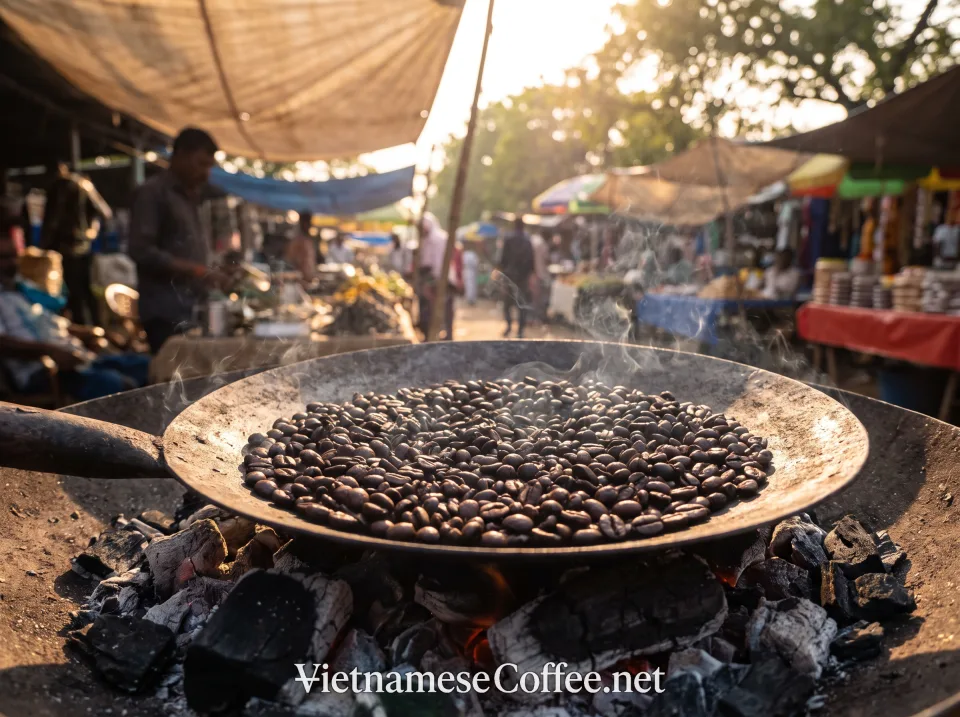
Ethiopian coffee's traditional brewing method, the buna ceremony, is dramatically more involved. Multiple sources describe the same core sequence: green beans are washed and roasted in a pan over coals in front of guests, ground by hand (traditionally with a mortar and pestle), then boiled together with water in a round clay pot called a jebena. Francesco's Coffee gives a specific example ratio of roughly 10 to 12 grams of coffee per 150 ml of water, brought to a slow boil and removed from heat once it rises toward the pot's neck. The coffee is then poured from a height into small, handleless cups (called sini), and, notably, the same grounds are reused for two more, progressively weaker rounds, traditionally named abol, tona, and baraka (or bereka). Amazing Food and Drink describes the full ceremony taking roughly two to three hours from start to finish, a stark contrast to the phin's few unattended minutes. Your Coffee Buzz notes the brewing itself is technically unfiltered in the way it steeps, similar in principle to Turkish coffee, relying on a horsehair filter at the jebena's spout to keep grounds out of the poured cup.
Flavor and how it's served
These different beans, processing methods, and roast levels add up to genuinely distinct flavor experiences. Vietnamese coffee, per CoffeeHQ, is high in body with medium-low clarity and high perceived strength, a heavy, sometimes bitter cup whose oils (uncaught by the phin's metal filter) contribute to its coating texture; it's most commonly served with sweetened condensed milk, which balances the coffee's intensity with sweetness and creaminess, whether hot or over ice.
Ethiopian coffee, by contrast, is described across multiple sources as aromatically complex: floral notes like jasmine or rose, bright citrus, and berry-like or wine-like fruit sweetness, generally with a lighter-to-medium body than a dark-roast robusta cup, though this varies by region and processing choice as noted above. It's traditionally served black and unsweetened in the ceremonial context, though some regional variations add salt, butter, or a local citrus-flavored herb, according to one source describing Habesha cultural practice.