
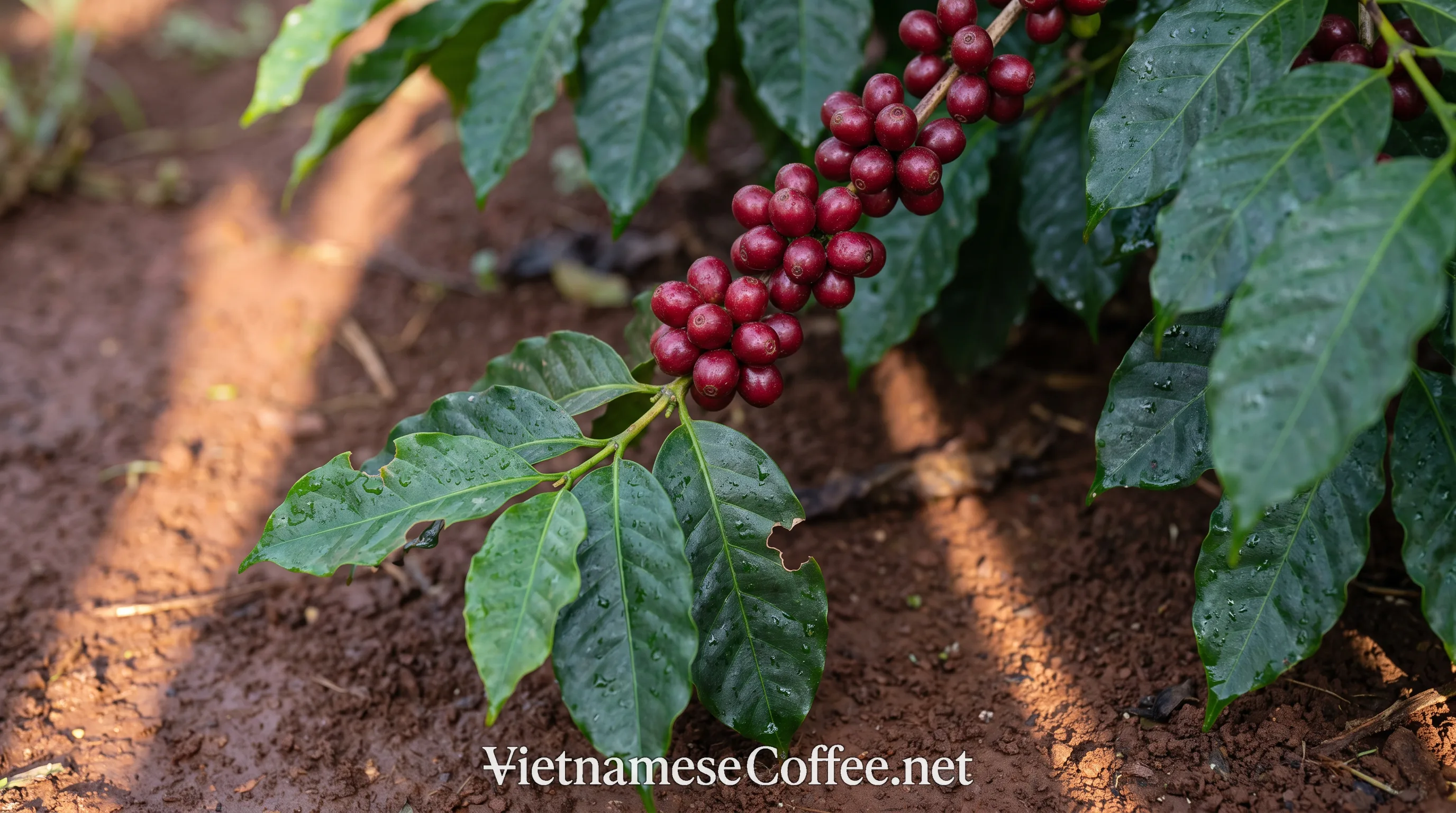
What cà phê chồn means
Cà phê chồn is the Vietnamese term commonly translated as civet coffee or weasel coffee. The relevant animal is generally the Asian palm civet, not a weasel. The international term "kopi luwak" is more closely associated with Indonesia, although it describes the same broad category of coffee that has passed through a civet's digestive tract.
The process begins when a civet eats coffee cherries. The fruit pulp is digested while the seed remains. Producers or collectors recover the beans after excretion, then continue with post-harvest handling. Vietnam Airlines describes washing, sun drying, and roasting after collection. Academic work also identifies washing, drying, and parchment hulling as common stages.
This process is unusual, but it is not a separate coffee species. Cà phê chồn can begin with Robusta or Arabica cherries. Its name describes the route through the animal and the subsequent handling, not a bean variety, growing region, roast level, or flavour guarantee.
The term is also commercially loose. A retail label may use "weasel coffee," "civet coffee," or "cà phê chồn" without making the production system transparent. The label alone cannot establish whether beans were collected from free-ranging civets, obtained from a captive operation, blended, or merely marketed with a civet-related name.
How civet coffee is processed
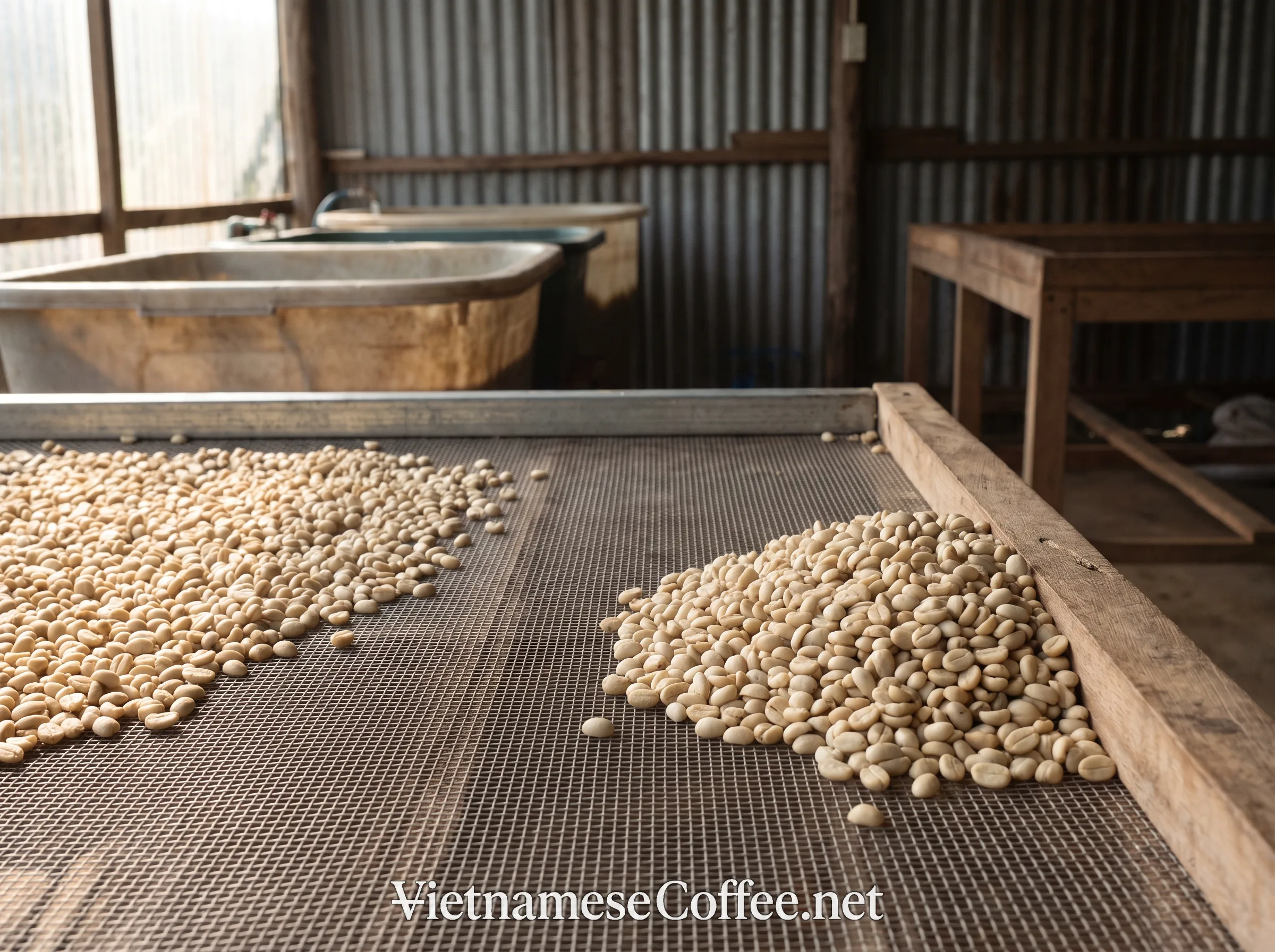
After collection, beans require thorough cleaning and conventional coffee processing. Material is separated, washed, dried, hulled, sorted, roasted, and packaged. Washing and drying are essential steps because the coffee was recovered from animal droppings. A civet coffee claim does not remove the need for basic food-safety controls and transparent handling.
The animal stage does not complete coffee processing. Green coffee still needs appropriate drying, storage, and roasting. As with other coffees, the final cup depends on the original species, cherry quality, drying, roasting, and brewing. It is not scientifically responsible to attribute every cup difference solely to passage through a civet.
Some sellers describe enzyme activity or fermentation as the reason for a smoother or less bitter coffee. Such descriptions should be treated carefully. Coffee flavour is affected by many confounded variables, including bean selection, captive feeding, post-collection washing, drying, storage, roast level, and brewing. A product claim about taste is not proof of a distinct biological effect.
The Vietnamese Coffee Processing Methods guide explains natural, washed, and honey processing. Cà phê chồn is different: it adds an animal-mediated stage before the usual washing, drying, hulling, and roasting sequence.
Welfare and authenticity concerns
Animal welfare is the central concern around commercial civet coffee. Asian palm civets are nocturnal, solitary, and arboreal animals. Wild Welfare warns that confinement for civet coffee can restrict natural movement, shelter, diet, and behaviour. A label saying "weasel coffee" supplies no meaningful welfare assurance by itself.
A 2016 study of 48 civets at 16 tourist-facing plantations in Bali assessed mobility, hygiene, surfaces, shelter, noise, food, water, and social interaction. The study found that the recorded conditions failed basic welfare requirements. This research concerns Bali rather than Vietnam, so it should not be used to make a country-wide factual claim about every Vietnamese producer. It does demonstrate why captive civet coffee requires careful scrutiny.
Wild collection is often presented as more ethical because civets remain free-ranging. However, a "wild" or "wild-sourced" statement is difficult for a shopper to verify without independently audited traceability. There is no widely adopted independent certification that reliably distinguishes wild-collected coffee from captive production across commercial supply chains.
For this reason, the page does not recommend civet coffee as an ethical purchase. A buyer who still considers it should ask for specific, independently verifiable information about animal conditions, origin, collection, chain of custody, and batch traceability. If that evidence is absent, the ethically cautious decision is to choose another coffee.
Flavour, price, and marketing claims
Civet coffee is often marketed as rare, premium, smooth, or exceptionally valuable. Those are commercial descriptors, not universal quality measures. Price can reflect scarcity, packaging, tourism demand, branding, or claimed production method. It does not independently verify authenticity, welfare conditions, or cup quality.
A cafe or seller may offer a tasting note such as chocolate, caramel, low bitterness, or a smooth finish. These notes are not unique to civet coffee. Roasted Robusta, Arabica, and blends can all show different sensory characteristics depending on origin, process, and roast. A product should not be treated as superior simply because it has a civet association.
The practical alternative is to explore transparent Vietnamese coffee by species and process. A traceable natural Robusta, washed Arabica, or honey-processed lot can provide specific information about origin and preparation without relying on an animal-mediated claim. What Is Robusta? provides background on the dominant Vietnamese species.
Cà phê chồn at a glance
| Question | Evidence-based answer |
|---|---|
| Is it made by a weasel? | The term generally refers to coffee that passed through an Asian palm civet, not a true weasel. |
| Is it a coffee species? | No. It can begin with Robusta or Arabica cherries. |
| What happens after collection? | Beans are washed, dried, hulled, sorted, roasted, and packaged. |
| Does "wild-sourced" prove ethical production? | No. It needs credible, independently verifiable traceability. |
| Does a high price prove quality or welfare? | No. Price alone does not prove authenticity, welfare, or cup quality. |