
Ingredients
| Ingredient | Amount | Notes |
|---|---|---|
| Vietnamese Robusta coffee, ground medium-fine | 30g, about 4 tablespoons | A dark roast is traditional; pre-ground phin coffee works well |
| Hot water, just off the boil | 200ml | Slightly below a full boil helps avoid over-extraction |
| Egg yolks, room temperature | 2 | Higher-risk readers should use pasteurized eggs or pasteurized egg product instead |
| Sweetened condensed milk | 2-3 tablespoons | Adjust to taste; this is the drink's primary sweetness |
| Vanilla extract or vanilla sugar | 1/2 teaspoon, optional | A small amount rounds out the egg cream's flavor |
Step-by-step method
Step 1: Set up the phin
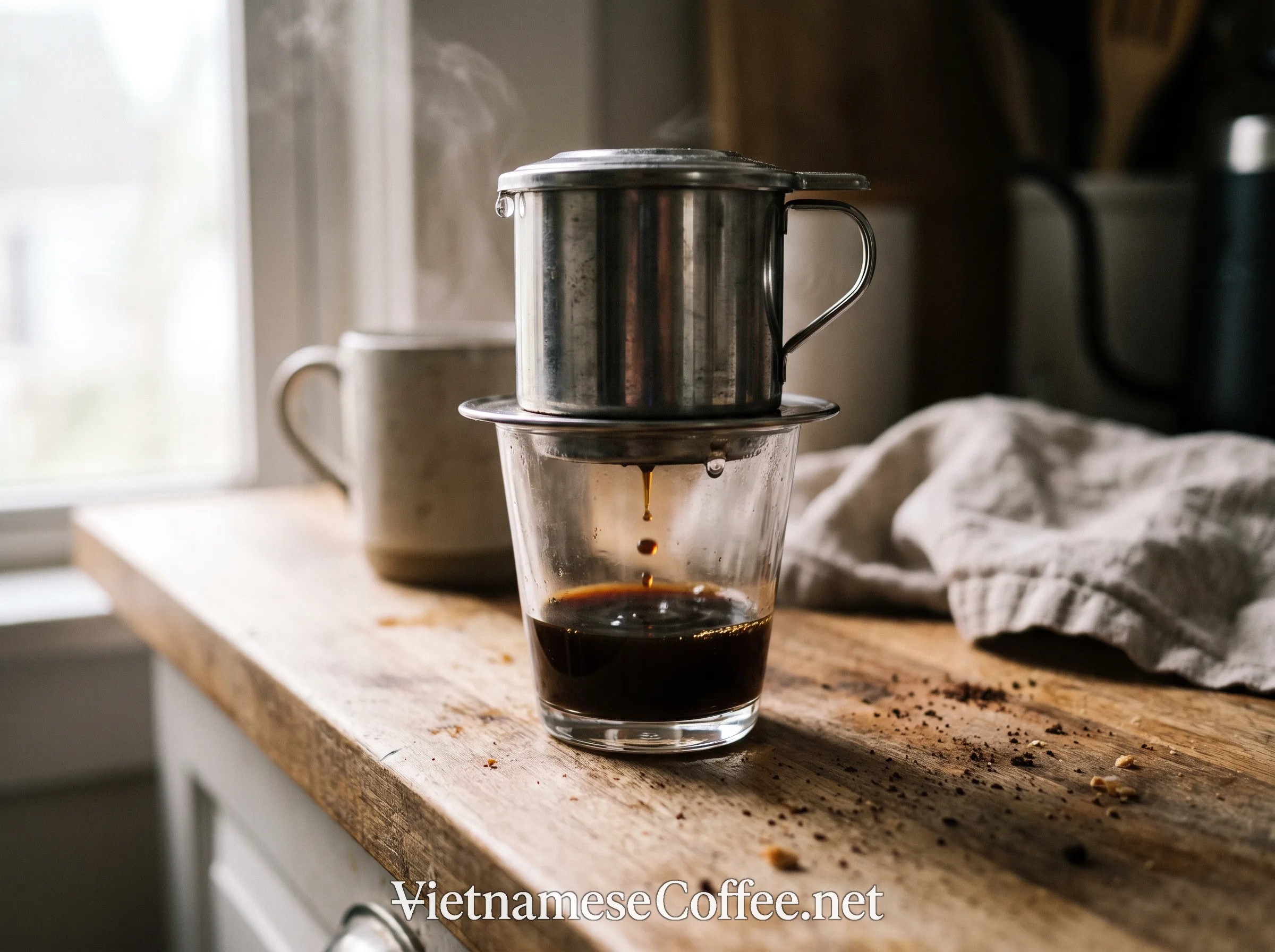
Place a phin filter over a small, heatproof serving glass. Add the ground coffee to the chamber and shake it level so the bed of grounds sits flat. Use the press according to your specific phin's design rather than forcing one universal method.
Step 2: Bloom the grounds
Pour a small splash of hot water over the grounds, just enough to wet them evenly. Wait about 30 seconds. This bloom step lets the coffee release trapped gas before the main pour, helping it extract more evenly.
Step 3: Brew the coffee
Add the remaining hot water to the phin chamber, then place the internal press according to your phin's design. Some are loose gravity inserts, while others screw down. Let the coffee drip slowly into the glass; this typically takes several minutes.
Step 4: Prepare the egg yolks
Crack the eggs and separate the yolks from the whites, placing the yolks in a clean mixing bowl. Discard or save the whites for another use. Higher-risk readers should use pasteurized egg yolks or a pasteurized egg product instead of raw eggs.
Step 5: Combine yolks and condensed milk
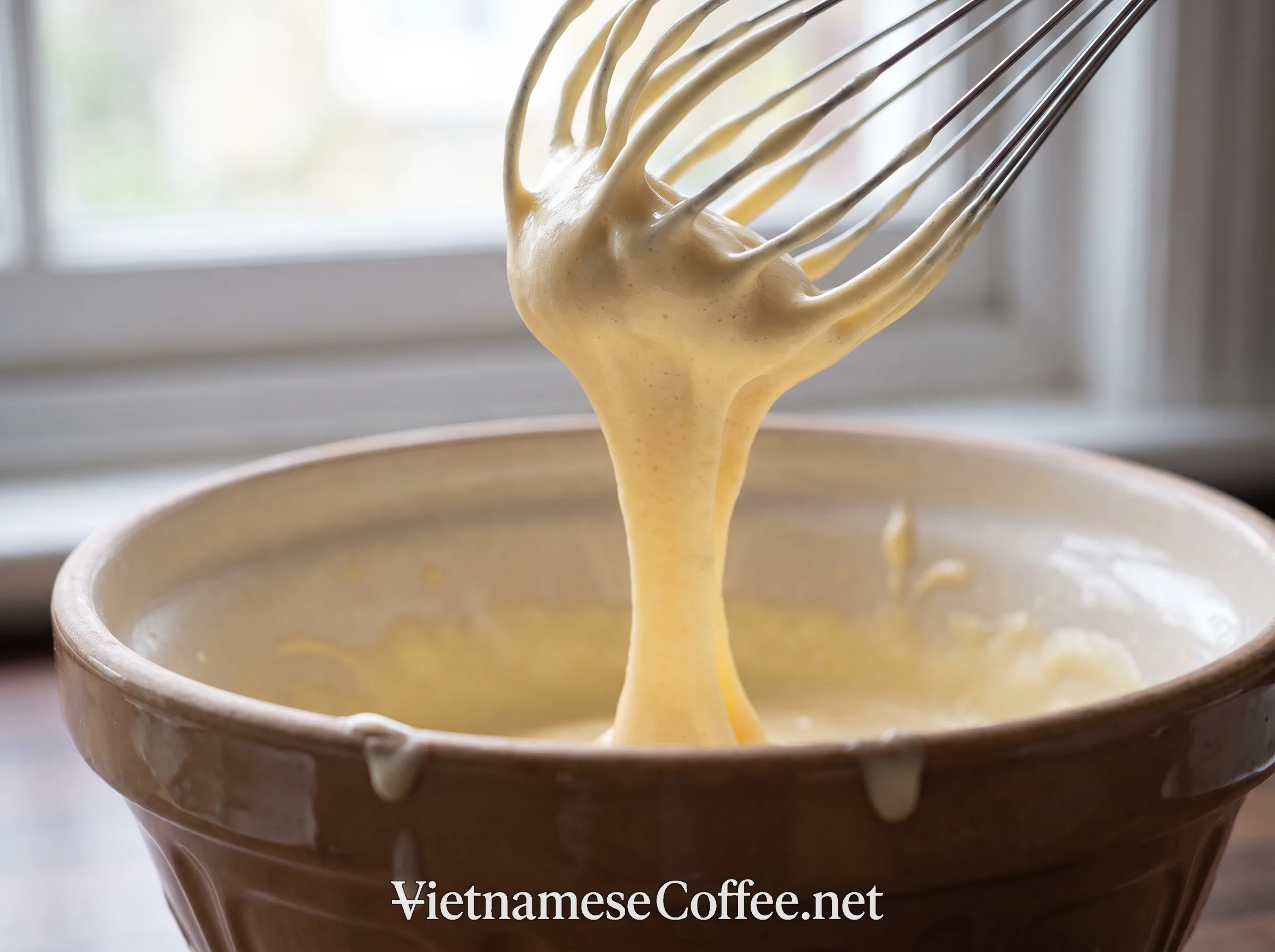
Add the sweetened condensed milk to the egg yolks. If using vanilla, add it now as well. This mixture will be whipped into the drink's signature topping, so start with a clean bowl and clean beaters.
Step 6: Whip the egg cream
Using an electric mixer on medium-high speed, whip the mixture for 3 to 5 minutes until it turns pale yellow, thickens noticeably, and roughly triples in volume. It should fall from the whisk in a ribbon that briefly holds its shape.
Step 7: Check the coffee
By this point, the phin should have finished dripping. You should have a small amount of strong, concentrated coffee at the bottom of the serving glass. If the drip is still running, wait until it finishes before adding the cream.
Step 8: Assemble the drink
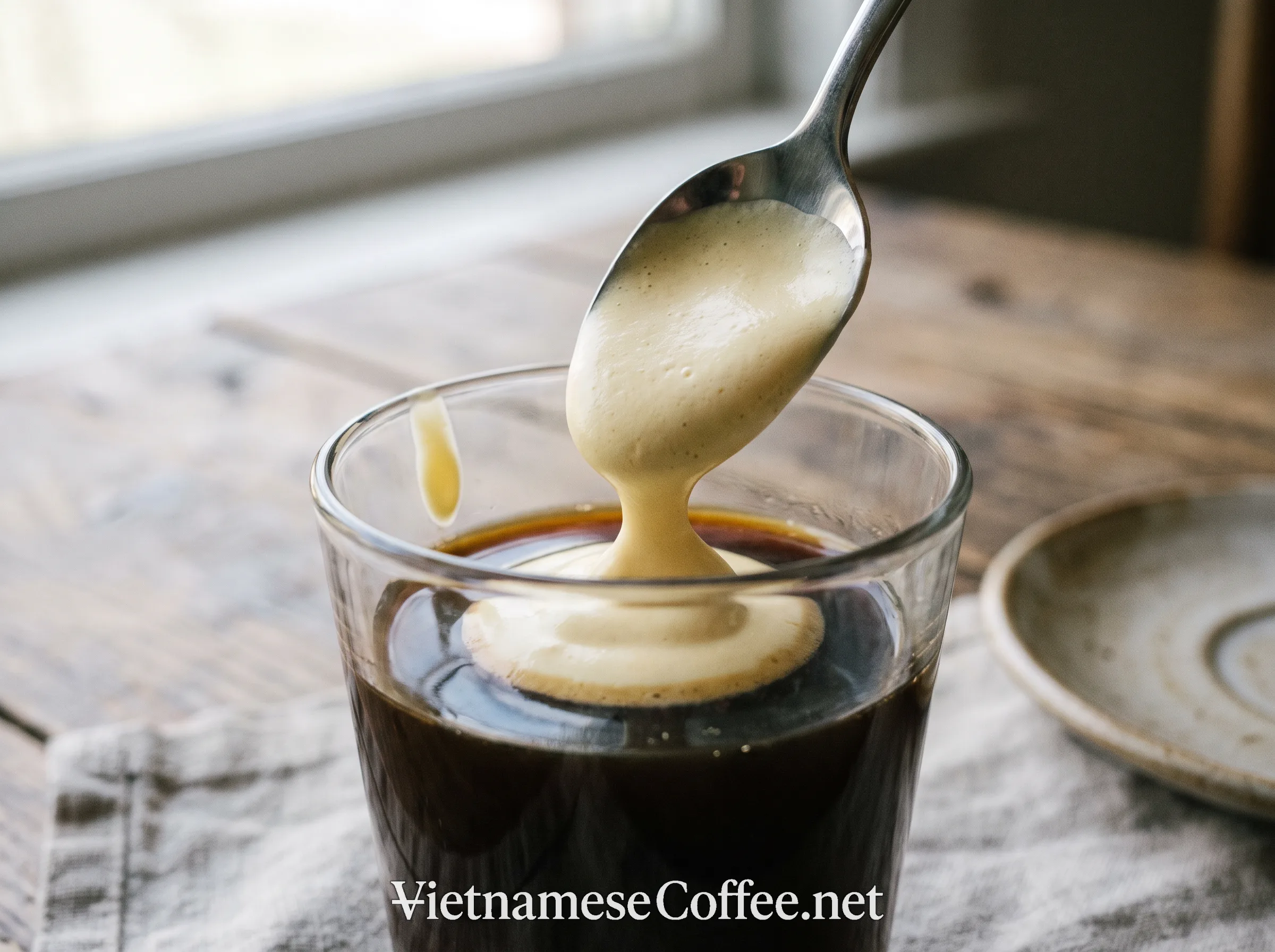
Spoon the whipped egg cream on top of the brewed coffee in the glass. Add it gently rather than pouring, so it sits as a distinct layer on the surface instead of mixing straight into the coffee.
Step 9: Keep it warm
Place the filled glass in a bowl of hot water for a few minutes. This helps keep the drink warm while serving, without needing to reheat the glass directly. Atlas Obscura describes this warm water bath as part of the serving method.
Step 10: Serve
Serve immediately with a small spoon. Traditionally, the cream and coffee are stirred together gently just before drinking, blending the sweet, custard-like topping into the strong coffee beneath it.
A note on egg safety
This traditional method whips raw egg yolks rather than cooking them, which carries a small risk of foodborne illness. The U.S. Food and Drug Administration advises that people at higher risk of foodborne illness, including those who are pregnant, young children, older adults, and anyone who is immunocompromised, should use pasteurized eggs or pasteurized egg products in any recipe calling for raw or undercooked eggs.
For readers who want a cooked alternative rather than switching to pasteurized eggs, Vietnamese Cookbook and Hummingbird High both describe gently heating the egg yolk, condensed milk, and any sugar over a double boiler, whisking constantly, until the mixture reaches about 71°C, or 160°F. Remove it from heat, cool slightly, and whip as usual. This should be treated as a cooked alternative rather than as a guarantee equivalent to commercial egg pasteurization.
Serving and variations
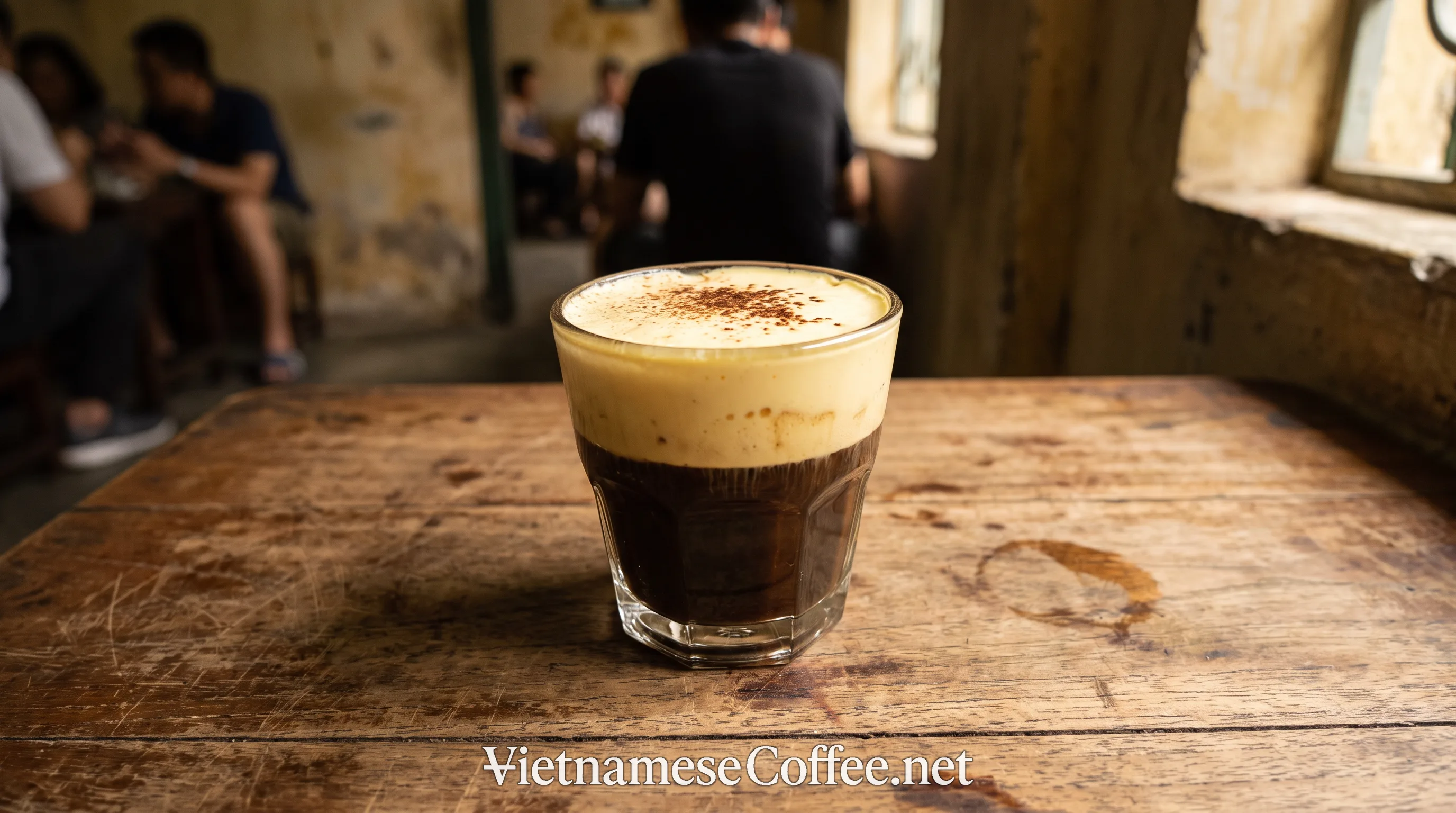
Traditional cà phê trứng is served warm, in a small glass, and eaten slowly with a spoon rather than sipped quickly like a standard coffee. Some versions include a light dusting of cocoa powder or cinnamon on top of the egg cream for aroma and visual contrast.
This drink is closely related to, but distinct from, standard Vietnamese iced coffee. Both typically start with strong, phin-brewed Robusta and sweetened condensed milk, but egg coffee replaces the milk-and-ice format with a warm, whipped egg custard topping, giving it a dessert-like richness that iced coffee does not have.
For the iced version, see the Vietnamese Iced Coffee (Cà Phê Sữa Đá) Recipe.