
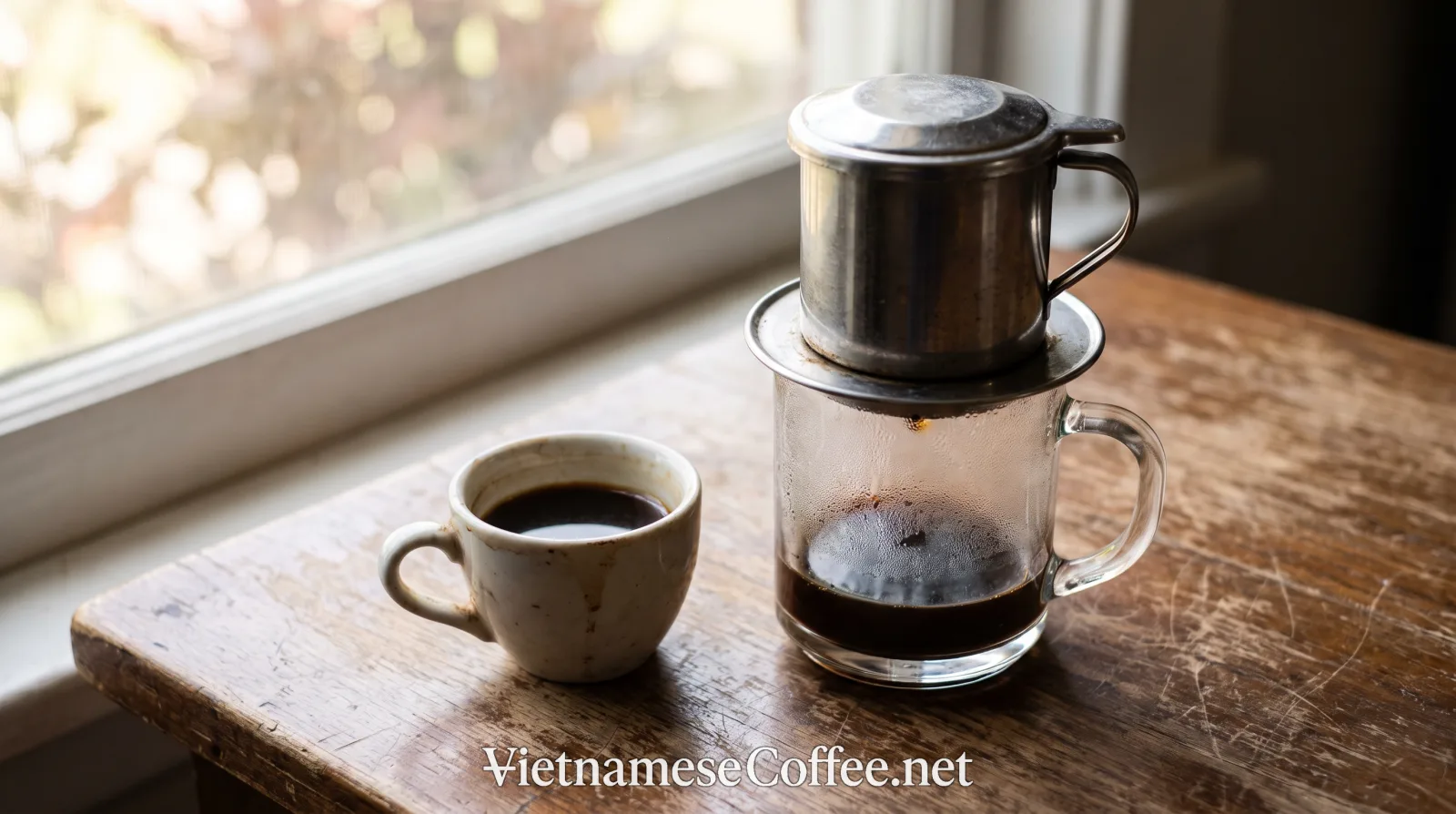
Quick comparison
| Feature | Vietnamese coffee | Brazilian coffee |
|---|---|---|
| Dominant species | Predominantly robusta | Predominantly arabica, with a substantial and growing conilon/robusta share (~63% arabica per finalized 2025 CONAB data) |
| Common processing | Natural (dry), traditional and widely used | Natural and pulped natural (honey) both common |
| Traditional filtering | Phin (metal gravity filter) | Cloth coador is a common traditional method, alongside other brewing methods |
| Typical flavor | Bold, heavy body, dark-roast intensity | Chocolate, nut, caramel-like notes; low-to-medium acidity |
| Sweetening | Condensed milk added after brewing | Sugar commonly added during preparation, with some variation in exactly how |
| Social role | Everyday drink, home and cafe | Cafezinho as a widely recognized hospitality gesture |
| Serving size | Small glass or cup, hot or iced | Small demitasse cup |
Species and processing
Vietnamese coffee is overwhelmingly built on robusta, and Roast.cafe describes traditional natural (dry) processing, alongside dark roasting, as central to the country's characteristically heavy, bold cup. Brazil, by contrast, is predominantly an arabica producer, though the exact split shifts meaningfully year to year rather than sitting at one fixed number. CONAB's finalized December 2025 crop survey put Brazil's 2025 harvest at 35.76 million bags of arabica against 20.77 million bags of conilon (a robusta variety), roughly a 63/37 split, with conilon production up a record 42% that year while arabica fell due to its normal biennial bearing cycle and weather.
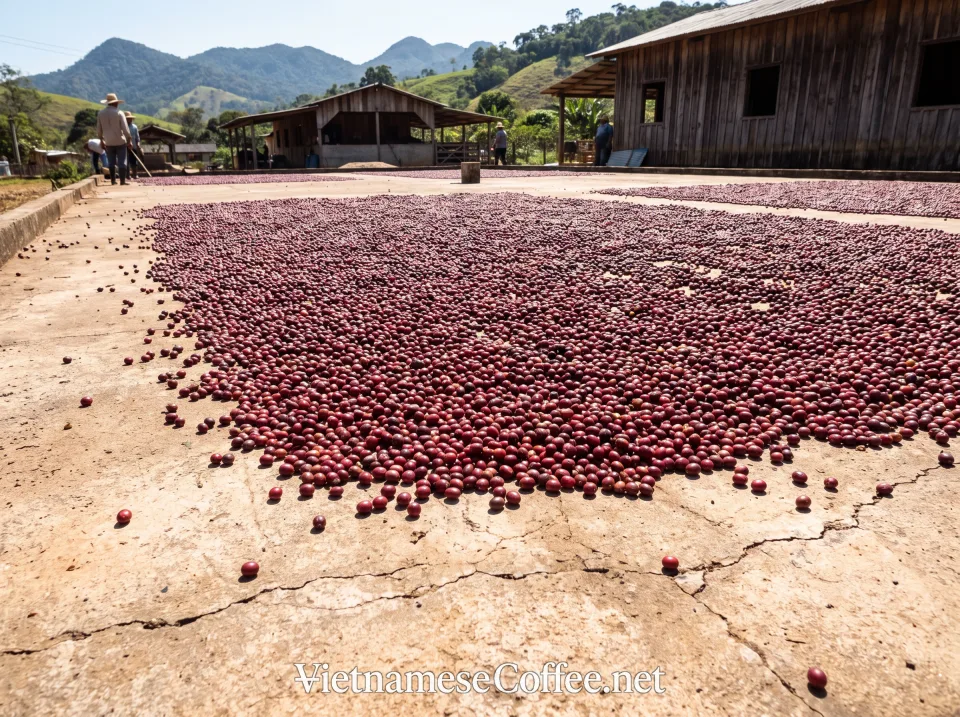
Both countries lean heavily on natural processing, but for different reasons and with different outcomes. Beanlytics and Baristalog both describe Brazil's flat terrain and reliably dry harvest climate as especially well suited to drying whole cherries in the sun at scale, extending fruit-to-bean contact to build sweetness and body. Brazil also commonly uses pulped natural processing (removing the skin but leaving some mucilage on during drying, called honey process in some other countries), alongside straight natural processing.
How each is brewed
Vietnamese coffee's everyday brewing method is the phin, a small metal filter that sits directly on the cup. CoffeeHQ describes hot water (90-96 degrees C) poured over ground robusta and left to drip by gravity alone for roughly 5 to 8 minutes, producing a concentrated, high-body cup.
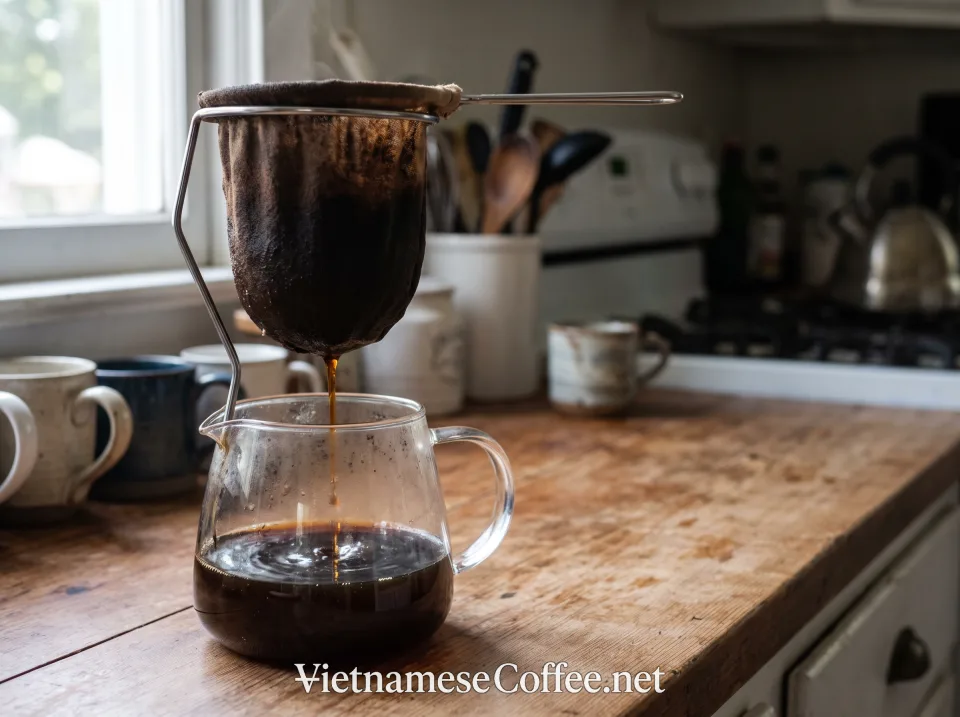
Brazilian coffee doesn't have one single defining brewing method in the same clear-cut way. A cloth filter called a coador, a reusable cotton or flannel sock mounted on a wire or wooden ring, is a well-documented traditional method: Texas de Brazil and Blurred Culture both describe hot water poured over finely ground coffee, passing through the cloth at its own pace and letting through more oils than a paper filter would, producing a fuller-bodied cup. But Blurred Culture also notes electric drip machines are widely used in Brazilian homes and offices today alongside the coador, so the cloth filter is best understood as one common, traditional preparation rather than the sole or required method. Sources also describe cafezinho's sweetening step differently: CoffeeHQ describes sugar dissolved into boiling water before the coffee is stirred in, while Coffee 61l.pages.dev describes sugar mixed directly into the dry grounds inside the coador before water is poured through. Both approaches produce a small, strong, pre-sweetened cup, but the exact sequence isn't fixed across sources.
Flavor and social role
The two cups taste quite different, largely as a result of species and processing choices working together. CoffeeHQ describes Vietnamese phin coffee as high in body with high perceived strength, its flavor leaning heavily on the coffee itself (typically dark-roast robusta) rather than the brewing mechanism, and it's traditionally paired with sweetened condensed milk, which balances the coffee's intensity with sweetness and creaminess. Baristalog and Beanlytics both describe Brazilian arabica's typical flavor as chocolate, hazelnut, brown sugar, and dried fruit, with low-to-medium acidity and a usually full, creamy body, especially in naturally processed lots, a smoother, less bitter profile than a dark-roast robusta cup, though this page doesn't attribute that character to a specific caramelization mechanism during drying, since that explanation isn't well supported.
The social role each drink plays also differs meaningfully. Vietnamese coffee is an everyday drink enjoyed at home or in a cafe, often unhurried. Brazilian cafezinho carries a well-documented cultural function: the Sao Paulo city government itself describes cafezinho as historically served to visitors specifically to add warmth to a conversation, consolidating it as a hallmark of Brazilian hospitality, and multiple sources describe cafezinho appearing constantly throughout daily life, in homes, bakeries, offices, and reception desks, functioning as much as a social gesture as a beverage in its own right.