
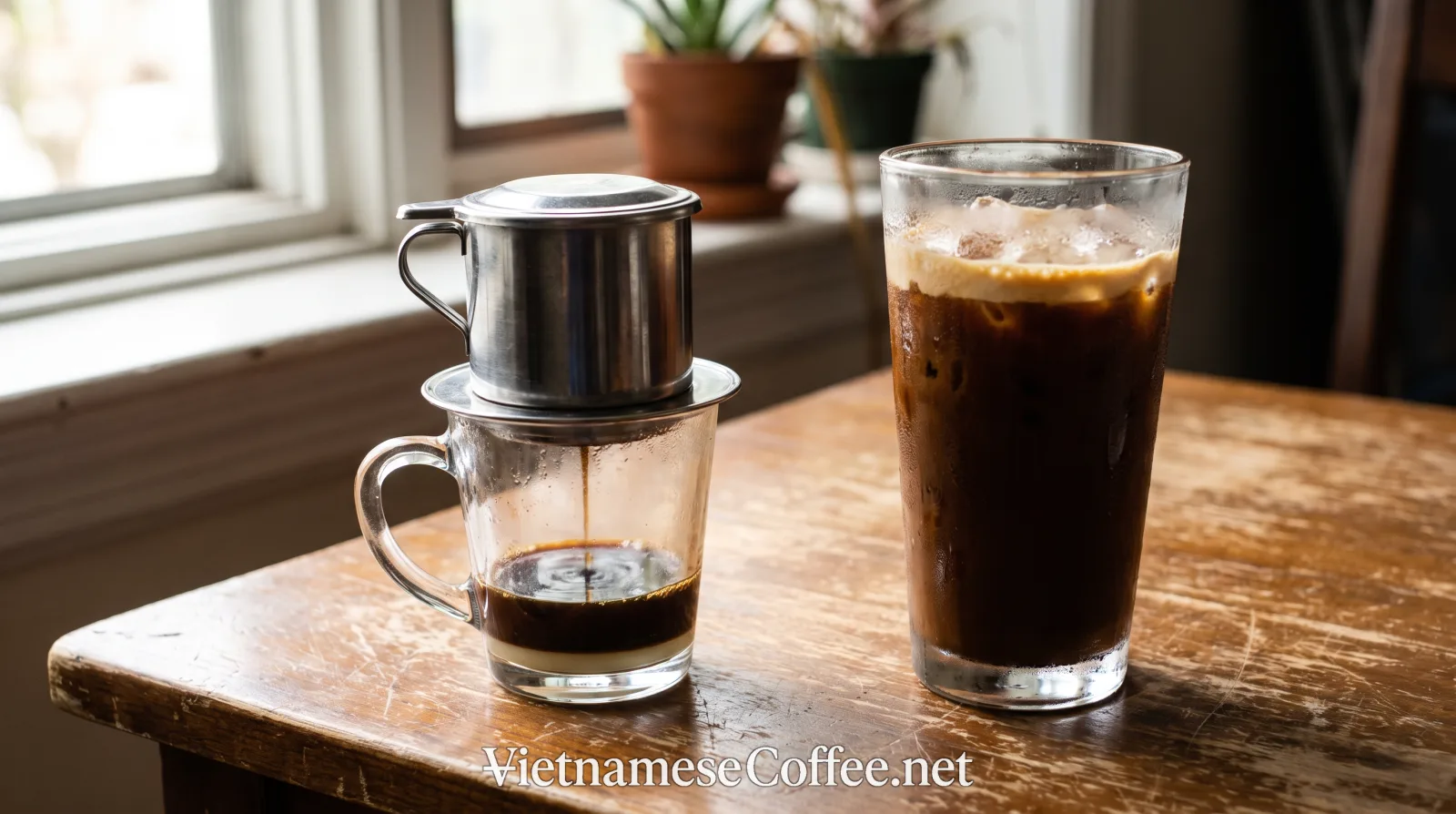
Quick comparison
| Feature | Vietnamese coffee | Thai oliang (traditional) |
|---|---|---|
| Base ingredient | Commonly/predominantly robusta | Robusta blended with roasted corn, soybean/sesame, sometimes cardamom |
| Traditional filter | Phin (metal gravity filter) | Tungdtom (cloth sock filter) |
| Milk | Condensed milk is a traditional, defining addition | None in oliang itself; milk versions are separately named drinks |
| Sweetener | Condensed milk | Sugar, dissolved into the brew |
| Brewing approach | Hot water poured over, gravity drip | Varies by source: immersion, pour-through, or a repeated double-pour |
| Typical flavor | Bold, heavy, dark-roast robusta intensity | Smoky, nutty, aromatic; sweetness from sugar and the grain blend |
| Milk variants | Cà phê sữa đá (iced, condensed milk) | Kopi, oliang yok lor, kafae yen (condensed and/or fresh milk added) |
Oliang is traditionally black, not a milk drink
This is worth stating clearly, since it's a common point of confusion for anyone encountering "Thai iced coffee" internationally. Thai-language.com's own dictionary entry defines oliang directly as "black iced coffee (very sweet, no milk)." CoffeeHQ is equally direct: oliang is not coffee with things added to the cup, it's a blend of robusta and roasted grains brewed together, sweetened with sugar, and poured over ice black, and adding condensed or evaporated milk creates a different, separately named drink rather than being part of oliang itself. Wikipedia lays out the specific naming: black coffee with ice is oliang; add condensed milk and it becomes kopi; add ice and fresh milk instead, and it's oliang yok lor; add both condensed and fresh milk, and you get kafae yen, the sweeter, creamier drink many international visitors actually picture when they hear "Thai iced coffee."
Vietnamese coffee's relationship with condensed milk is different and much more central to its identity: cà phê sữa đá, iced coffee with condensed milk, is one of Vietnam's most iconic and widely recognized traditional drinks, not a separately named variant layered on top of a black-coffee default. So while both countries have popular condensed-milk iced coffee traditions worth comparing directly, Thailand's sits alongside oliang as a distinct, differently named drink, while Vietnam's condensed-milk coffee is central to the country's everyday coffee identity.
Beans, blends, and flavor
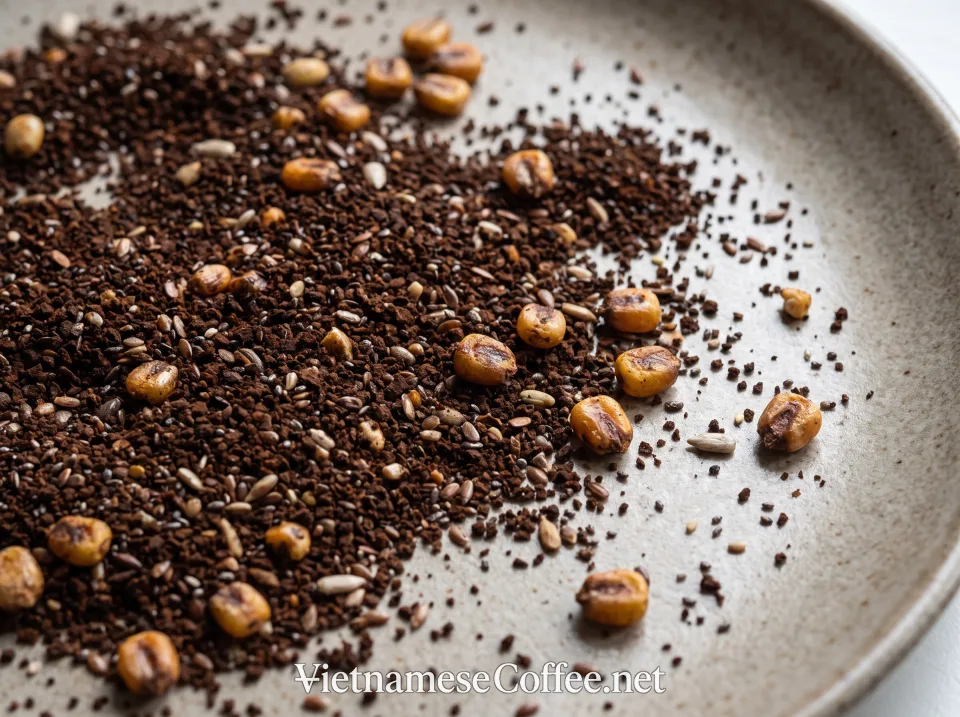
Vietnamese coffee is commonly built on robusta, and Roast.cafe describes traditional natural (dry) processing and dark roasting as central to its heavy, bold character in traditional preparations. Traditional oliang works differently from the start: Coffee Studies describes it as a genuine blend, dark-roasted robusta combined with roasted corn for sweetness and body, roasted soybeans or sesame seeds for depth and thickness, and often cardamom as the blend's defining aromatic note, all roasted and ground together rather than added afterward. DripRoast and Feel Chiang Mai both cite a specific example ratio, roughly 50% coffee, 25% corn, 20% soybean, and 5% sesame, associated with Pantainorasingh, a widely available commercial brand, though actual ratios vary by producer.
This blend composition is part of why oliang tastes noticeably different from a straight robusta cup: sources describe it as smoky, nutty, and aromatic, with sweetness and body contributed by both the grain blend and added sugar rather than relying on milk at all in its traditional form. It's also worth knowing that oliang isn't the only Thai coffee tradition; Dabov notes Thailand also grows specialty arabica in northern highland regions like Doi Chaang, a very different, straight-coffee tradition existing alongside the traditional grain-blended, street-vendor style.
How each is brewed
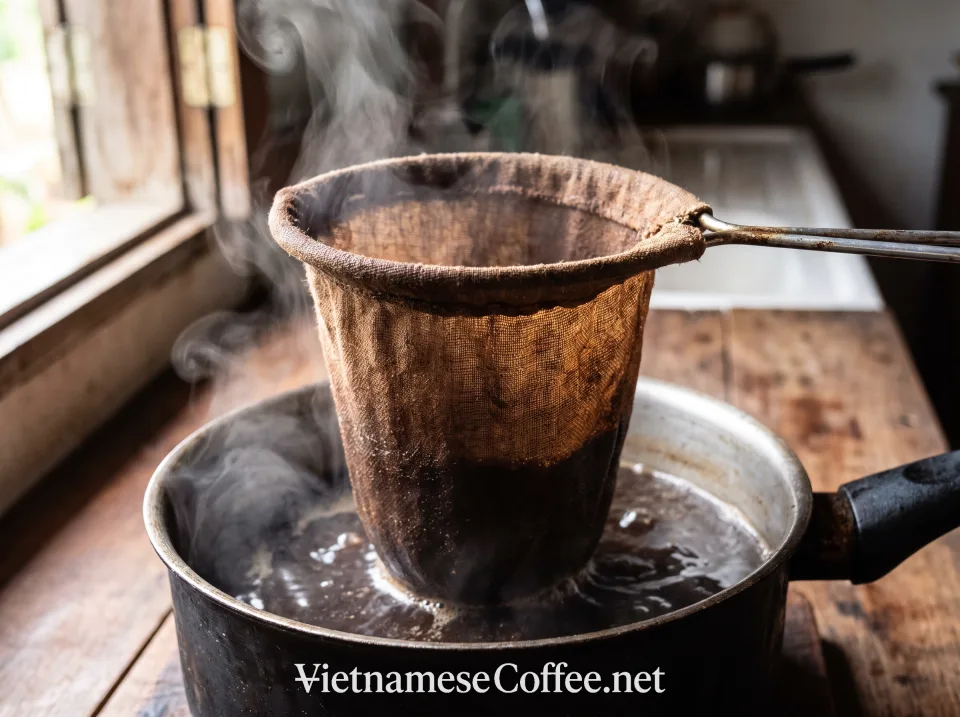
Vietnamese coffee's brewing method is fairly consistent across sources: hot water (90-96 degrees C) poured over grounds in a phin, dripping by gravity alone for roughly 5 to 8 minutes, per CoffeeHQ. Oliang's traditional tungdtom method, by contrast, is described somewhat differently across the sources reviewed for this page, genuine variation in technique rather than one settled method. Coffee Studies describes full immersion, submerging the cloth sock in hot water to steep before lifting and draining it. Coffeeness instead describes a pour-through method with a distinctive extra step: after the first pour-through, the already-brewed coffee is poured back through the same sock filter two to three more times, meant to build a richer body with each pass. DripRoast describes straightforward immersion steeping for about 10 minutes before straining, while Feel Chiang Mai describes pouring hot water through the sock and letting it sit in place for several minutes before pressing.
Because these are genuinely different brewing techniques rather than the same method simply measured for different lengths of time, steep durations aren't directly comparable across them, and this page doesn't generalize a single "longer steep equals bolder result" rule from these varied recipes. Whichever specific tungdtom method is used, the resulting coffee is sweetened with sugar and poured over ice for traditional black oliang, or mixed with condensed and/or fresh milk if one of the named milk variants is what's being made instead.