
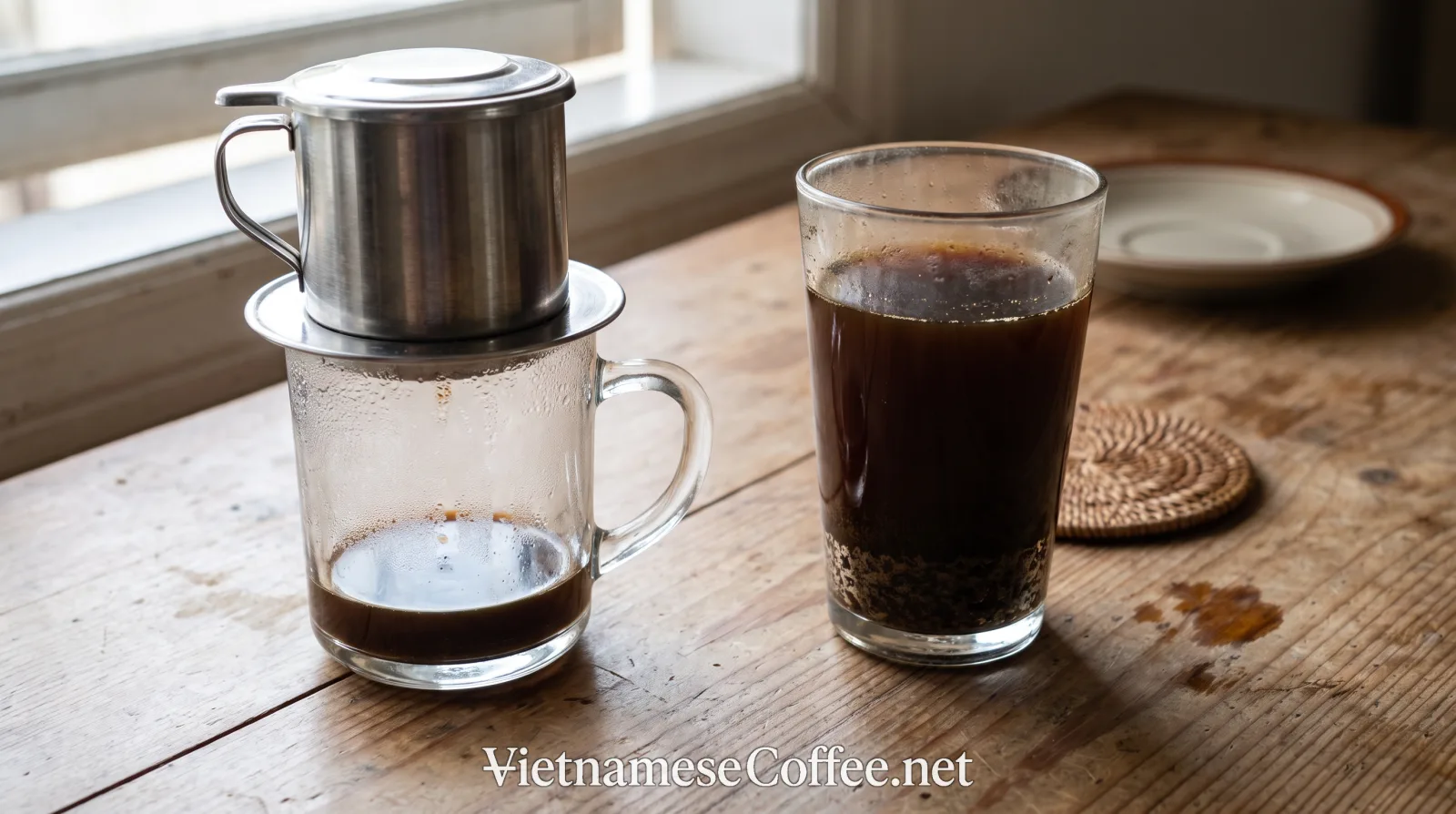
Quick comparison
| Feature | Vietnamese coffee | Indonesian coffee |
|---|---|---|
| National production | Predominantly robusta | Predominantly robusta by volume (~80-90% per USDA), concentrated in southern Sumatra |
| Distinctive processing | Natural (dry), traditional and widely used | Wet-hulling (giling basah), strongly associated with Sumatra and some other regions; not used nationwide |
| Wet-hulled coffee's species | N/A | Includes well-known arabicas (Mandheling, Lintong) as well as some robusta lots |
| Traditional brewer | Phin (metal gravity filter) | No filter; kopi tubruk brewed directly in the glass or pot |
| Typical flavor (wet-hulled) | N/A | Earthy, herbal, spice, low acidity, heavy syrupy body, with meaningful lot-to-lot variation |
| Common addition | Sweetened condensed milk | Sugar, sometimes condensed milk |
| Filtration | Metal mesh filter | None; grounds settle to the bottom and are left behind |
Species and national production
Both countries are predominantly robusta-growing by national production volume. Vietnamese coffee is overwhelmingly robusta, associated with the country's Central Highlands and traditional dark-roast, natural-processed style. Indonesia's national output is similarly robusta-heavy: USDA's current forecasts put robusta at roughly 80 to 90% of total Indonesian production, concentrated especially in southern Sumatra.
It's worth being precise about what this statistic does and doesn't tell you, though. Indonesia also has important arabica-producing regions, and some of its most internationally recognized coffees, including the wet-hulled Mandheling and Lintong coffees from northern Sumatra discussed below, are arabica rather than robusta. National production-share statistics describe overall volume, not the specific coffees a buyer or drinker is likely to encounter when they seek out "Sumatra" or other well-known Indonesian regional names, so this page doesn't use Indonesia's robusta-majority production volume to explain the flavor profile associated with its distinctive processing method.
Processing: wet-hulling and its role
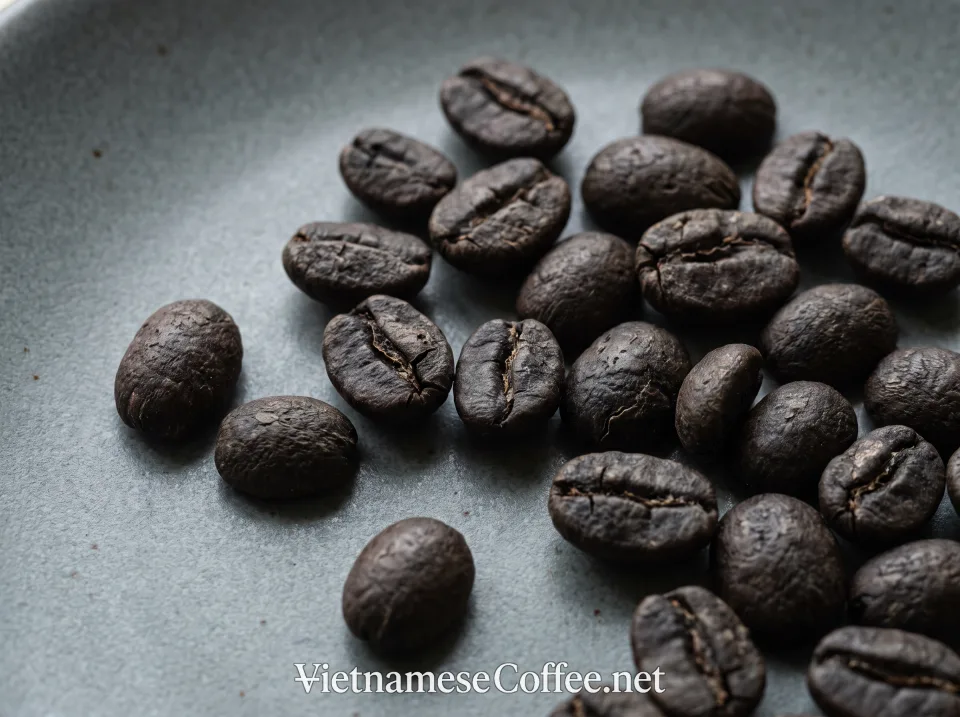
Roast.cafe describes natural (dry) processing, whole cherries dried intact in the sun, as long-standing and widely used for Vietnamese robusta specifically, a method used across many coffee-growing countries worldwide. Indonesia's most distinctive processing method, giling basah or wet-hulling, is different in an important way: it's strongly associated with specific Indonesian regions, particularly Sumatra and parts of Sulawesi and Flores, rather than being practiced uniformly across the country or characterizing Indonesian coffee as a whole.
World Coffee Index and Green Coffee Collective both describe the key mechanical difference: instead of drying beans down to the conventional 10-12% moisture before removing the parchment layer, Indonesian mills using this method hull the parchment off while the bean is still very wet, at roughly 30-40% moisture, then dry the exposed bean a second time to reach export-ready levels. Green Coffee Collective specifically notes that this method spans both major species in practice, northern Sumatra's well-known Mandheling and Lintong coffees are wet-hulled arabica, while much of southern Sumatra's robusta uses more conventional processing instead.
Wet-hulling is strongly associated with a distinctive cup profile, earthy, herbal, spiced, low in acidity, and heavy-bodied, but Coffee Review's own reporting is a useful check against treating this as a fixed, guaranteed outcome: it describes wet-hulled Sumatran lots spanning a wide quality range, from musty or mildewy in poorly executed cases to complex, humus-like, and sweetly tobacco-toned in the best examples. Variety, growing conditions, fermentation, drying execution, storage, and roast all contribute alongside the wet-hulling step itself, so this page treats wet-hulling as a strong contributing factor to Indonesian coffee's distinctive character, not a single-step explanation for it.
How each is brewed
Vietnamese coffee's everyday brewing method is the phin, a small metal filter using gravity alone. CoffeeHQ describes hot water (90-96 degrees C) poured over ground robusta and left to drip for roughly 5 to 8 minutes, with the metal mesh straining out the grounds as the coffee passes through.
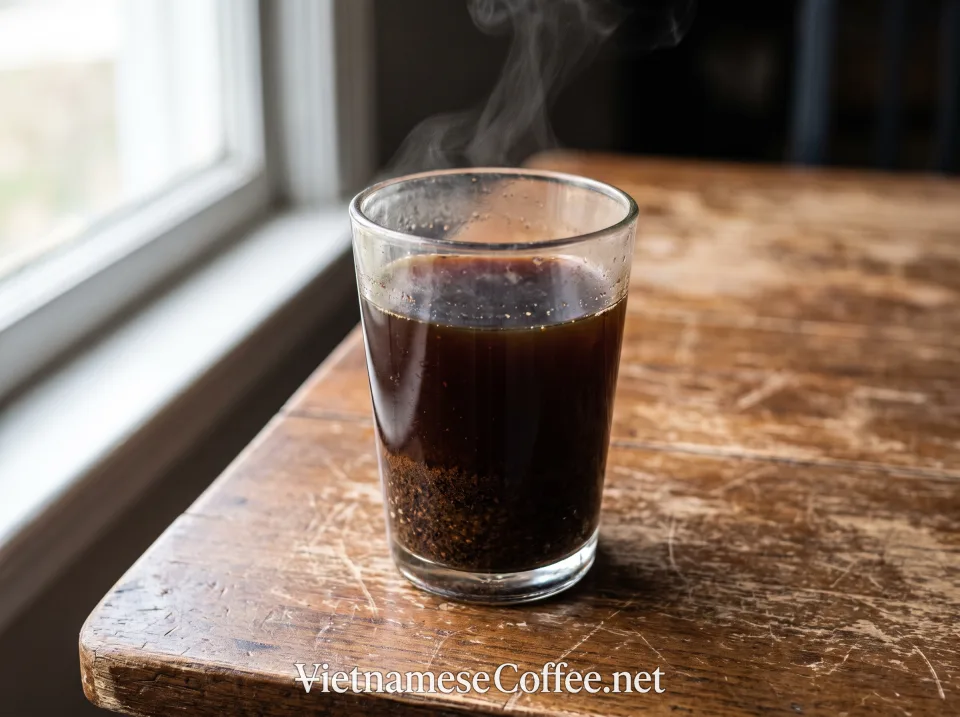
Indonesia's everyday brewing method, kopi tubruk, skips filtration entirely. CoffeeHQ describes fine grounds and sugar placed directly in a glass, boiling water poured straight on top, stirred once, then left for a few minutes until the grounds settle to the bottom, with the drinker sipping from the top and leaving the sediment layer behind. My Home Barista gives a more specific version of this same approach, water at 90-95 degrees C rather than actively boiling, poured once over 10 g of grounds, settling for 3 to 5 minutes, and explicitly states the drink is never boiled with the water on the heat. A different account, from The Drink Journal, describes combining grounds, sugar, and water directly in a pot and gently heating them together until the coffee rises in a bubbling swell before removing from heat, a genuinely different, stovetop-based method rather than pouring hot water over grounds already in the cup. Given this real variation across sources, kopi tubruk is best understood as a family of similar unfiltered preparations rather than one single fixed recipe, unified by the shared principle of no filter at all and grounds settling to the bottom before drinking.