
Quick comparison
| Feature | Vietnamese coffee | Italian coffee (espresso) |
|---|---|---|
| Brewing force | Gravity only | High pressure (9 bar ± 1, per INEI) |
| Typical bean | Robusta | Arabica/robusta blend (robusta share varies widely by source, roughly 10-50%) |
| Dose and yield | ~150-200 g coffee per liter of water | 7 g ± 0.5g dose, 25 ml ± 2.5ml yield (INEI certified standard) |
| Brew time | 5-8 minutes | 25 seconds ± 5 (INEI) |
| Traditional serving | Seated or standing, sipped slowly, often with condensed milk | Standing at the counter, drunk in a few sips |
| Typical pace | Leisurely, unhurried | Fast; often under 3 minutes start to finish |
| Common addition | Sweetened condensed milk | Traditionally black; milk drinks avoided after ~11 a.m. or meals |
How each is brewed

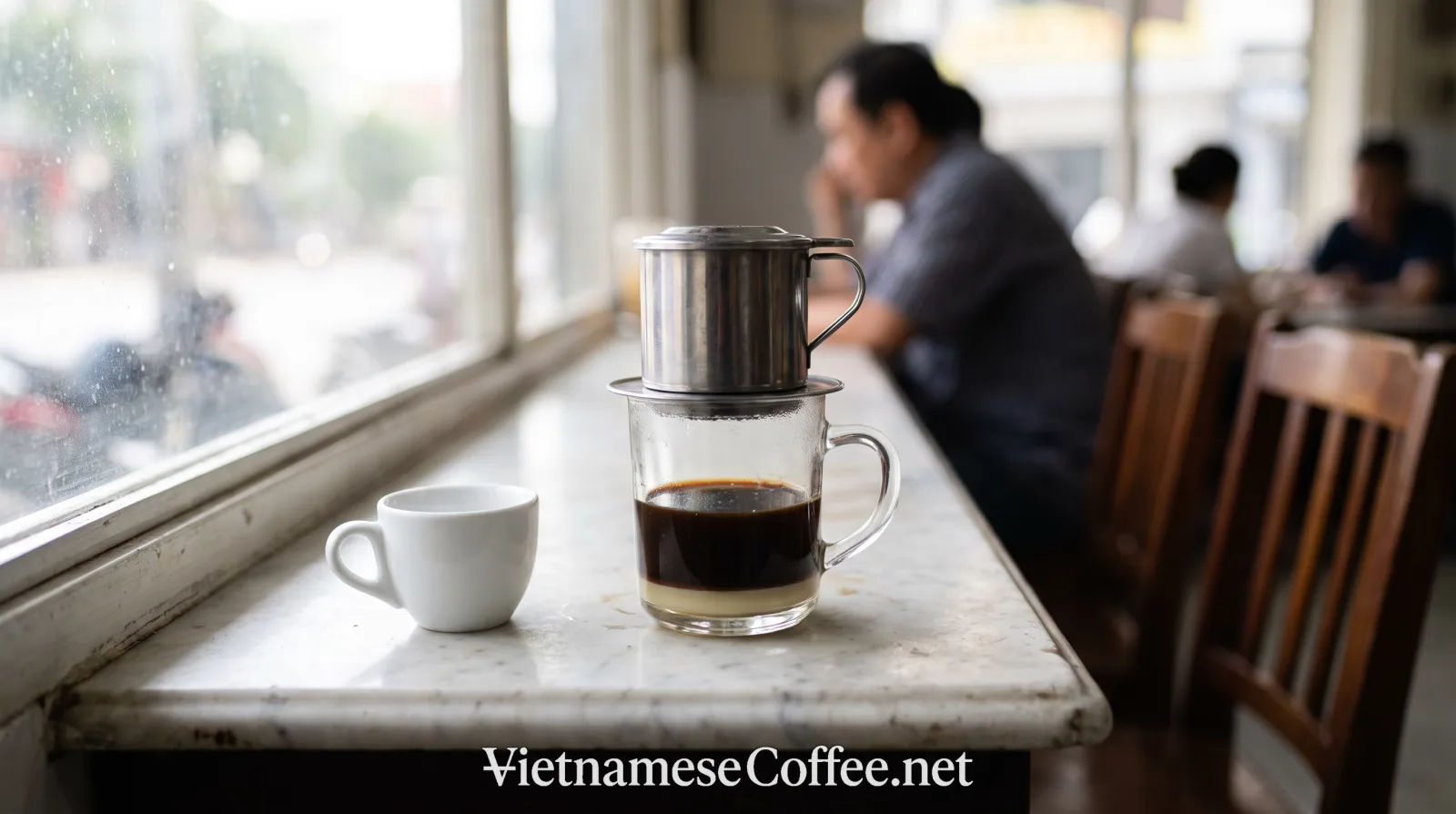
Vietnamese coffee's traditional method is the phin, a small metal filter using gravity alone. CoffeeHQ describes hot water (90-96°C) poured over ground robusta and left to drip, unassisted, for roughly 5 to 8 minutes, producing a concentrated, high-body cup. No mechanical pressure is involved at any stage. Press-disc tightness is one variable affecting drip speed, but it's not the only one: grind size, dose, coffee-to-water ratio, water temperature, and how the water is poured over the grounds all shape how a given phin brews as well.
Italian espresso works by the opposite principle: forcing hot water through finely ground coffee under significant pressure in a matter of seconds. The Istituto Nazionale Espresso Italiano (INEI), the body that has certified the standard since 1998, defines it precisely: 7 g ± 0.5 g of ground coffee, water exiting the machine's group head at 88°C ± 2°C, entry pressure of 9 bar ± 1, a percolation time of 25 seconds ± 5, and a final volume in the cup, including crema, of 25 ml ± 2.5 ml. Lavazza's own practical home recipe uses a larger dose than the single-shot certification standard, an 18 g dose yielding 36 g of espresso (a 1:2 ratio) in 25 to 30 seconds, reflecting the more common double-shot format many home and cafe setups actually use, distinct from INEI's original single-shot certification. Where the phin's five-to-eight-minute drip is entirely passive, espresso extraction is fast, mechanically pressurized, and measured in seconds rather than minutes.
Beans and blends
Vietnamese coffee is built predominantly around robusta, and Roast.cafe describes traditional natural (dry) processing, alongside dark roasting, as contributing to the bold, heavy character associated with the country's coffee. This is typically presented and sold as 100% robusta, without the blending common in Italian espresso.
Italian espresso, by contrast, is very often a deliberate arabica-robusta blend rather than pure arabica, specifically because a modest robusta component improves crema stability and body compared with straight arabica, according to Lavazza. Exactly how much robusta a "traditional" Italian blend contains, however, is genuinely disputed across sources: The Coffee Locator cites roughly 10-30% robusta as typical, Pulled Coffee cites a higher 30-40% range and notes southern Italian blends (Naples especially) commonly use more robusta than northern ones (Milan), and Kaffanero cites an even broader 20-50%-plus range. There's no single agreed "correct" Italian espresso blend ratio; it varies by brand, region within Italy, and the specific style of espresso a bar or roaster is aiming for.
How each is consumed
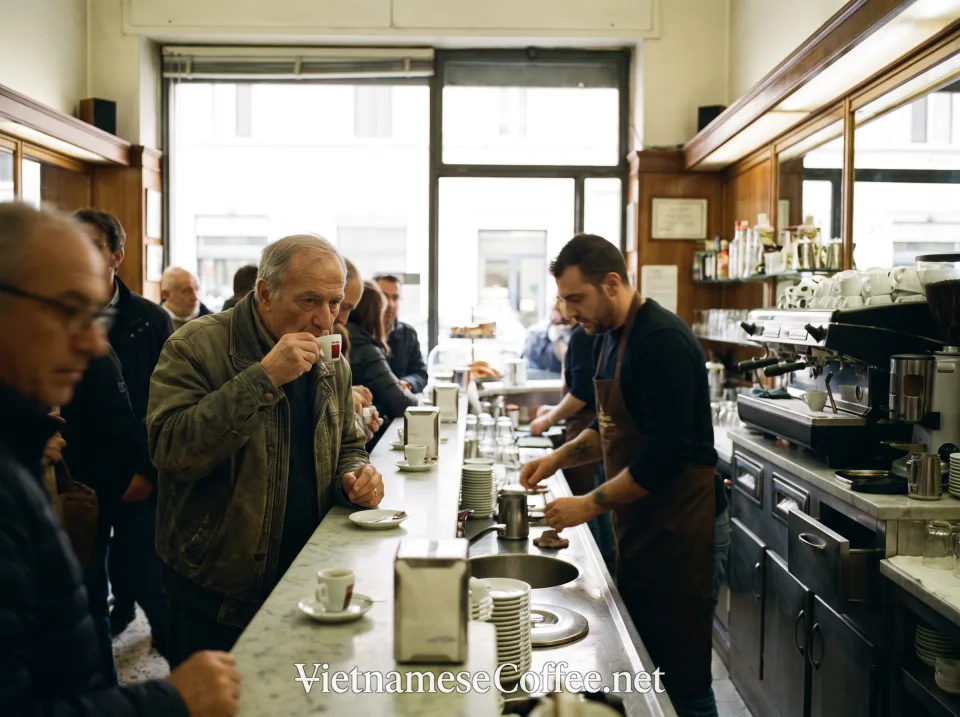
The two traditions diverge sharply in pace and setting. Vietnamese coffee is typically an unhurried drink, sipped slowly over the phin's own drip time or savored afterward once fully brewed, whether hot or poured over ice with condensed milk.
Italian espresso culture, by contrast, is built around speed and a well-documented standing tradition: Gustonote and Lavazza both describe drinking espresso standing at the counter (al banco) as the cultural heart of the Italian bar experience, typically finished within about three minutes, with sitting at a table (al tavolo) for table service commonly costing two to three times as much at the same bar. What isn't universal, though, is the exact payment sequence. Multiple sources reviewed for this page are explicit that Italy has two coexisting systems: in busy city bars, train stations, airports, and northern cities like Milan, customers often pay first at a separate register (la cassa), then bring the receipt (scontrino) to the counter to order; in smaller neighborhood bars and much of southern Italy, customers more commonly order and drink first, then pay on their way out. Which system applies depends on the specific bar and region, so it's worth watching what other customers do, or simply asking, rather than assuming one fixed national sequence. There's also a well-documented etiquette rule around timing and drink type: milk-based drinks like cappuccino are culturally reserved for the morning, avoided after roughly 11 a.m. or following a meal, when a plain espresso, a macchiato, or an espresso corretto (with grappa or sambuca) is the standard order instead.