
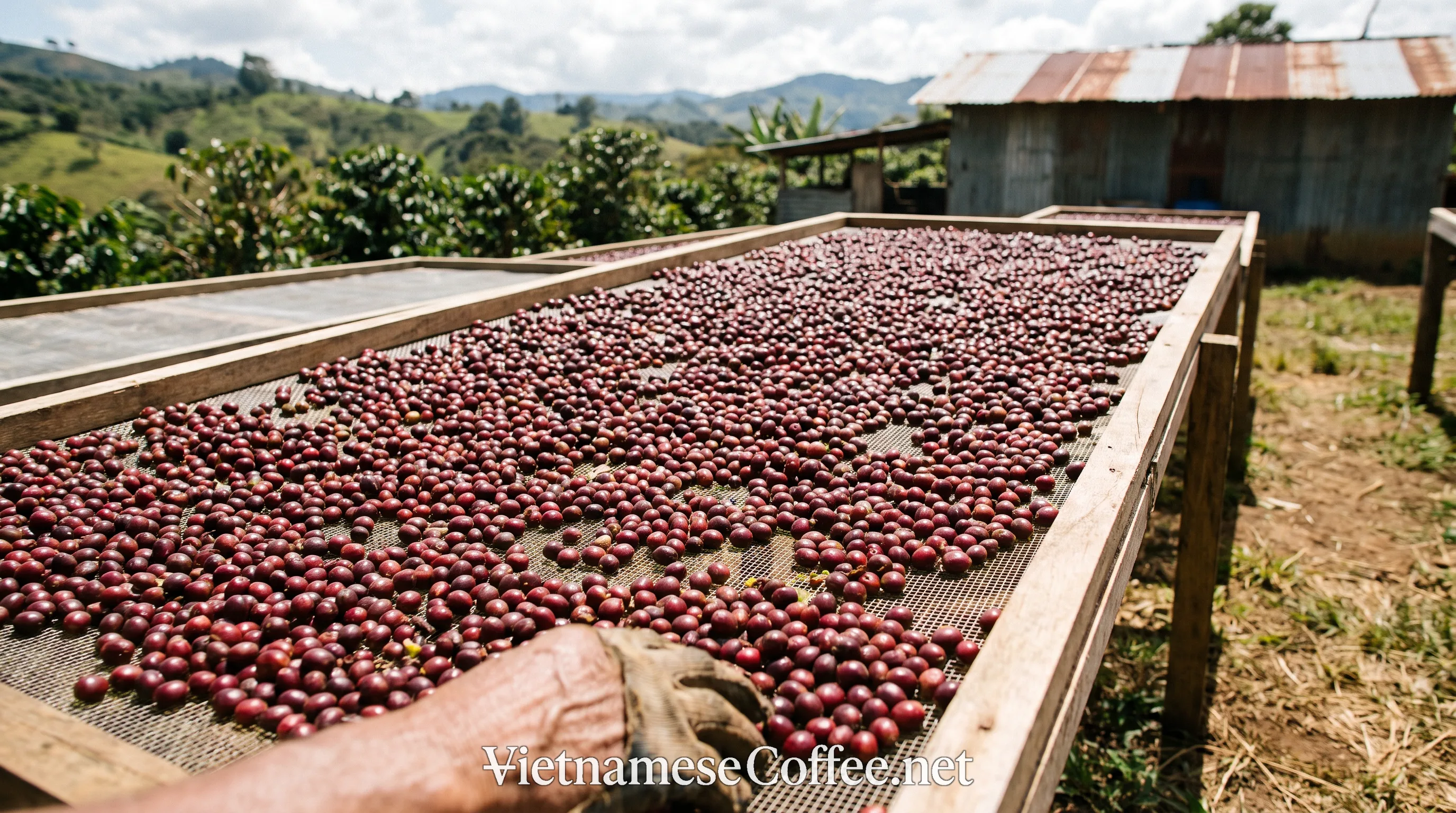
How natural process works
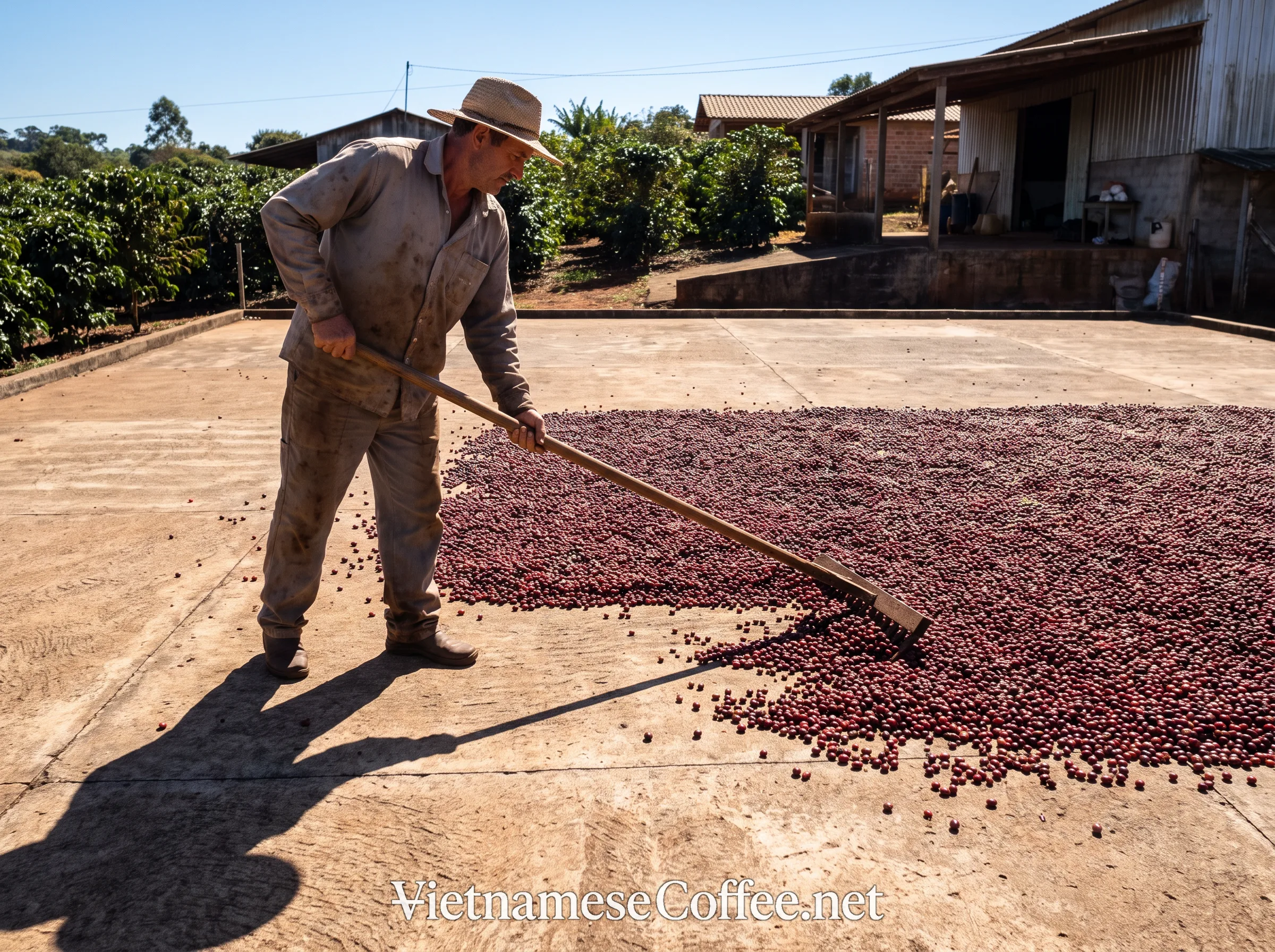
Natural processing skips the pulping and fermentation-tank steps used in washed processing entirely. Coffeester describes the method plainly: cherries are harvested, sorted, and laid out to dry as-is. Barista Magazine describes cherries spread in thin layers, traditionally directly on the ground but now more often on raised beds, bricks, tables, or cement patios, where they are turned regularly throughout the drying period to prevent mold and slow uneven fermentation.
Drying time varies by source and by region. General processing guides reviewed for this page describe a two-to-six-week window, while sources specifically covering Vietnamese Robusta describe a shorter typical period, roughly 10 to 20 days per Alibaba Product Insights, or one to three weeks per Helena Coffee Vietnam. Once the cherries have dried down to a target moisture level, roughly 12 to 13 percent per Roast.cafe, the hardened outer husk, skin, pulp, mucilage, and parchment together, is removed in a single mechanical step called hulling.
Why natural process tastes fruity
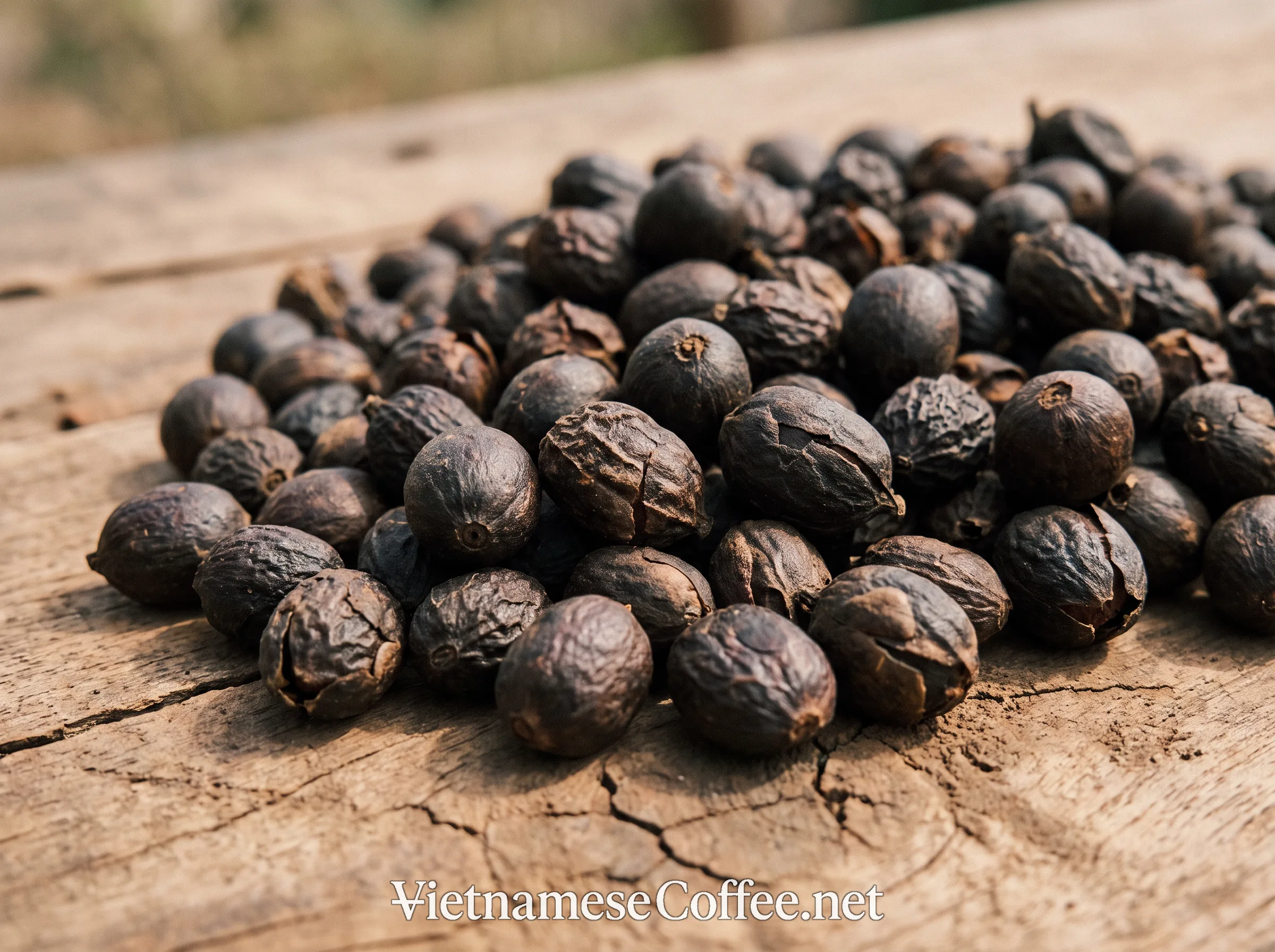
The fruity, wine-like character associated with natural coffees comes from fermentation and chemical changes that happen while the bean stays inside the intact, drying fruit, rather than from a full-scale controlled fermentation tank as in washed processing. CoffeeWiki describes microbial activity occurring within the drying cherry, with yeasts producing aromatic compounds and bacteria contributing acids and esters as moisture leaves the cherry over the drying period.
This is more complex than a simple transfer of sugar from fruit to seed, so this page presents the broad pattern without treating one biochemical pathway as settled fact. The practical result is what is commonly described in cupping notes: strawberry, blueberry, tropical fruit, stone fruit, and sometimes dark chocolate or wine-like complexity, along with a heavier body and lower acidity than a typical washed coffee.
The risks: what can go wrong
Natural processing's biggest advantage, extended contact between bean and fermenting fruit, is also its biggest risk. Expert Café identifies over-fermentation as the primary concern: if drying takes too long or conditions are too humid, fermentation goes past the point of producing pleasant fruit character and instead creates vinegary, barnyard, or composty defects that no amount of careful roasting can fix afterward.
Coffee Fluent adds practical detail on how these problems start: thick drying layers trap heat and moisture inside the cherry pile, infrequent turning lets that heat and moisture build up further, and overripe or damaged cherries left unsorted before drying ferment faster and less predictably than intact, properly ripe fruit. Rain or re-wetting during drying can also restart fermentation in cherries that had already begun to stabilize.
Natural process and Vietnamese Robusta
Natural, or dry, processing is a traditional and widely used method for Vietnamese Robusta. Roast.cafe describes the unwashed method as a long-standing, widely used approach for Vietnamese Robusta, with whole cherries dried on large concrete patios until moisture drops to around 12 to 13 percent. Alibaba Product Insights and Helena Coffee Vietnam both describe this as especially well suited to Vietnam's sunny, dry Central Highlands climate, where consistent sun exposure supports relatively fast, even drying.
The sources available for this page support natural process as traditional and common in Vietnamese Robusta production, but they are not strong enough to confidently state that it remains the dominant or default method across current national production. A cup's heavy body and bold profile reflects more than processing method alone; species, cultivar, growing conditions, roast level, and brewing preparation all shape the final cup as well.