
What actually damages coffee beans
Four factors consistently show up across every source reviewed for this page as the main causes of stale, flat-tasting coffee: oxygen exposure, light, heat, and moisture. Oxygen reacts with the oils in roasted coffee over time, gradually dulling aroma and flavor, which is why keeping air out matters more than almost anything else in day-to-day storage.
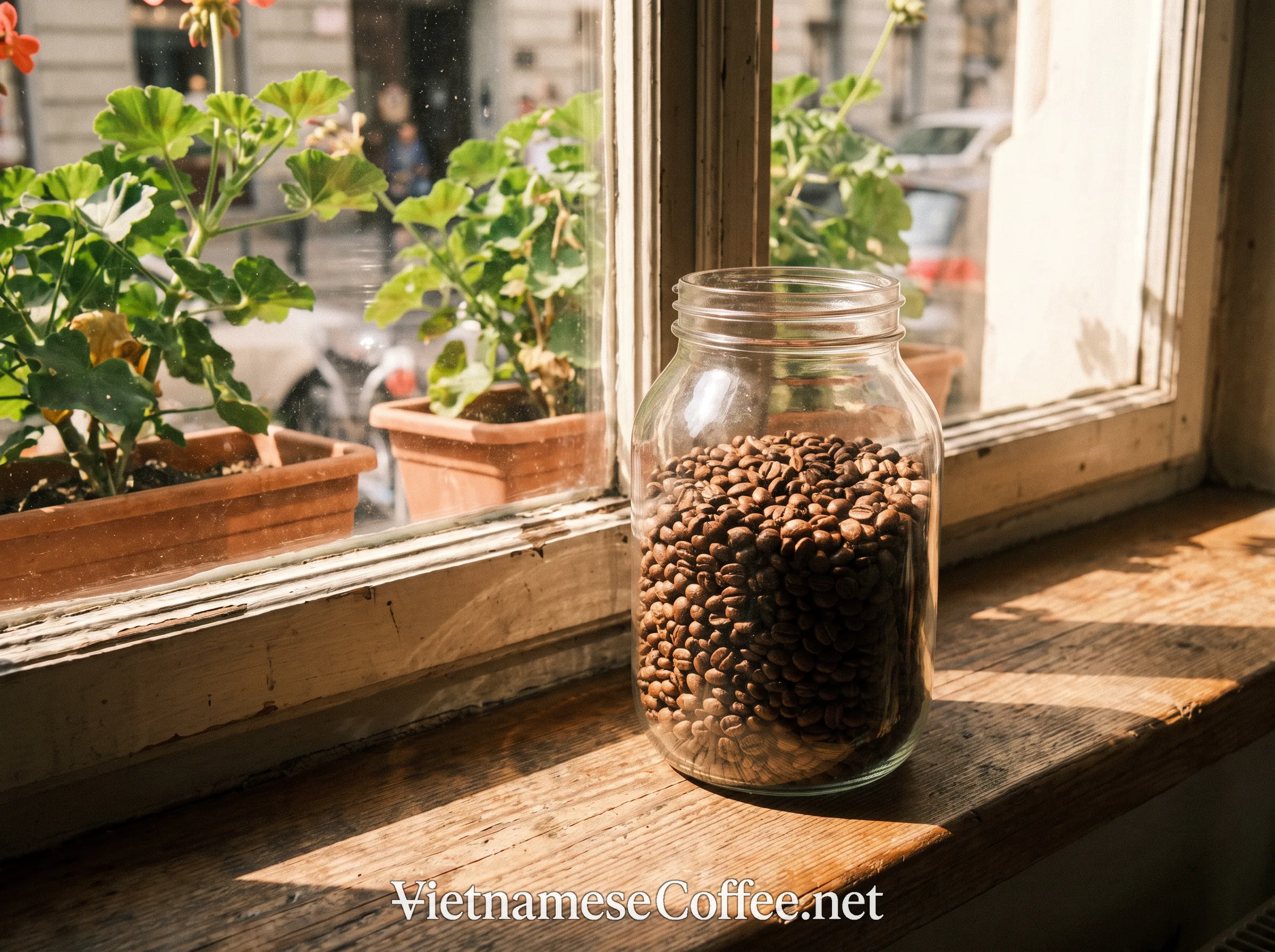
Light, particularly direct sunlight, accelerates this oxidation process further, which is why clear glass jars are a poor choice even when they look good on a shelf. Heat speeds up the same chemical reactions, so beans stored near a stove, kettle, or sun-warmed countertop will stale faster than beans kept in a cool cabinet.
Moisture is the fourth factor, and it is specifically why refrigeration is generally discouraged. Condensation can form on cold beans each time a refrigerated container is opened and returned to a colder environment, and that moisture accelerates staling rather than preventing it.
Everyday storage: original bag or canister?
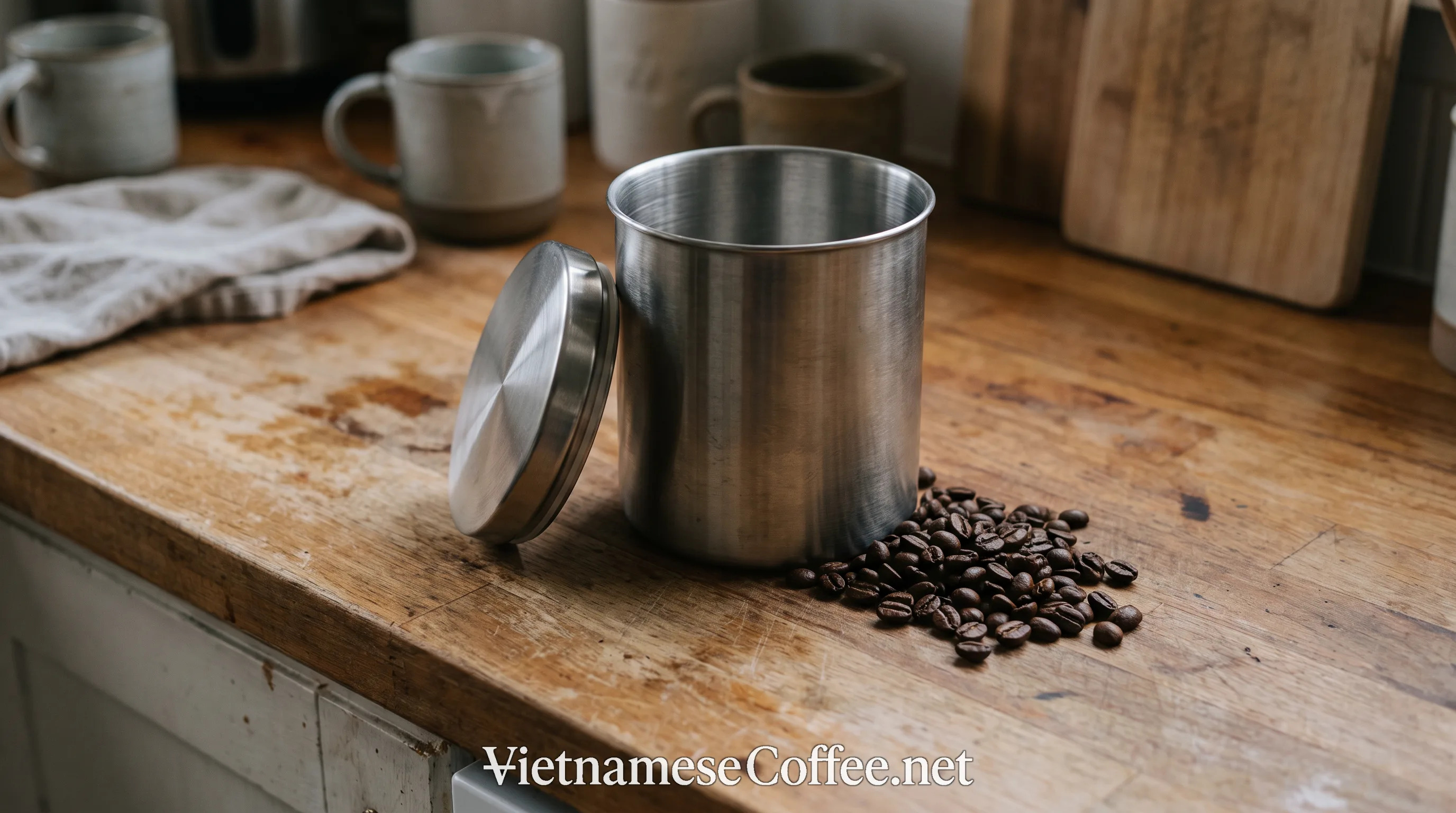
The core recommendation is consistent: keep air, light, heat, and moisture away from the beans, in a cool, dark spot. But whether a separate canister is actually an upgrade over the bag your coffee came in is less clear-cut than it might seem.
A peer-reviewed 2022 study by Smrke and colleagues tested four ways of storing opened whole-bean coffee over nine weeks: transferring beans into an airtight canister, resealing the original bag with tape, resealing it with a clip, and using a bag with a built-in screw cap. The screw-cap package performed best, while the plain canister performed worst in those conditions.
The practical takeaway is not that canisters are a mistake, but that packaging design matters more than the simple decision to decant or not. If your beans came in a bag with a genuinely tight seal, pressing the air out and resealing it can work well. If the original bag is flimsy, torn, or relies on a loose fold, a good opaque, airtight container is likely to do better.
Whole beans versus ground coffee
Every source reviewed for this page agrees on one clear point: whole beans last substantially longer than ground coffee, because grinding dramatically increases the surface area exposed to oxygen. Ground coffee can lose aroma fast, while whole beans can hold meaningful flavor for weeks under good storage conditions.
The practical takeaway is straightforward: buy and store Vietnamese Robusta as whole beans where possible, and grind only the amount you need shortly before brewing. This matters specifically for phin brewing, where a fresher grind can affect how evenly the coffee blooms and drips.
Freezing coffee beans and ground coffee
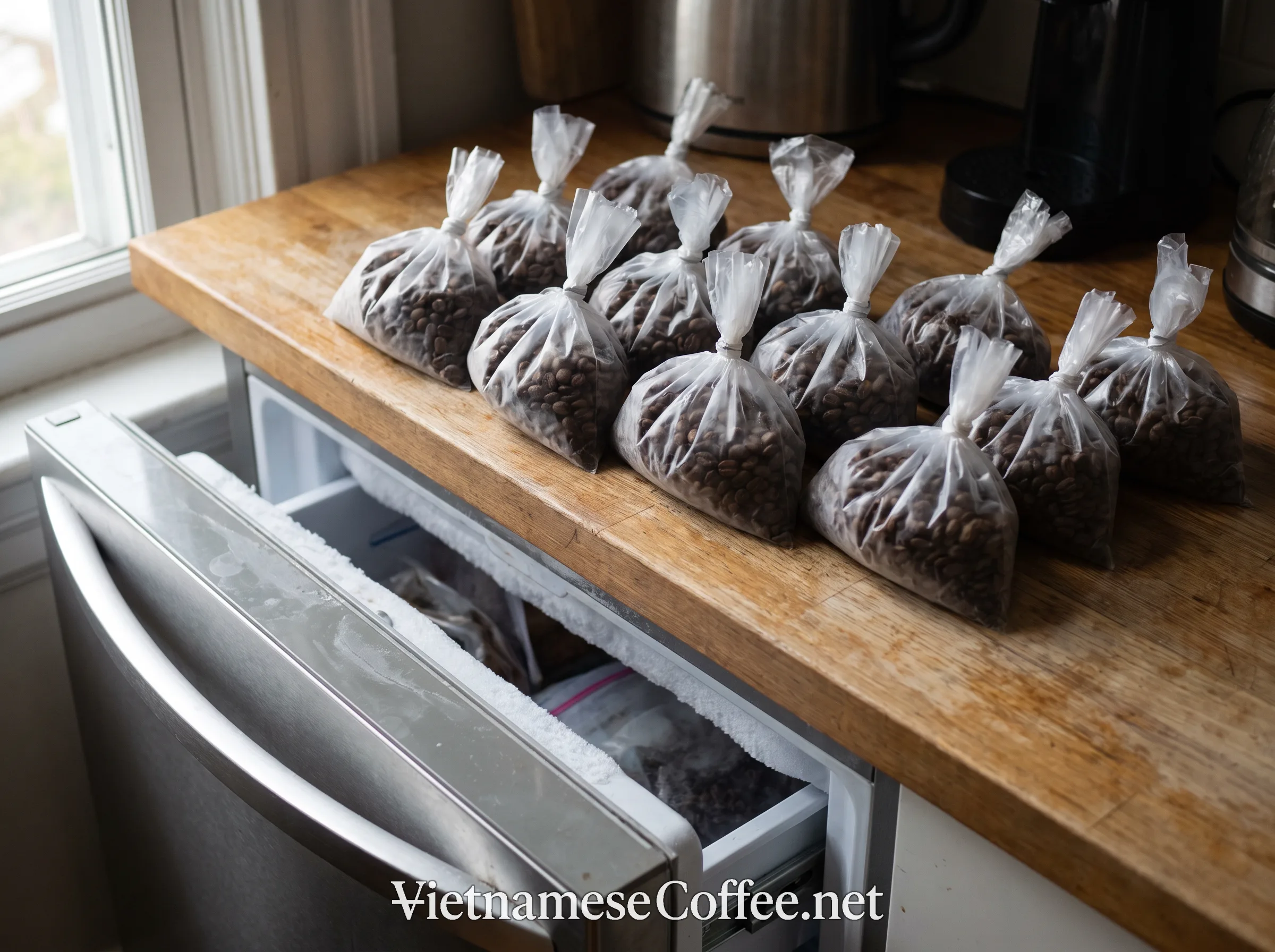
Sources are more divided on freezing than on any other storage question, though most agree it can work if done carefully. The key variables are limiting oxygen exposure, keeping moisture out, and avoiding repeated temperature cycling, rather than freezing itself being the problem.
For whole beans, this generally means an airtight, moisture-proof bag or container, portioned into amounts you'll use in one go, without repeated thawing and refreezing. If you do freeze already ground coffee, portion it tightly, remove as much air as possible, and let it come fully to room temperature before opening the container.
Freezing is most useful for beans or grounds you will not get through within their first few weeks of peak freshness, rather than as a routine method for coffee you are actively working through.
Roast level: does it matter for Vietnamese Robusta?
Roast level affects how quickly coffee stales, largely because roasting changes the bean's density and oil content. Darker roasts are often more porous and oilier from the roasting process, so they can lose freshness faster than lighter or medium roasts.
Since much Vietnamese Robusta is sold as a dark roast, this suggests paying closer attention to freshness timing than you might for a lighter-roasted coffee, and being more deliberate about airtight, opaque storage from the day you open the bag. Regardless of roast level, the same core storage principles apply: keep air, light, heat, and moisture away from the beans, and grind close to brewing whenever possible.