
From cherry to green coffee
Processing begins after ripe coffee cherries are harvested. The aim is to remove fruit layers, dry the coffee safely, and prepare stable green beans for storage, export, roasting, and brewing. The order of those steps changes according to the processing method.
A coffee cherry contains skin, pulp, mucilage, parchment, silverskin, and seed. The seed becomes the green coffee bean after the surrounding layers are removed. Natural processing dries the complete cherry first. Washed processing removes fruit before drying. Honey processing removes the skin and pulp but leaves some mucilage while the parchment dries.
These are post-harvest descriptions, not quality grades. A natural coffee can be carefully prepared or poorly dried. The same is true of a washed coffee. Cherry selection, cleanliness, fermentation, drying rate, final moisture, storage, and roasting all contribute to the cup.
Vietnam's Robusta sector is strongly associated with dry processing. The ICO profile describes it as the country's most common method during the profile period. Its nearly 80% sunlight figure is historical and source-specific. It should not be read as a guaranteed current national share.
Natural and dry processing
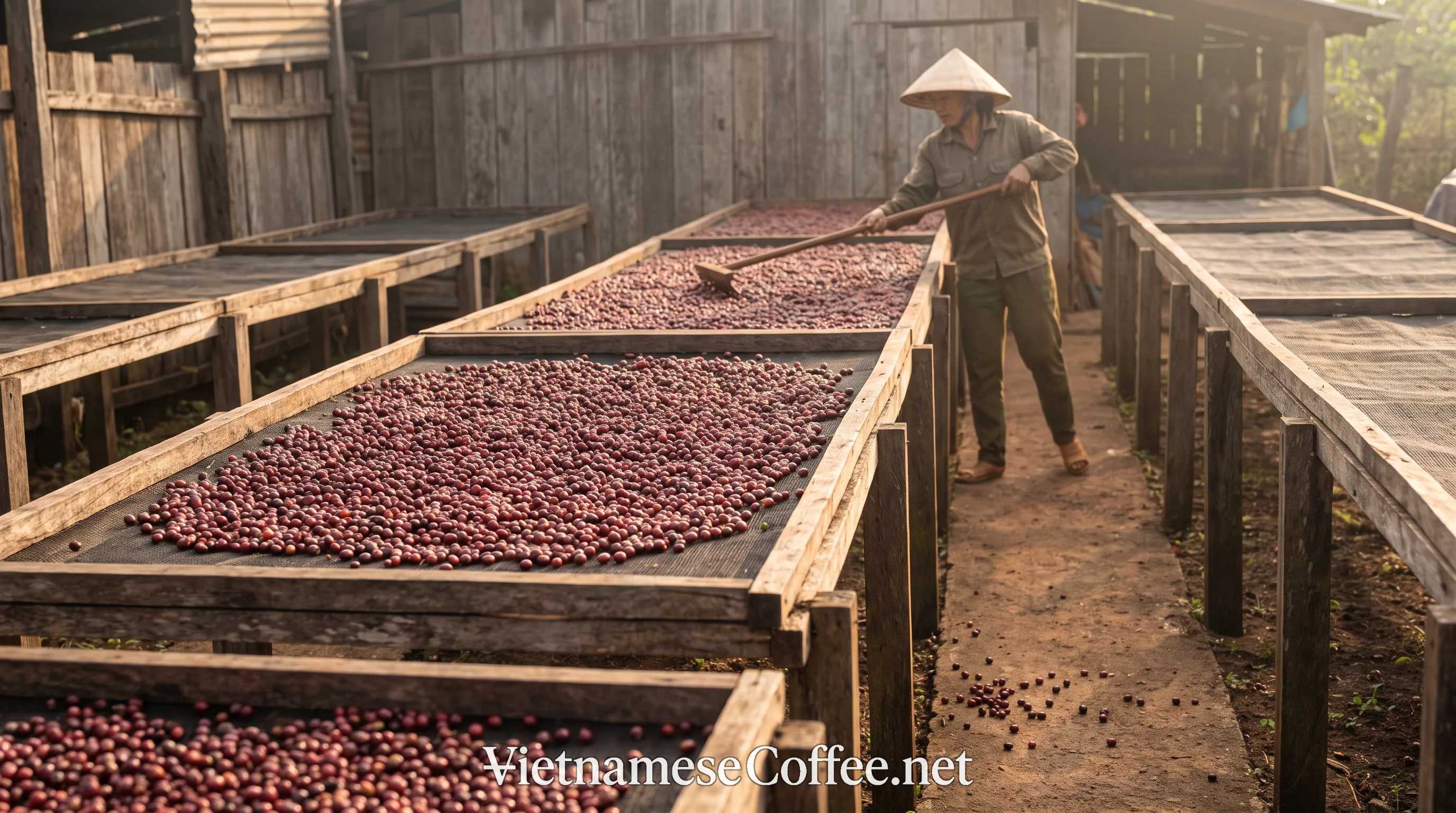
Natural processing is also called dry processing. Whole cherries are sorted and dried before hulling. The fruit remains around the seed during drying. Once a stable moisture level is reached, the dried outer material is removed to produce green coffee.
Sun drying is a long-established part of this method. The ICO reports that sunlight handled nearly 80% of Vietnam's post-harvest processing in its reference period. FAO also identifies both sun and mechanical drying as common. Mechanical drying is a way of drying coffee, not a separate fruit-removal method. A natural coffee may dry in the sun or with mechanical heat.
Drying control matters. Cherries must be spread and turned so they dry evenly. Humid conditions and limited drying capacity can create quality risks. The World Bank report notes that wet harvest conditions can make sun drying difficult and may require producers to use mechanical drying.
Natural Vietnamese Robusta is often associated with heavy body and low perceived acidity. Those tendencies do not result from processing alone. The bean species, cherry maturity, fermentation, drying practice, roast, and brewing method are all involved. A label reading "natural" describes a process, not a fixed flavour promise.
Washed and honey processing
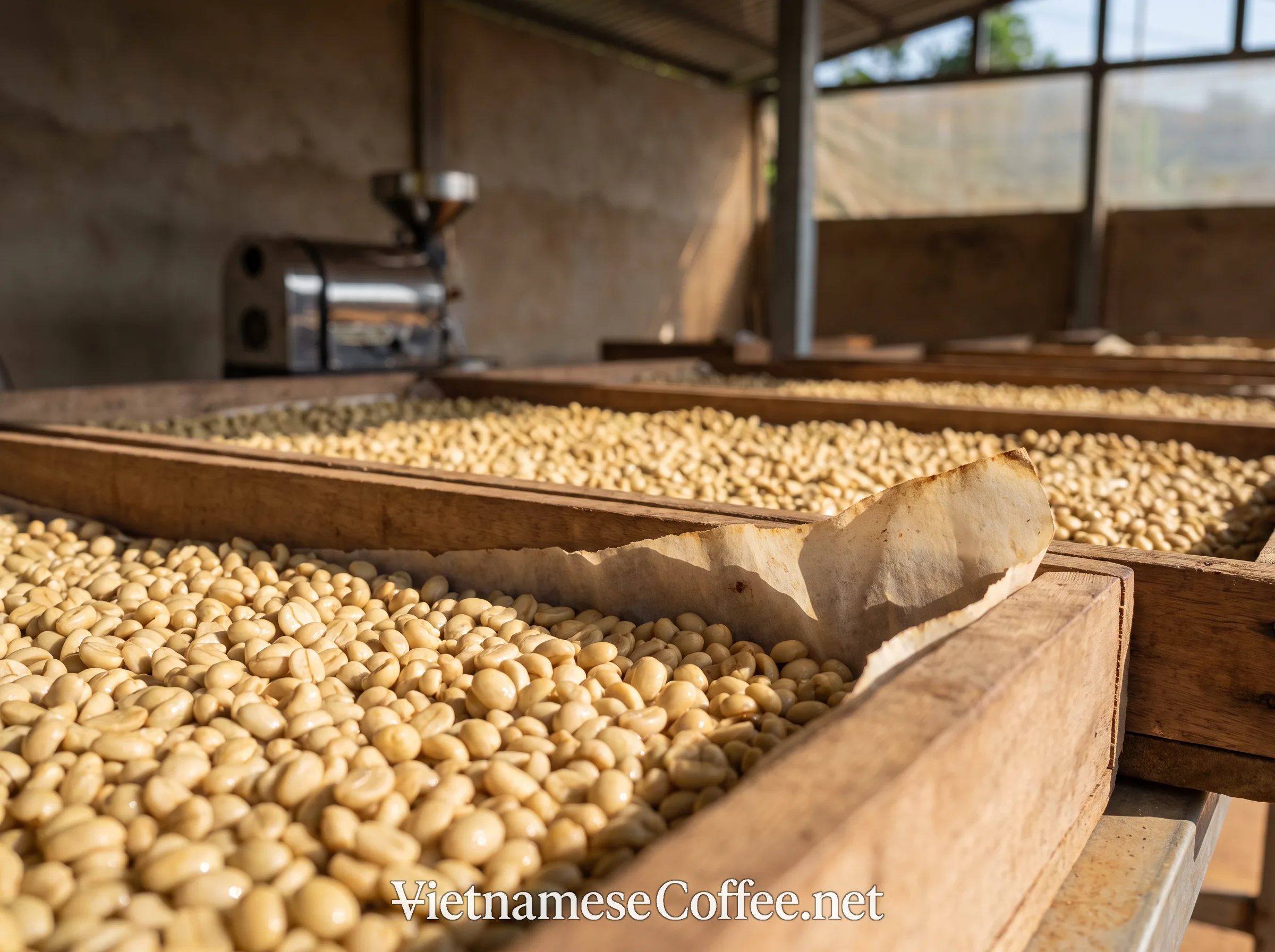
Washed processing removes the skin and pulp before drying. The remaining mucilage is then fermented and washed away. The parchment coffee is dried, rested, hulled, graded, and prepared for sale. The ICO describes washed processing as more resource-intensive because it requires pulping, water management, and washing.
Vietnam uses wet processing alongside its more widespread dry-processing tradition. The ICO profile notes wet-processing technology among large-scale producers. FAO explains why pulping changes the workflow: parchment dries faster than a whole cherry because much of the fruit has already been removed.
Honey processing sits between natural and washed methods. The producer depulps the cherry but leaves some sticky mucilage on the parchment for drying. No bee honey is added. The name refers to the mucilage's appearance and texture. The precise amount retained, fermentation choices, and drying conditions differ between producers.
Honey lots are available from Vietnam, but they should not be described as a dominant national method without a defined source, date, and sample. Terms such as "semi-washed," "pulped natural," and "honey" can also overlap in commercial language. Buyers seeking precision should look for an explanation of the actual fruit-removal, fermentation, and drying steps.
Drying, hulling, and preparation
The coffee must be dried after either whole-cherry or parchment processing. The ICO describes natural processing as reducing moisture from roughly 60-65% toward about 10-12% before hulling and further preparation. Reaching a target moisture level does not finish the work. Coffee can still be damaged by poor storage, excessive heat, contamination, or rough handling.
After drying, parchment or dried cherries are hulled. The coffee is then graded and sorted. Sorting may remove defects or separate beans by size. Exporters and roasters may use additional quality checks before coffee is shipped or roasted.
The same Vietnamese coffee can therefore have several relevant descriptors: Robusta or Arabica, Đắk Lắk or Lâm Đồng origin, natural or washed process, sun- or mechanically dried, and light or dark roast. Each term answers a different question. Species identifies the plant. Origin identifies geography. Processing describes fruit removal and drying. Roast describes what happened after green coffee reached the roaster.
This distinction is useful for phin brewing. A dark-roasted natural Robusta may create the heavy, concentrated profile many readers associate with Vietnamese coffee. It is not the only valid Vietnamese coffee. Washed Arabica, honey Robusta, and Arabica-Robusta blends can all be brewed with a phin. See How to Brew with a Phin for preparation guidance.
How to read a processing label
Processing labels are most helpful when they identify specific steps. "Natural" means the cherry dried whole. "Washed" means pulp and mucilage were removed before drying. "Honey" means some mucilage remained during drying. "Mechanical drying" describes how drying energy was supplied, not whether the coffee was natural or washed.
A buyer should avoid drawing broad conclusions from a single word. Natural does not automatically mean fruity, and washed does not automatically mean bright. The label should be combined with species, producer information, roast level, and intended brew method. A dark roast can dominate delicate distinctions, while a lighter roast may make them more apparent.
Vietnam's processing landscape has a clear factual centre: traditional dry processing remains important, particularly for Robusta. It also includes washed, honey, and mechanical-drying practices. That variety is enough to make overly rigid country-level claims misleading.
Processing methods at a glance
| Method | Main sequence | Vietnam context | What the term does not mean |
|---|---|---|---|
| Natural / dry | Whole cherries dry before hulling | The most common method in the ICO reference period | It does not guarantee one flavour profile |
| Washed | Pulp and mucilage are removed before parchment dries | Used by Vietnamese producers, including large-scale operations | It does not mean non-Vietnamese coffee |
| Honey | Cherries are depulped; some mucilage remains while drying | Used for some differentiated lots | No bee honey is added |
| Mechanical drying | Coffee dries with mechanical heat | Used alongside sun drying | It is not a complete processing category |