
How honey process works
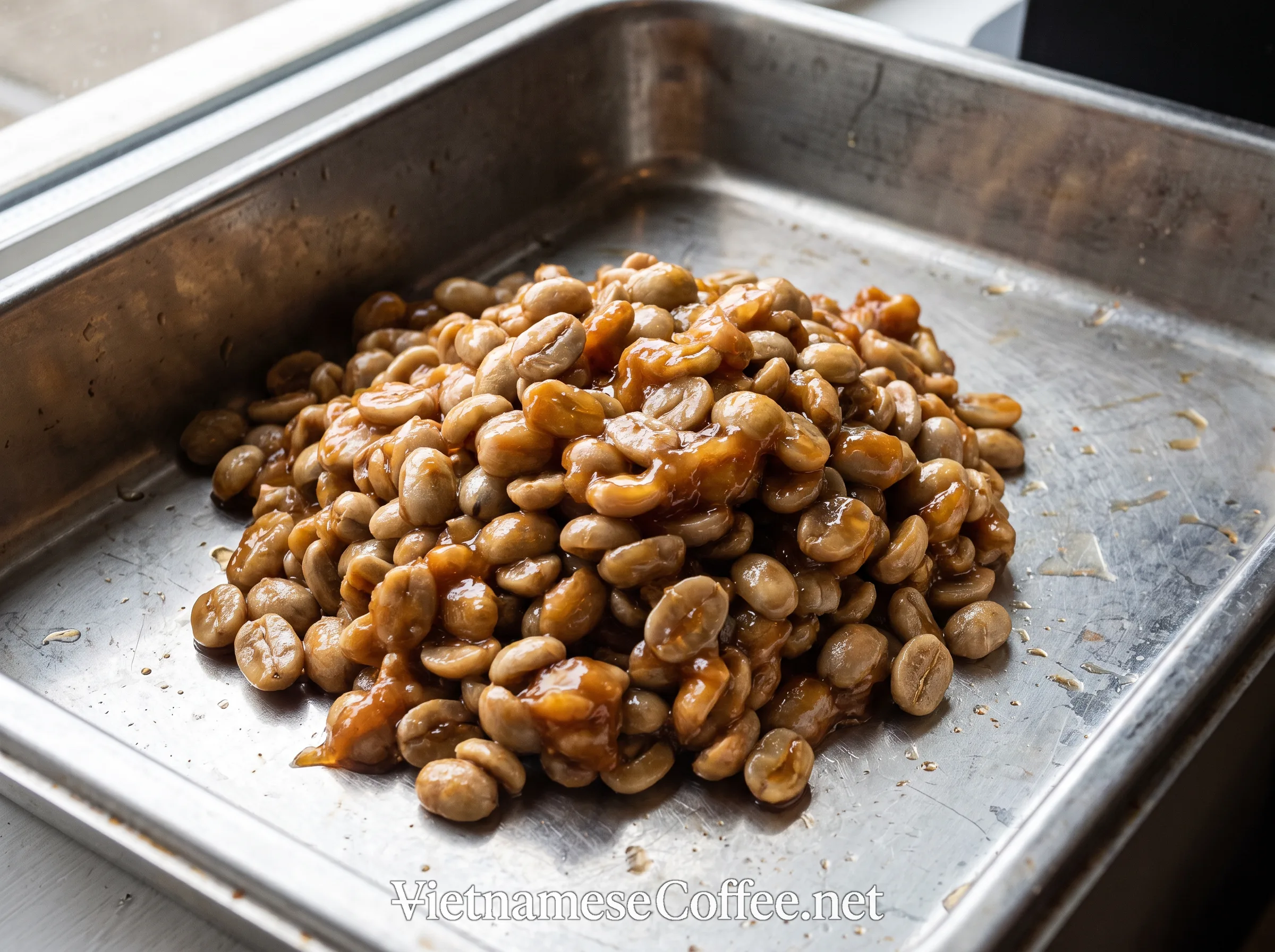
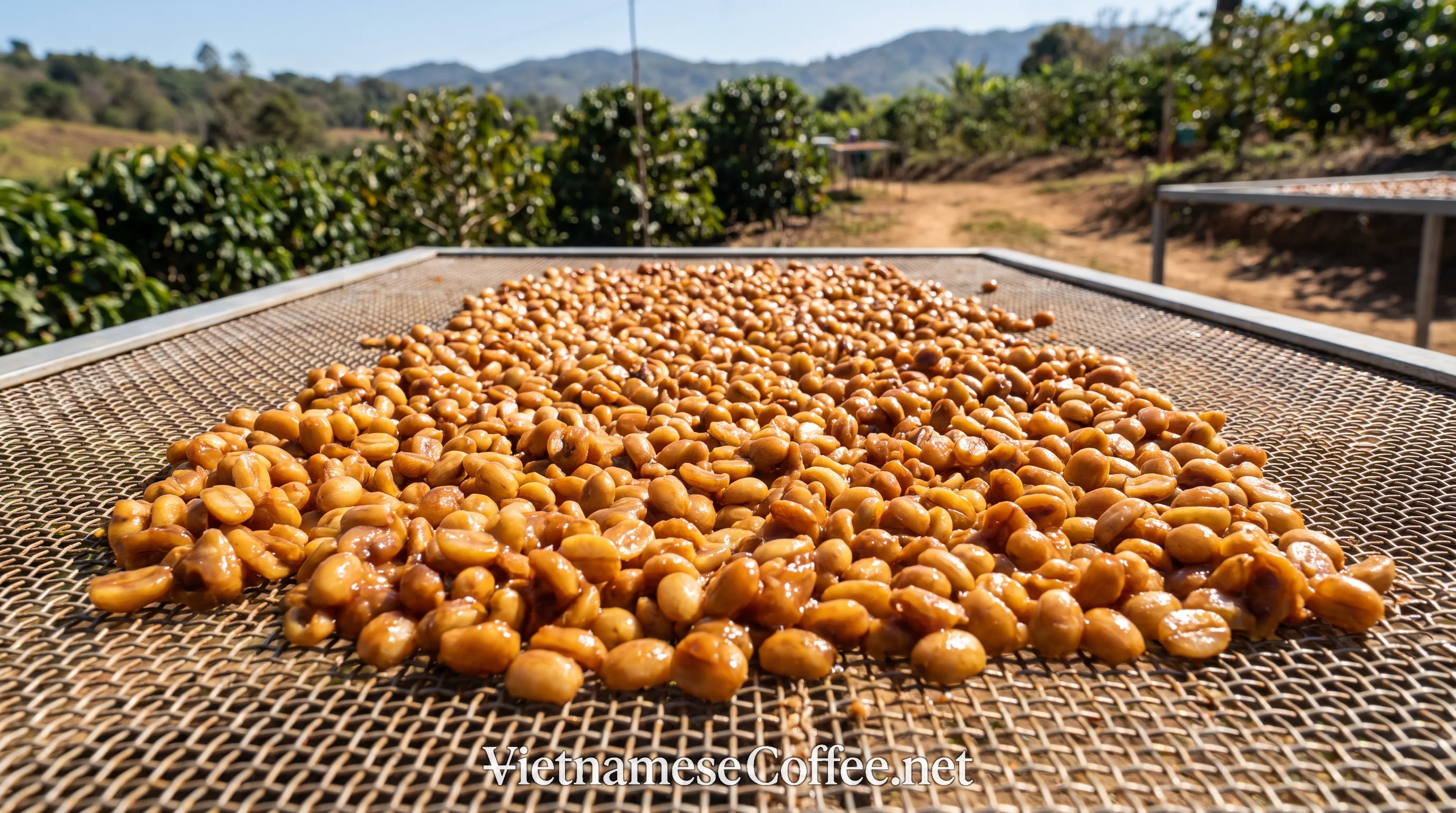
Counter Culture Coffee describes honey processing, also known as pulp natural processing, as a middle path between washed and natural methods: the outer cherry skin is mechanically pulped off within roughly 24 hours of harvest, per Café Imports, but instead of washing the underlying mucilage away in tanks or channels, producers leave some or all of it on the parchment-covered seed as it dries. That sticky, sweet, amber-colored mucilage is what gives the method its name, even though no actual honey is used.
As the bean dries with mucilage attached, fermentation continues throughout the process, not in a separate tank beforehand, per Café Imports, which cites an average total drying time of 18 to 25 days until the seed reaches roughly 11 percent moisture. This ongoing fermentation and drying develops the sweetness, body, and fruit character associated with honey-processed coffee, generally landing between the cleaner profile of washed coffee and the heavier, more intensely fruity profile of natural coffee.
Yellow, red, and black honey
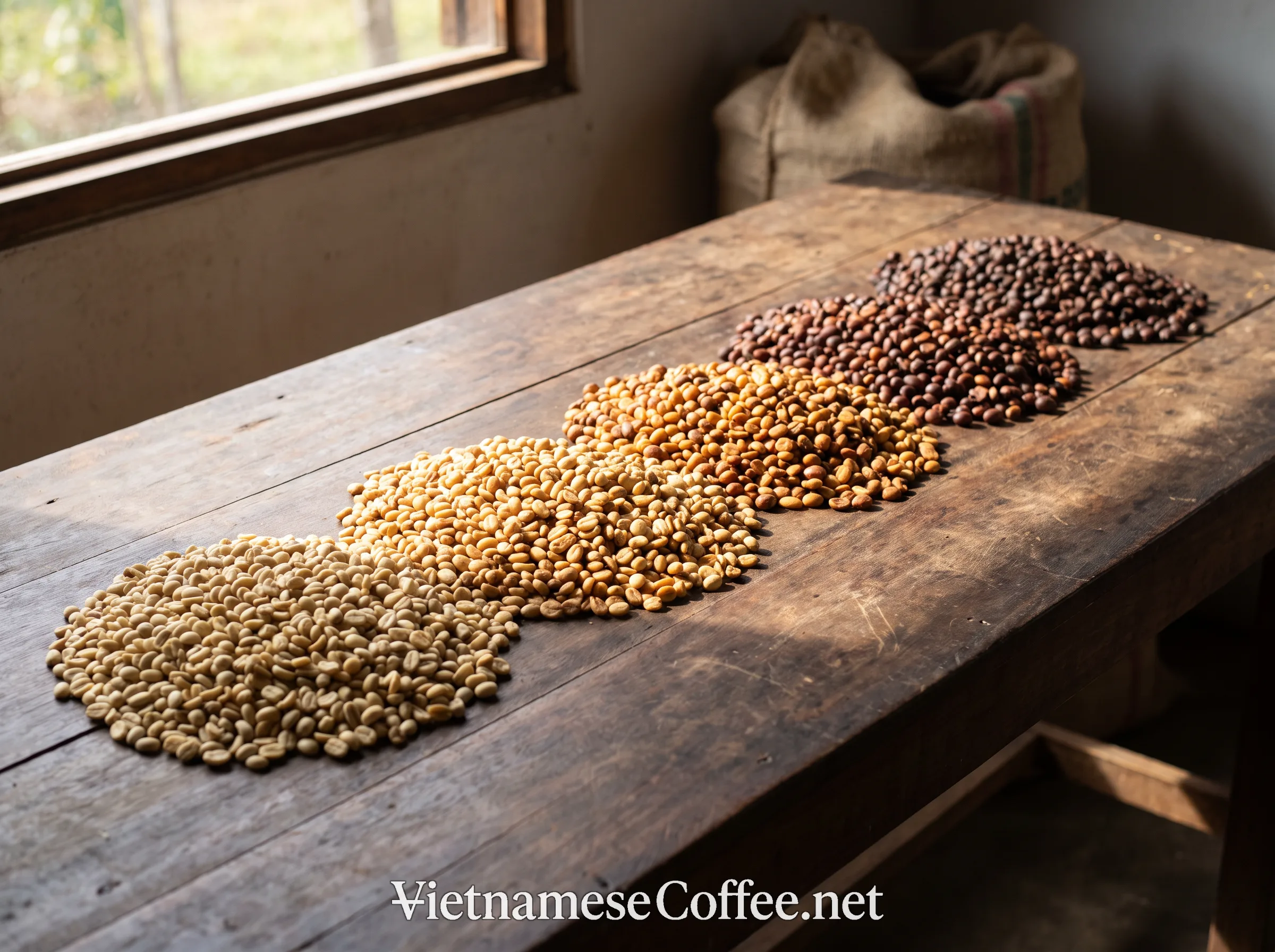
Producers describe honey-processed coffee using color labels, white, yellow, red, and black, that broadly track how the lot was processed and dried. Big Island Coffee Roasters is explicit that these labels developed as producers varied their own depulping and drying protocols, and that there is no fixed international standard defining exactly what qualifies as each color. Mucilage amount is part of the picture, but drying conditions, sun or shade, drying speed, turning frequency, and layer depth also shape which label a lot receives.
Exact mucilage percentages vary meaningfully across sources. Efico's examples describe roughly 80 to 90 percent of mucilage removed for white honey and roughly 50 percent removed for yellow honey. 1Zpresso's examples instead describe roughly 10 percent mucilage retained for white honey, 25 percent for yellow, 50 percent for red, and 75 to 100 percent for black. Expert Café's examples give a third set of ranges: 25 to 50 percent for yellow, 50 to 75 percent for red, and 90 to 100 percent for black. These are illustrations of how different sources frame the labels, not one fixed definition.
Flavor and why it can be tricky
Because honey processing keeps sugar-rich mucilage in direct contact with the bean throughout an extended drying period, it tends to produce a sweeter, heavier-bodied cup than washed coffee without the more intense, sometimes polarizing fermented-fruit character of a fully natural-processed coffee. Café Imports notes that the resulting profile is often fruity, jammy, or stewed-fruit-like, with caramel or burnt-sugar sweetness and some nuttiness.
The tradeoff is that honey processing needs careful attention during drying. A bean still coated in mucilage is more prone to over-fermentation or mold if humidity is high or turning is inconsistent, similar to the risks described for natural processing. Some accounts describe honey processing as using less water than a full washed process, since it skips extensive fermentation-tank washing and rinsing, but protocols vary enough by farm that this should not be treated as a fixed rule for every honey-processed lot.
Honey process in a Vietnamese context
Honey processing is documented as a technique used by at least one Vietnamese specialty producer: Golden Robusta, based in the Blao, or Bảo Lộc, region, describes using it to develop a distinctive flavor profile for its Robusta, combining elements of natural and washed methods. This is a specific example worth knowing about if you're exploring specialty Vietnamese coffee.
The research behind this page does not establish how common honey processing is across Vietnamese coffee production overall, or how a specific Vietnamese honey-process coffee compares in scale or origin with other processing approaches used in the country. Treat the Golden Robusta example as one documented case rather than as evidence about national prevalence.