
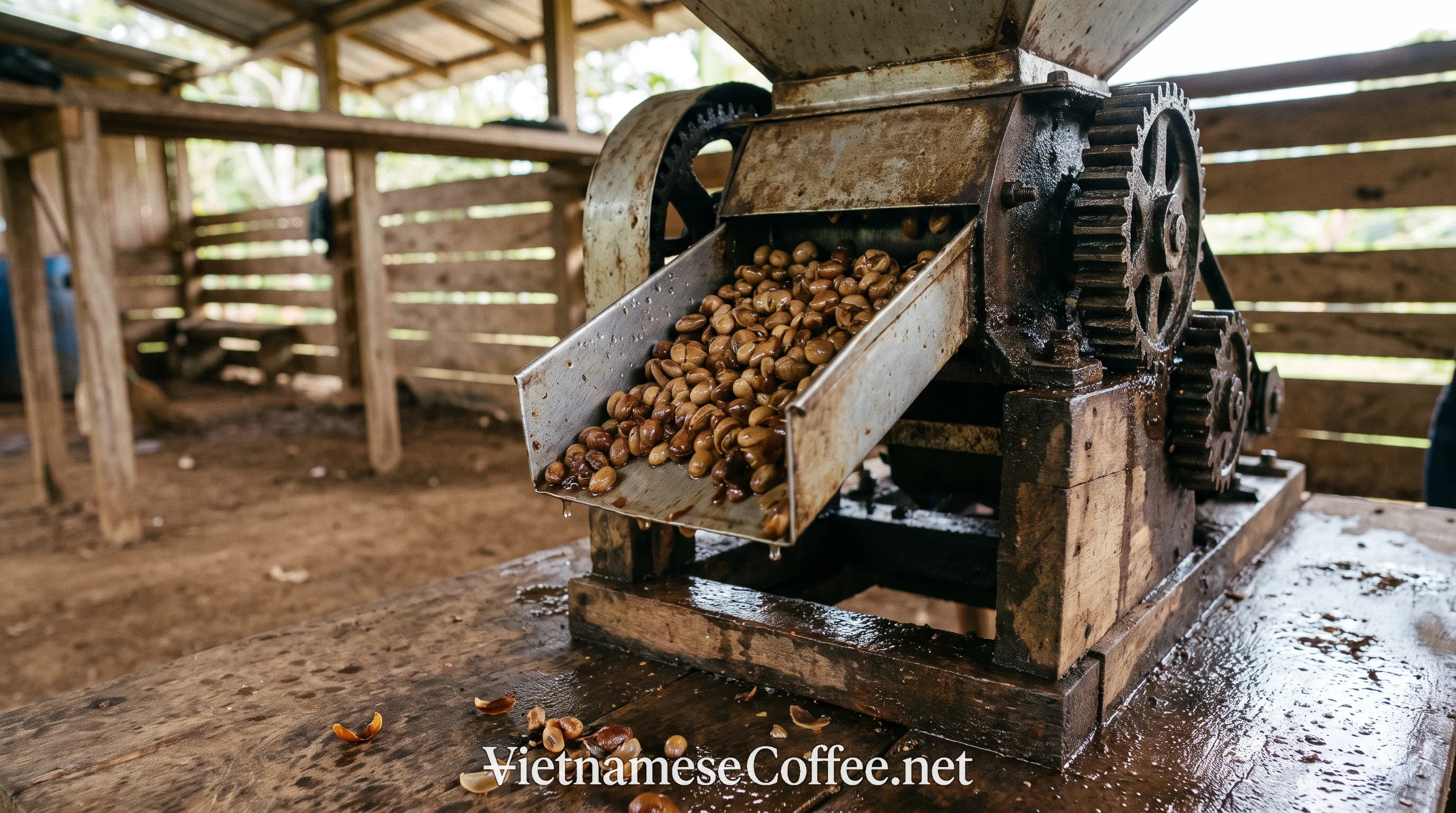
Wet hulled process at a glance
| Local name | Giling basah, meaning "wet grinding" in Bahasa Indonesia |
|---|---|
| Primary origin | Indonesia, particularly Sumatra, Sulawesi, and Flores |
| Hulling moisture | Roughly 30 to 50 percent, versus the standard 10 to 12 percent |
| Vietnam usage | Also practiced in parts of Vietnam, on some Vietnamese Arabica |
| Flavor profile | Heavy body, earthy, herbal, woody, low acidity |
| Main risk | Musty, baggy, or muddy defects from early bean exposure |
| Drying speed | Faster overall drying compared to parchment-on methods |
An Indonesian method, also found in Vietnam
The wet hulled process is native to Indonesia, where it is known locally as giling basah, meaning "wet grinding" in Bahasa Indonesia. According to Sweet Maria's Coffee Library, the method is specific to Indonesia and is responsible for the signature flavor most associated with Indonesian coffee, particularly from Sumatra. Multiple specialty coffee sources, including Green Coffee Collective and My Coffee Explorer, describe the process as unique to Indonesia. They tie it most closely to the islands of Sumatra, Sulawesi, and Flores.
This distinction matters because the wet hulled process is sometimes discussed in the context of Vietnamese coffee, which can create confusion about its origin. Deeper Roots Coffee's processing guide is explicit on this point: wet hulling, or giling basah, is unique to Indonesia, though it is sometimes practiced in parts of Vietnam. The process originated in Indonesia and is also practiced in parts of Vietnam.
Understanding this origin is useful context before looking at how the process actually works. The mechanics are the same regardless of country: parchment coffee is hulled at an unusually high moisture level, rather than after full drying. This single change in sequence defines the entire method.
How wet hulling works
Standard coffee processing methods, whether washed, natural, or honey, all share one common rule. The parchment layer covering the seed is removed only after the coffee has been dried down to a stable moisture level, typically 10 to 12 percent. Wet hulling breaks that rule deliberately. According to World Coffee Index, mills using giling basah pre-dry the coffee to only roughly 30 to 40 percent moisture, far higher than any other mainstream process allows. The beans then run through a huller that strips away the still-wet, still-soft parchment.
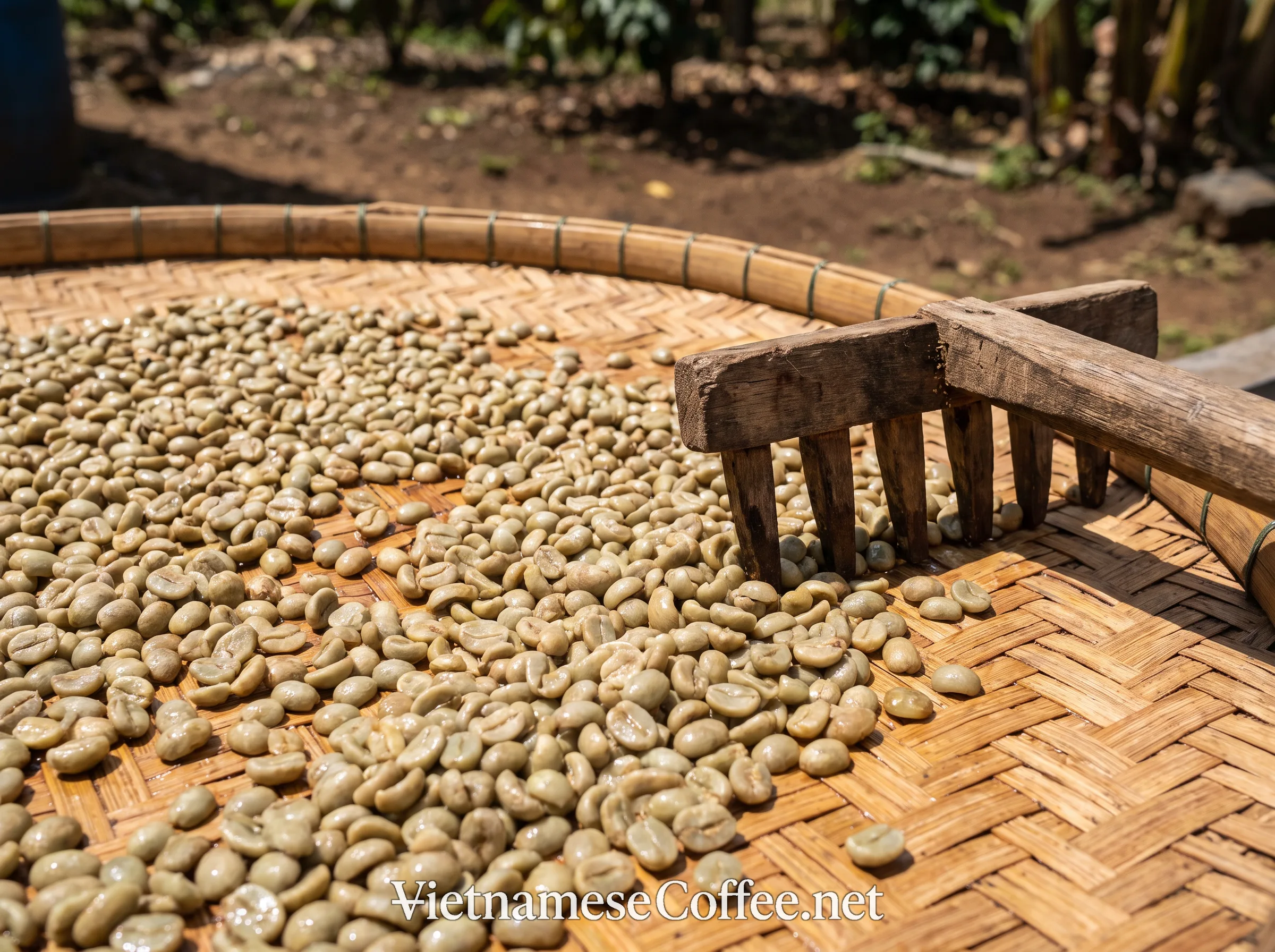
This early hulling exposes the naked green bean, without its protective parchment layer, while it is still swollen with water. According to Cafe Imports, fermentation begins the moment the cherry is picked and continues to accelerate through the piling or sacking stage that precedes hulling. The parchment is removed so early that the wet, moisture-laden green bean must then be spread out to complete its drying in the open air. This differs from drying slowly inside a protective husk.
This sequence shortens overall drying time significantly, which is part of the original appeal of the method in Indonesia's humid climate. According to Coffee or Die's reporting on a specific wet-hulled Vietnamese Arabica product, coffee processed this way dries quickly and reaches ideal moisture in less than a week. This compares favorably to the much longer drying period required when parchment stays intact until the bean is fully dry.
Why the method exists: climate and speed
Wet hulling did not emerge as a deliberate flavor experiment. It developed as a practical response to a specific climate problem. According to World Coffee Index, Indonesia's consistently humid, rainy conditions make the slow, parchment-on drying used elsewhere in the world genuinely risky. Parchment coffee left to dry gradually in wet weather is prone to mold, fermentation defects, and spoilage before it ever reaches a stable moisture level.
Removing the parchment early solves this problem directly. Once the protective husk is gone, the exposed green bean dries far faster in the open air than parchment coffee would. This reduces the total number of days the crop is vulnerable to humidity and rain. Scofi's roasting guide for wet-hulled Indonesian coffee frames this trade-off plainly. Hulling early and drying fast delivers speed and reliability in a difficult climate. However, it also introduces a real risk of musty, baggy, or muddy defects if the drying and storage that follow are not carefully controlled.
This same climate logic helps explain why the method is also found in parts of Vietnam. Coffee or Die profiles a wet-hulled Vietnamese Arabica product and notes that Arabica represents roughly 5 percent of Vietnam's national coffee production. The fast-drying, climate-driven logic behind wet hulling applies to that Vietnamese Arabica the same way it applies in Indonesia, though the available sources do not establish what share of Vietnam's Arabica crop is processed this way.
Flavor profile and the trade-offs of wet hulling
Wet hulling produces one of the most immediately recognizable flavor signatures in the coffee world. According to Keith Lyons' processing guide, the method is directly responsible for a big, syrupy body and lower perceived acidity compared to washed or natural coffee. It also produces earthy, herbal, woody, and spice notes that many drinkers instinctively associate with the word "Sumatra." World Coffee Index adds that a cup showing damp earth, cedar, and tobacco notes with a heavy body is typically the result of this specific processing choice. It is not the underlying bean variety alone that produces this profile.
This distinctive profile comes with genuine downsides that separate wet-hulled coffee from more universally praised processing methods. Because the green bean is exposed to open air and handling while still highly vulnerable to microbial activity, quality control during and after hulling becomes critical. Scofi's guide notes a higher risk of musty, baggy, or muddy cups specifically tied to wet hulling. This defect risk is not typically associated with fully washed or carefully managed natural coffee.
Vietnam's use of the method reflects this same basic flavor trade-off. Coffee or Die describes the specific wet-hulled Vietnamese Arabica it profiles as producing a distinctly different cup from the country's dominant robusta-based coffee culture. It carries the same heavier body and reduced brightness that defines Indonesian wet-hulled coffee, though this profile applies to the specific product covered, not necessarily to all Vietnamese Arabica.