
Weasel coffee at a glance
| Animal species | Asian palm civet (Paradoxurus hermaphroditus) |
|---|---|
| Vietnamese name | Cà phê chồn |
| Biological mechanism | Enzymatic breakdown of storage proteins |
| Primary effect | Dramatically reduced bitterness, smoother body |
| Authentic wild price | USD 1,000 to USD 3,000 per kilogram |
| Conservation concerns | Least Concern (IUCN); population trend declining; threatened by capture, hunting/snaring, and wildlife trade |
| Simulated alternative | Food-grade enzyme processing |
| Prominent simulated brand | Trung Nguyen Legendee |
History and linguistic origins
The name "weasel coffee" is technically a mistranslation that became a permanent fixture in the global coffee trade. The animal responsible for producing this famous coffee is the Asian palm civet (Paradoxurus hermaphroditus). However, the Vietnamese word chồn is a broad taxonomic term that locals use to describe various small carnivores, including civets, ferrets, and weasels. When Western traders and tourists encountered the product, the term was loosely translated into English as "weasel coffee." In Indonesia, an identical biological process produces the globally famous kopi luwak.
The broader history of coffee in Vietnam is well documented by the Vietnam Coffee - Cocoa Association (VICOFA). Coffee was first introduced to the country in 1857, initially as arabica. Robusta, the species that now dominates Vietnamese production and the beans most commonly associated with cà phê chồn, was not formally introduced until 1908.
The specific origin story of civet coffee itself is less rigorously documented and is generally passed down as a commonly repeated historical account rather than verified fact. According to the Smithsonian Magazine, which frames the story as a supposed origin, colonial-era plantation owners are said to have restricted local workers from the coffee crop.
As the story goes, workers reportedly began collecting coffee beans out of the droppings of wild civets that foraged in the plantations at night. They washed and roasted the beans, discovering an unexpectedly smooth, low-bitterness cup.
The biological fermentation process
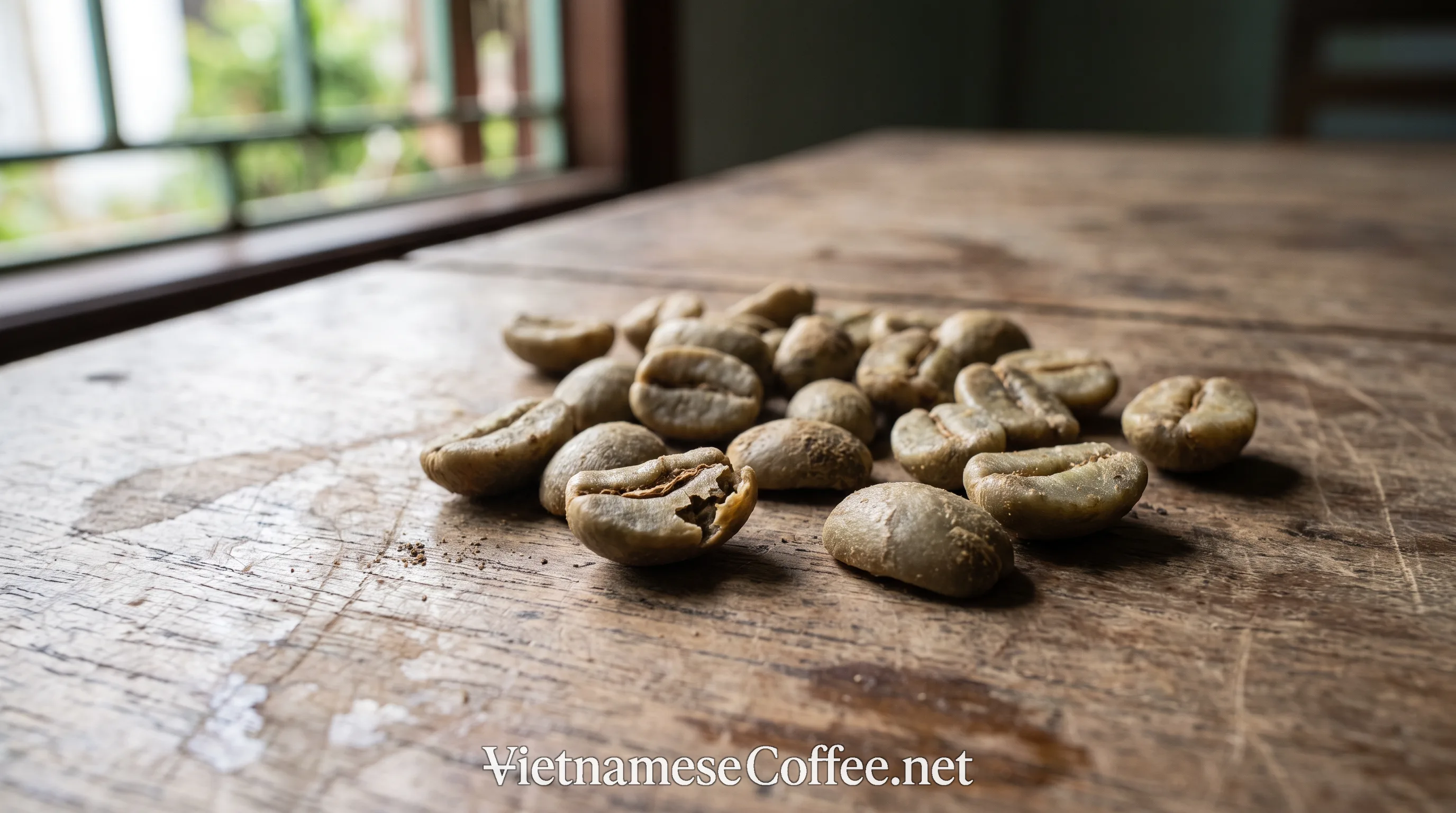
The unique flavor profile of cà phê chồn is not a marketing gimmick; it is the direct result of a specific biological fermentation process. Left to forage in the wild, the Asian palm civet relies on its acute sense of smell to identify and consume the ripest, most nutrient-dense coffee cherries.
Once ingested, the cherry enters the civet's digestive tract, where the transformative chemical process begins. The animal's stomach acids digest the sweet, fleshy outer pulp of the fruit, while the hard internal coffee bean remains intact.
As the bean sits in the digestive tract for several hours, it undergoes a warm enzymatic bath. According to agricultural analysis compiled by Gevi, enzymes and acids within the civet's stomach and intestines permeate the coffee bean itself.
These digestive enzymes alter the bean's internal molecular structure. They break down the complex storage proteins that typically cause harsh, astringent bitterness, particularly in standard robusta coffee. When the civet finally excretes the beans, still encased in their protective parchment layer, their structural composition has changed.
Flavor profile and cup characteristics
Because of the intense enzymatic breakdown of bitter proteins, true cà phê chồn offers a distinct cup profile. This profile differs sharply from conventionally processed Vietnamese coffee. While standard robusta is famous for its heavy bitterness and sharp bite, the civet-processed version is exceptionally smooth.
According to specialty coffee importers at Pure Kopi Luwak, Vietnamese weasel coffee produces a mellow, syrupy cup with very low harsh acidity. Drinkers often report deep notes of dark chocolate, toasted caramel, sweet tobacco, and lingering earthiness.
Because abrasive bitter compounds have been biologically softened, cà phê chồn is easy to drink black. This separates it from the usual need for the heavy sweetened condensed milk used in standard Vietnamese iced coffee, cà phê sữa đá.
Vietnamese cà phê chồn also differs from Indonesian kopi luwak. Pure Kopi Luwak's comparison confirms both products come from the same civet species, but Vietnam's coffee sector is overwhelmingly robusta. As a result, the Vietnamese cup tends toward a heavier, denser, more chocolatey body than its often arabica-based Indonesian counterpart.
Animal welfare and modern commercial pricing
While the traditional account of cà phê chồn centers on wild foraging, modern commercialization has created serious ethical controversies. As global demand for rare luxury coffee grew, the traditional method of foraging for wild droppings became impossible to scale.
To increase production, some producers across Southeast Asia, including Vietnam, shifted to intensive civet farming. In these operations, wild civets may be captured, confined to small cages, and fed an unnatural diet dominated by coffee cherries.
This model removes the civet's natural ability to selectively forage for the ripest cherries and can degrade the baseline quality of the coffee. Wildlife welfare organizations, including Wild Welfare, have documented capture, snaring, and wildlife-trade pressures linked to civet-coffee farming.
The Asian palm civet is formally assessed by the IUCN Red List as Least Concern. However, the same IUCN assessment documents the global population trend as declining, citing hunting, trapping, and wildlife trade among contributing pressures. Industry pricing trackers such as VietnamSpot report that authentic wild cà phê chồn can sell for USD 1,000 to USD 3,000 per kilogram, while caged-civet versions are far cheaper.
Simulated enzymatic weasel coffee
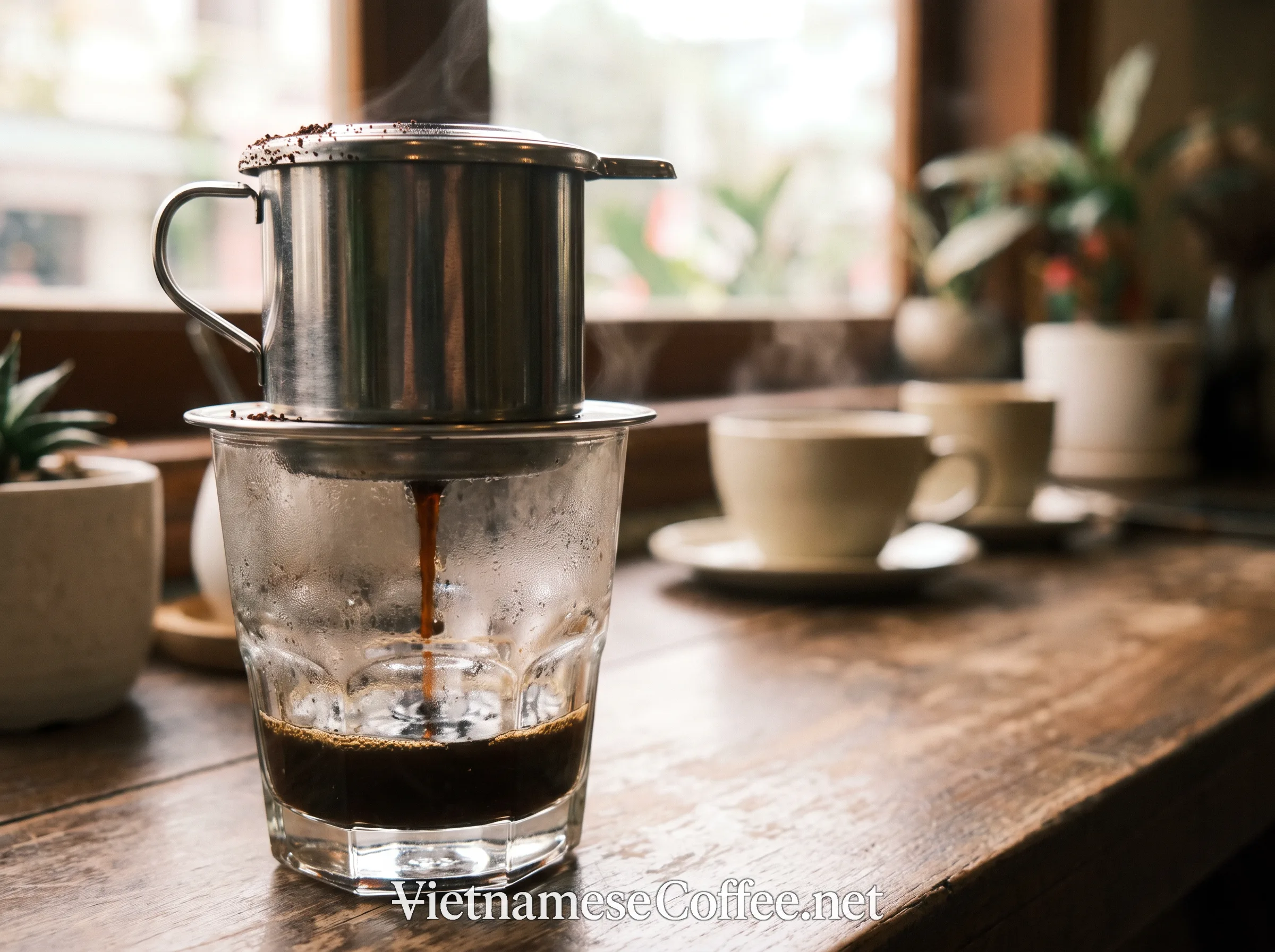
The high consumer demand for the unique cà phê chồn flavor profile pushed the Vietnamese coffee industry to develop a scientific alternative. Mounting welfare and conservation concerns accelerated this shift, with the goal of creating a similar sensory experience without animal cruelty or extreme pricing.
Trung Nguyen, one of Vietnam's largest domestic coffee companies, led this chemical innovation. According to reporting from Vice, the company hired German scientists to study the civet's digestive system and replicate the process artificially.
Using natural, food-grade enzymes, Trung Nguyen created a proprietary commercial process that applies enzymes directly to selected arabica and robusta beans. The process is designed to mimic the same protein breakdown that occurs inside the civet's digestive system.
The stated goal is a smooth, chocolatey flavor profile intended to resemble authentic wild civet coffee. However, the precise biochemical outcomes of the commercial process itself have not been independently verified. Trung Nguyen markets this cruelty-free, simulated product globally under its Legendee brand.