
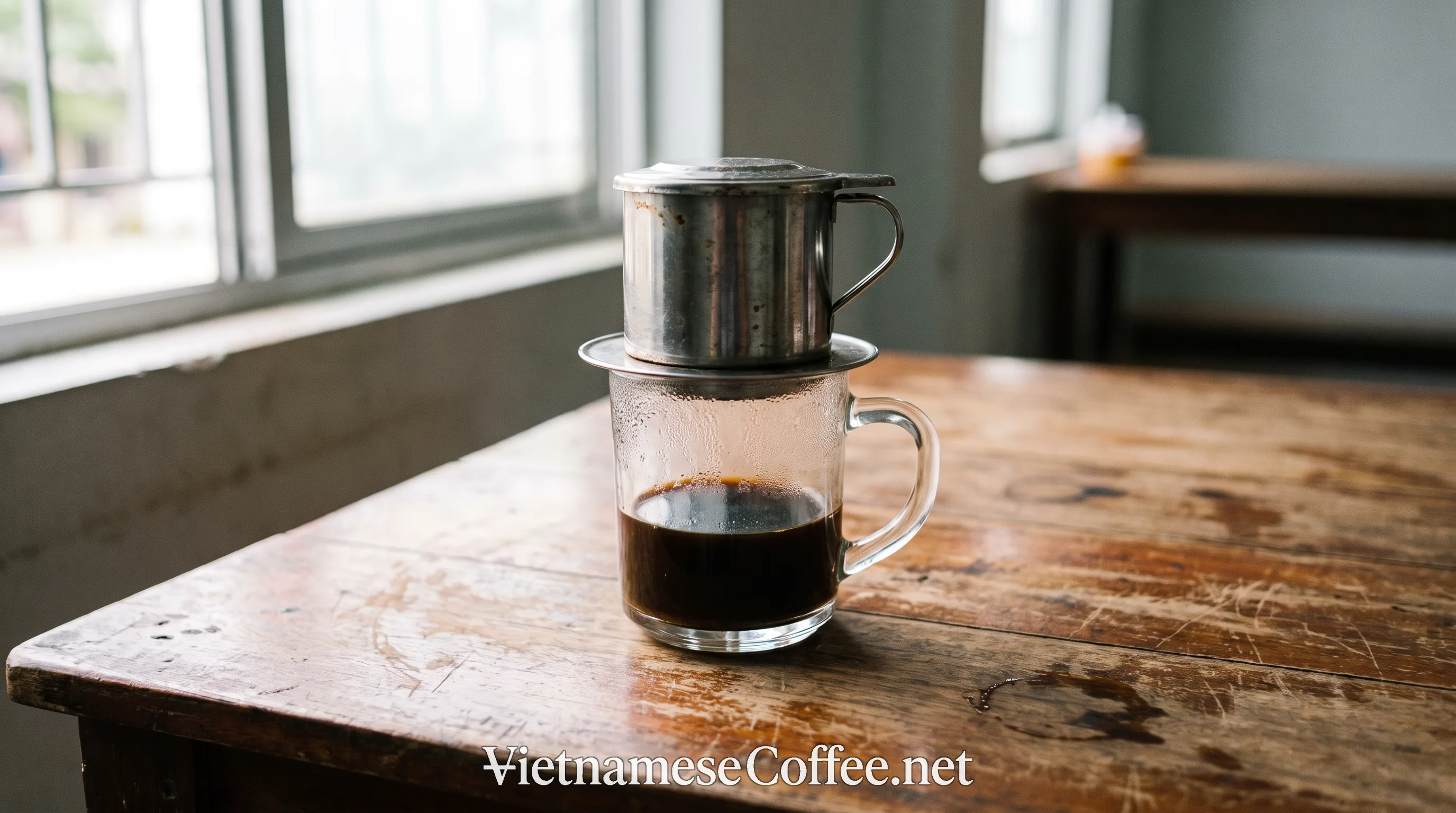
Where the name comes from
The most commonly repeated account of the phin's name traces "phin" back to the French word "filtre," meaning filter, absorbed into Vietnamese during the French colonial period. The drink brewed with it is called "cà phê phin," literally "filter coffee," though Coffee & Tea Culture notes that the word order is sometimes reversed as "phin cà phê."
This derivation should be treated as the generally accepted, widely repeated explanation rather than a fully settled linguistic fact. One historical account adds an interesting wrinkle regardless of the name's exact origin: because the water sits and steeps under gravity pressure through a packed bed of grounds rather than simply passing through, the phin's actual brewing action has more in common with a percolator than a strict filtration device, even under its commonly cited "filter" name.
Where it comes from historically
Coffee arrived in Vietnam through French colonization, with several sources reviewed for this page citing 1857 as the year French missionaries first introduced coffee cultivation, followed by the first large-scale plantations in the following decades. What is well supported across sources is that European, and specifically French, metal drip-filter brewing influenced the phin's design during this same colonial period.
Beyond that broad influence, the phin's specific origin story is not well documented. Day9 Coffee states plainly that its exact invention story is undocumented, and other sources describe its emergence only in general terms, somewhere within the broader colonial period, without naming an inventor or a specific date. Vietnam Airlines offers a more specific early-1900s estimate, but this page treats that as one source's estimate rather than a settled date.
The parts of a phin
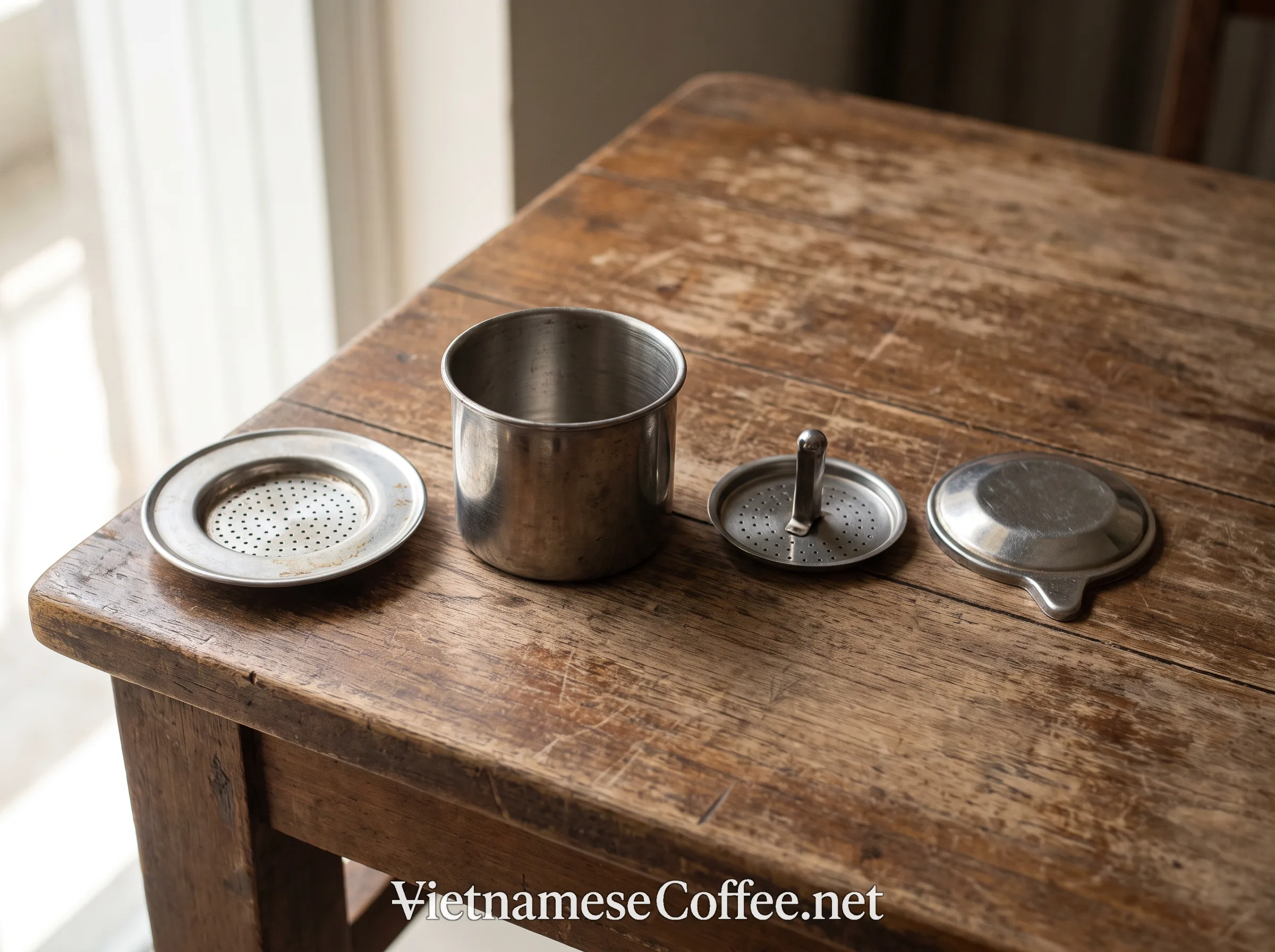
A standard phin is built from four separate metal pieces that stack together: a flat, perforated saucer or base plate that catches drips and rests on the rim of the serving cup; the brew chamber itself, which holds the ground coffee; a press insert, either a loose gravity-drop disc or a threaded screw-down version, that sits on top of the grounds; and a lid that sits on top during brewing to retain heat.
The screw-down press style lets a brewer fine-tune drip speed by tightening or loosening it, while the simpler gravity-insert style relies on its own weight. Either way, this pressing mechanism is the main variable a phin brewer controls once the grounds are loaded, alongside grind size and dose, which this site covers in its dedicated phin brewing guide.
What it's made of
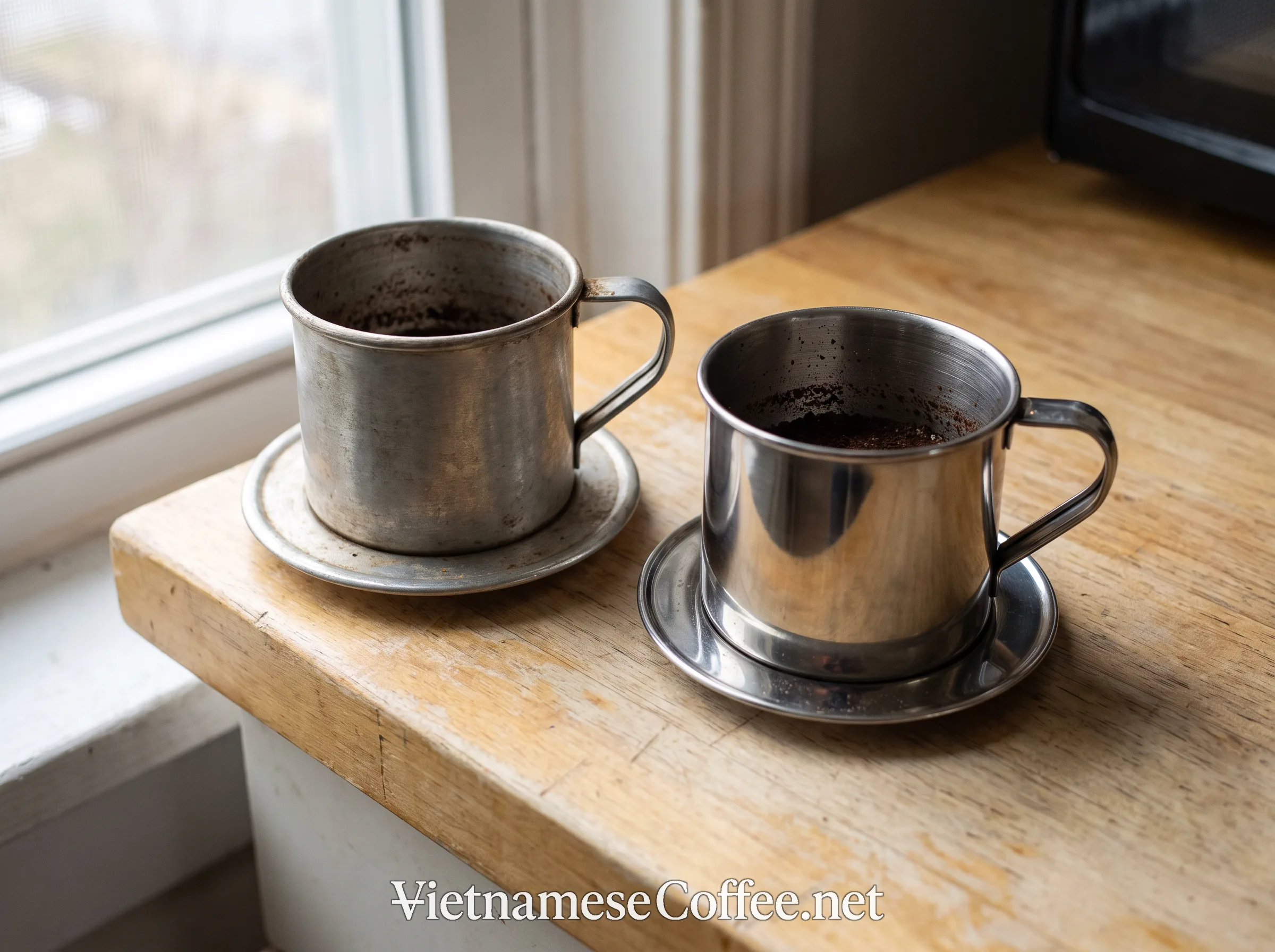
Coffee & Tea Culture and Roastopedia both describe three common phin materials. Aluminum is the traditional, lightweight, inexpensive option most widely seen across Vietnam, and it tends to lose or gain heat quickly compared with heavier materials. Stainless steel is generally more resistant to dents and corrosion over time than aluminum, making it a durable long-term option. Ceramic and porcelain phins also exist; they hold heat well and can look more decorative, but they are heavier and more prone to chipping or cracking if dropped.
Beyond weight, corrosion resistance, and fragility, more specific claims depend heavily on a given phin's individual manufacturing quality rather than being a fixed property of the material itself, so this page does not present those as general rules for aluminum versus stainless steel.