
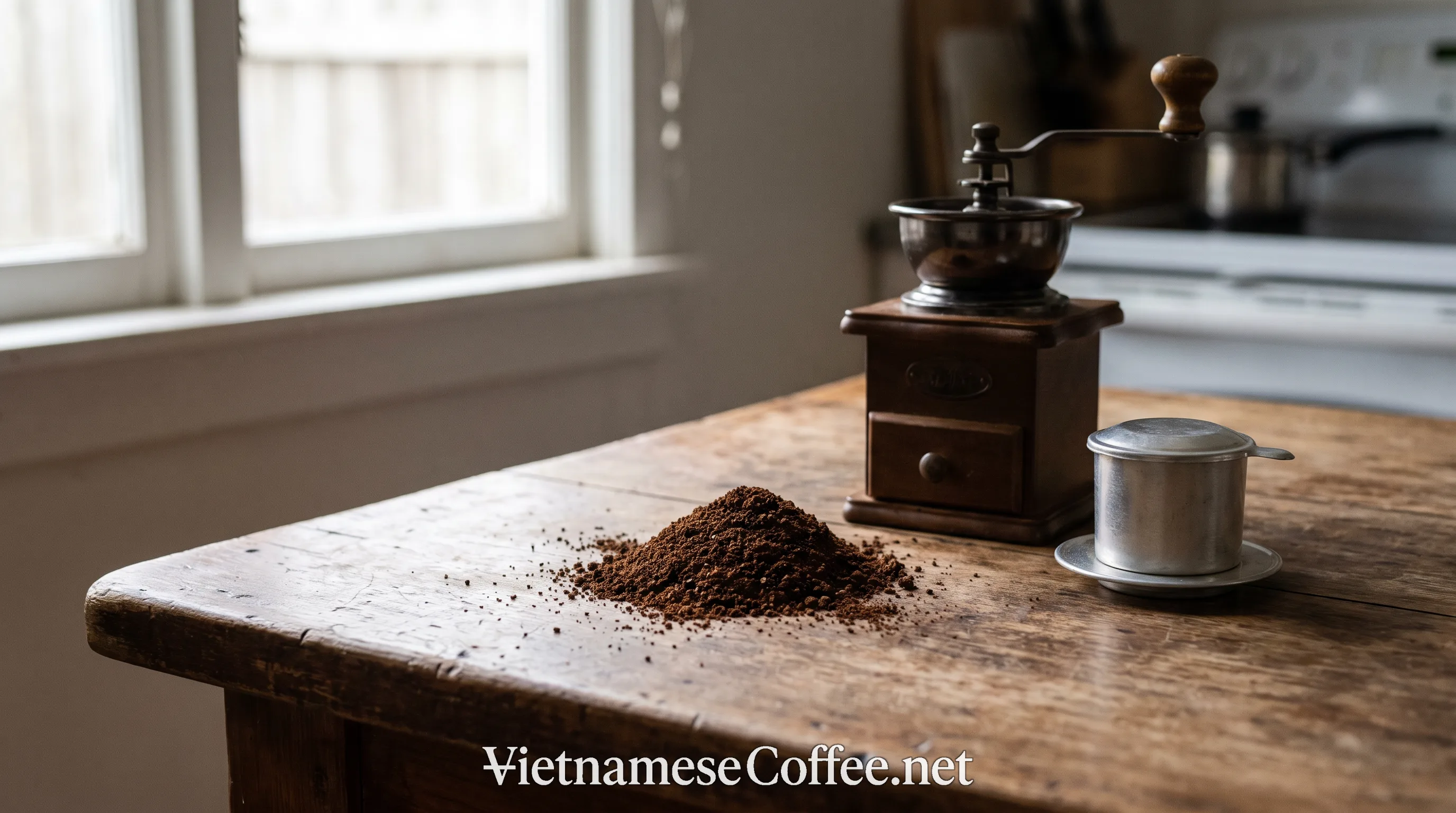
What grind size actually works
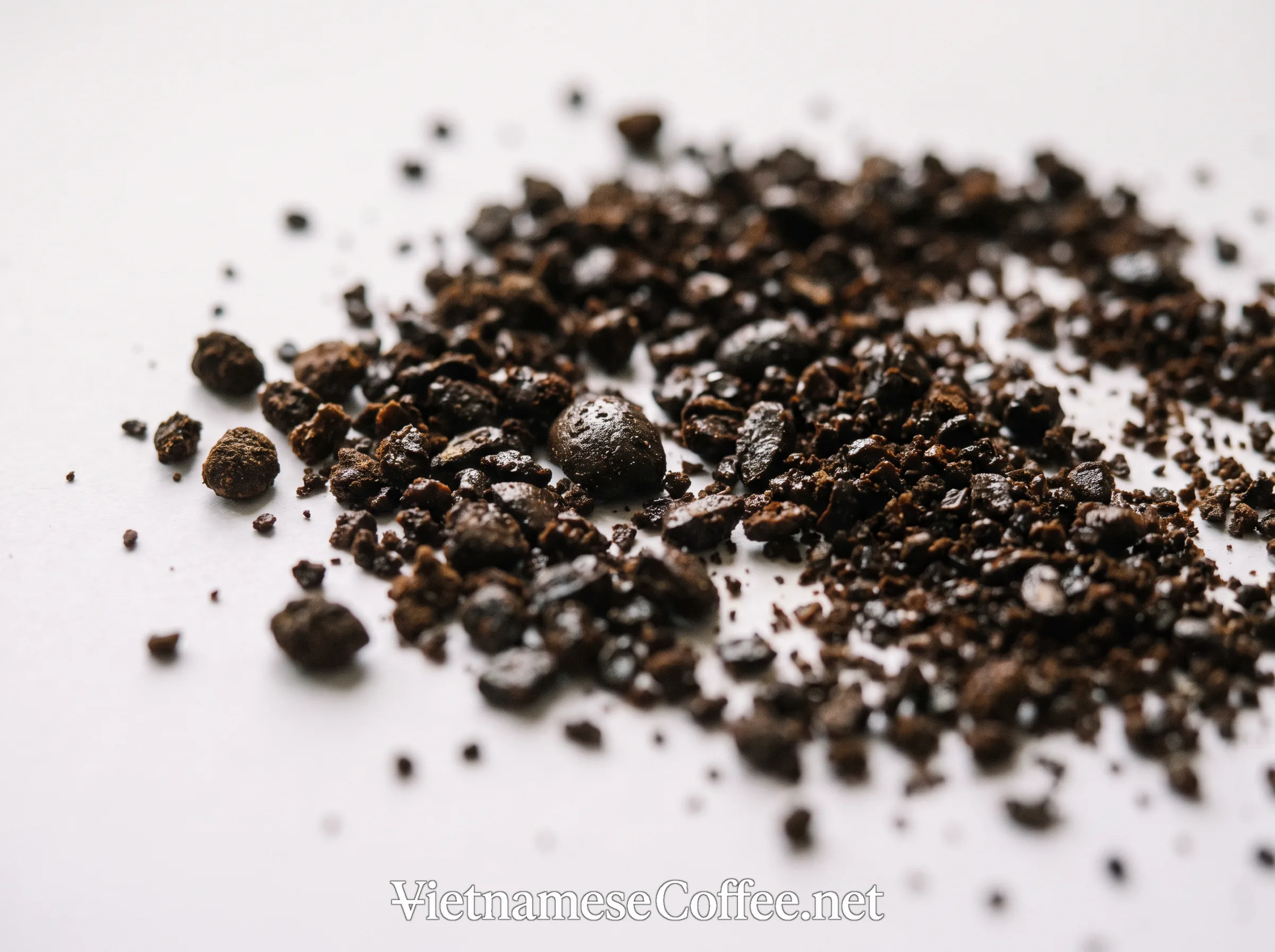
There is no agreed-upon standard grind size for phin coffee across the sources reviewed for this page, and the range is wider than a simple "medium-coarse" recommendation would suggest. Nguyen Coffee Supply states "fine, like sand" in two separate published guides, recommending a Baratza Encore setting of 14-16. Yet a third guide from that same company recommends medium-fine instead.
Other sources land at different points along the same range. My Home Espresso recommends medium to medium-coarse, described as slightly coarser than standard drip. Jay Arr Coffee recommends medium-coarse, closer to French press than pour-over. Caffeine Supply's grind chart lists phin at roughly 700 to 900 microns. Treat any one of these as a starting point for testing, not as the correct answer that other sources have gotten wrong.
Grind-texture reference points by source
Rather than asserting a fixed order across brewing methods, here are the specific descriptions given by name in the sources reviewed for this page. Use these as reference points for your own grinder, not as a universal ranking of phin against other methods.
| Source | Grind description for phin | Comparison given |
|---|---|---|
| Nguyen Coffee Supply, brew and grind guides | Fine | "Like sand" |
| Nguyen Coffee Supply, high-caffeine guide | Medium-fine | Not specified |
| My Home Espresso | Medium to medium-coarse | Slightly coarser than standard drip |
| Jay Arr Coffee | Medium-coarse | Coarse table salt; closer to French press than pour-over |
| Caffeine Supply | Medium-coarse, about 700-900 microns | Kosher salt |
Pre-ground coffee sold specifically for Vietnamese brewing is often already close to one of these ranges, since many Vietnamese brands grind specifically for phin use. Check the package or ask the roaster if you are unsure whether a given pre-ground coffee is meant for phin.
Dialing in your grind with drip time
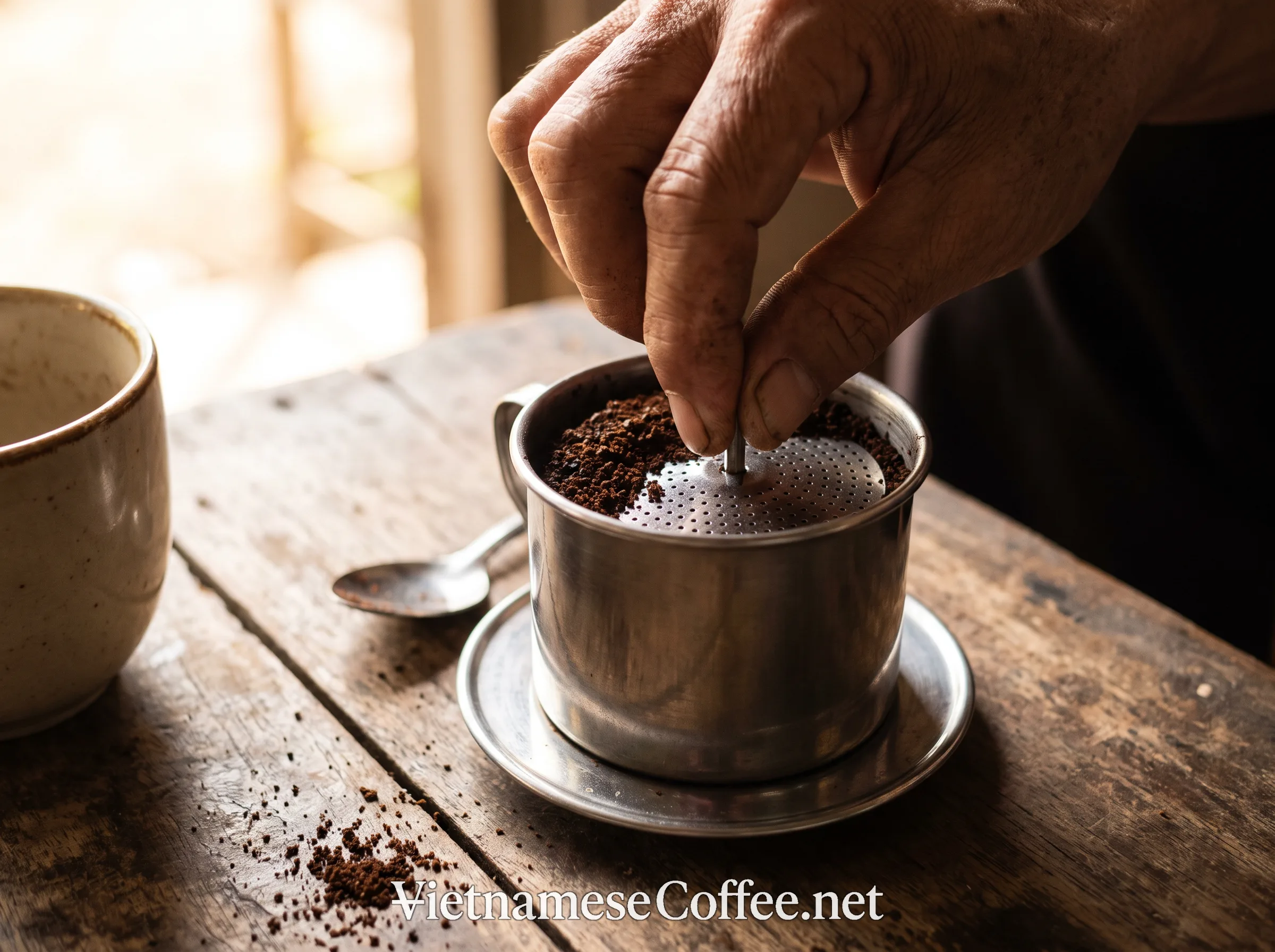
Because phin filters vary in hole pattern, metal thickness, and how the insert sits on the grounds, the same grind setting can behave differently from one phin to another. Nguyen Coffee Supply gives a concrete timing benchmark for a solo-serving 4 oz phin: aim for the first drip to appear by around the two-minute mark, with the last drip falling around the five-minute mark.
If your brew finishes notably faster or slower than that window, it may indicate a grind issue, but it is not the only possible explanation. A brew finishing in under 3 minutes may mean the grind is too coarse, or that the filter press is not seated tightly enough. One taking over 6 minutes may mean the grind is too fine, or that the press needs loosening.
Fresh coffee degassing, dose, how evenly the coffee bed sits in the chamber, and press pressure can also change the drip. Before adjusting your grinder in response to a flow problem, keep your dose and press setup consistent between brews so you can tell whether grind size is actually the variable that changed.