
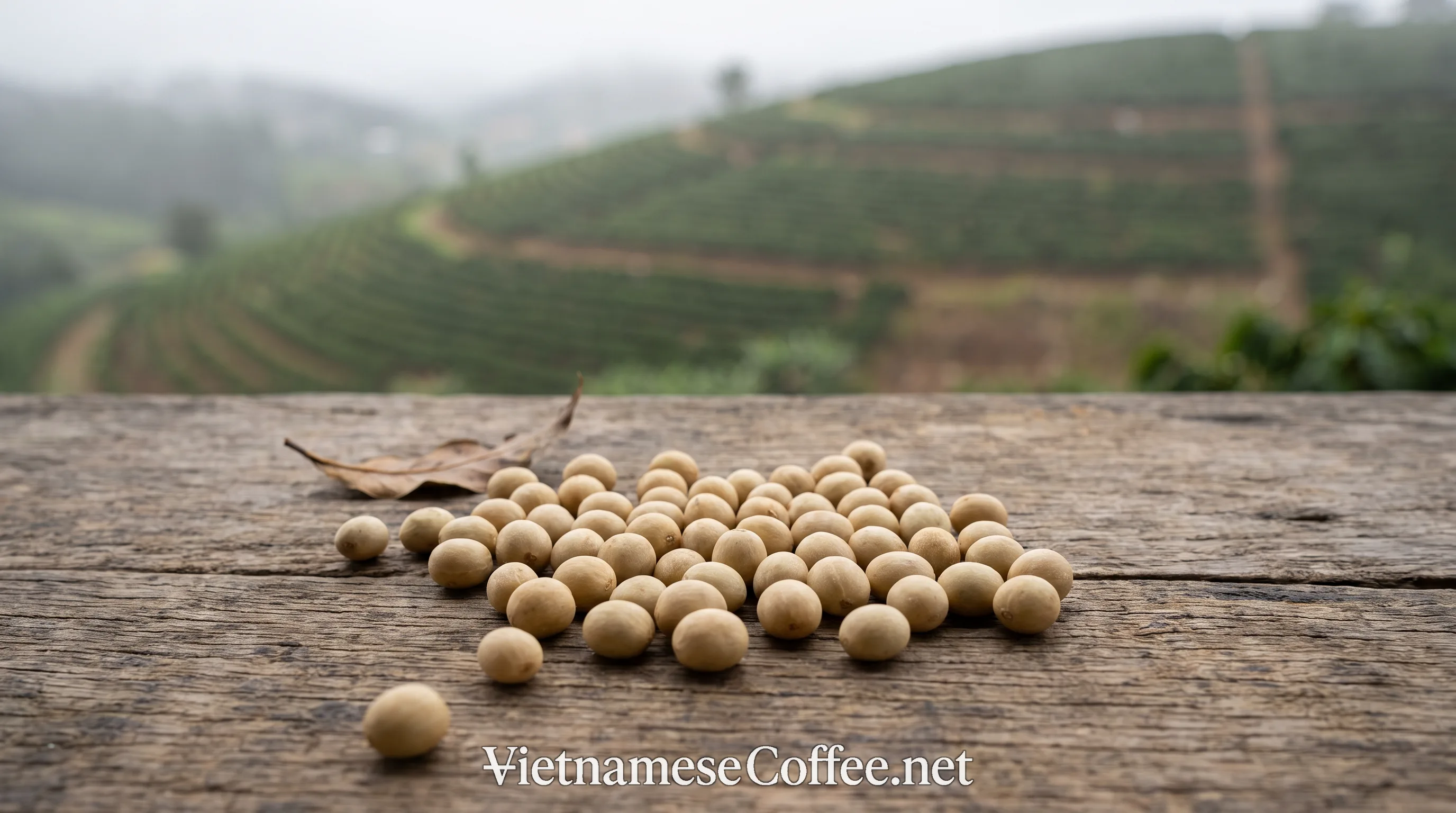
Moka Culi at a glance
| Underlying variety | Moka, a traditional Vietnamese arabica type often described by local sources as Bourbon-related |
|---|---|
| Bean form | Culi / peaberry, single round seed |
| Main growing area | Cầu Đất, Đà Lạt, Lâm Đồng |
| Introduced to Vietnam | 1875 according to Nguyen Coffee Supply; Cầu Đất cultivation documented from 1925 |
| Flavor profile | Floral, citrus, fruity, delicate sweetness, concentrated |
| Caffeine | Roughly 1 to 2 percent, similar to standard arabica |
| Market position | Premium, rare specialty coffee |
Moka: the variety behind the name
Before explaining the peaberry form, it helps to understand Moka itself, though its exact botanical lineage is not fully settled across sources. According to Nguyen Coffee Supply, French colonists brought Bourbon-lineage arabica seeds from Réunion Island to Vietnam in 1875, and Vietnamese growers and traders came to call this variety Moka.
Helena Coffee offers a more cautious framing, describing Moka as often described as a dwarf variant of Bourbon rather than stating a fully confirmed identical lineage. Namsancoffee lists Arabica, Moka, and Bourbon as related but separately named Cầu Đất coffee types rather than treating Moka and Bourbon as the same thing.
For this reason, the safest description is that Moka is a traditional arabica type long grown in Vietnam and closely associated with Cầu Đất. Vietnamese sources frequently connect it to Bourbon without full agreement on the precise botanical relationship.
Helena Coffee documents that Moka, Typica, and Bourbon were planted together at the Cầu Đất plantation near Đà Lạt in 1925 under French management. That is the more firmly corroborated milestone in Moka's Vietnamese history.
What "Culi" adds to Moka
Culi is the Vietnamese term for a peaberry, a coffee cherry that develops only one round seed instead of the usual two. This bean-development pattern is not unique to Moka. It can occur on any coffee plant, including standard arabica and robusta.
For the full biological explanation of how a peaberry forms, see What Is Culi Bean?; this page focuses specifically on what that form means when it happens on Moka trees. When it appears on Moka coffee, sellers and roasters label the result Moka Culi.
Vietnamese retailer Aro Ba Khanh markets a Cầu Đất product explicitly as 100% Culi Moka, describing the resulting cup as bold and strong. This kind of listing shows that Moka Culi functions as a specific commercial product in the Vietnamese market, not simply a theoretical bean category.
Because Moka already has a naturally low yield, the peaberry form of Moka is rarer still. Coffee is picked, processed, and only later sorted to separate the small number of round peaberries from the majority of standard flat beans.
Flavor profile and how it differs from standard Moka
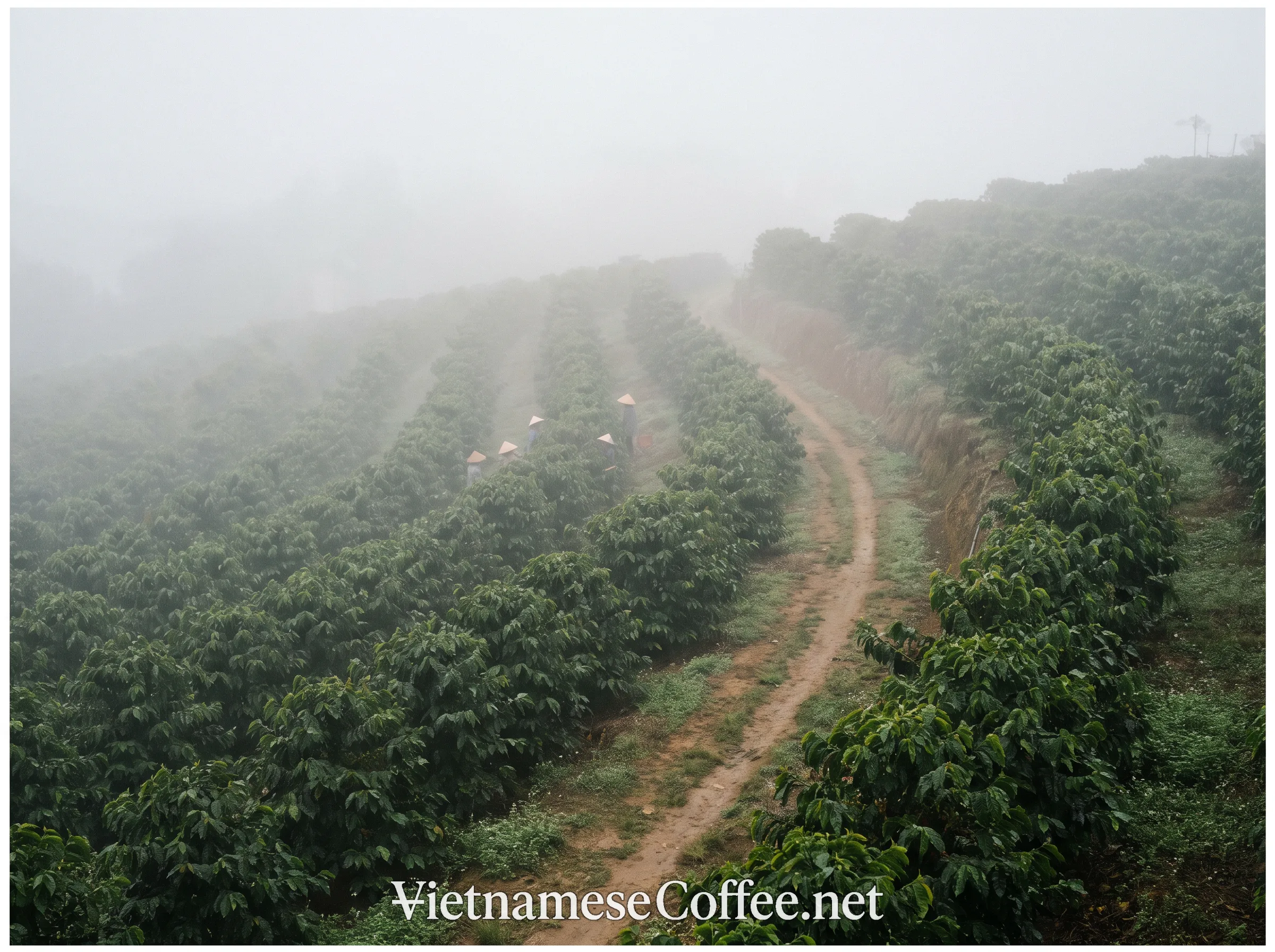
Standard Moka is prized for a complex, layered cup. According to Helena Coffee, it typically shows bright acidity, floral aromatics, citrus and stone-fruit notes, and a delicate sweetness in the finish. This profile is shaped by its cool, high-altitude Cầu Đất terroir.
Namsancoffee's comparison of Cầu Đất coffees describes Arabica, Moka, and Culi grown in the same district as sharing a similar character. All three show a tangy, mildly bitter, gently sweet profile with relatively low caffeine.
Moka Culi is generally described by sellers as a more concentrated version of that same base profile rather than a fundamentally different coffee. The peaberry's single, densely packed seed is often marketed as delivering a fuller body and a bolder finish than a standard split Moka bean roasted the same way.
These flavor claims should be read as common commercial positioning rather than settled sensory law. Roast level, harvest timing, and processing method still shape the final cup significantly.
Caffeine and low-intensity positioning
Unlike Robusta Culi, which is often marketed for its high caffeine content, Moka Culi inherits the naturally lower caffeine level associated with arabica varieties. Namsancoffee reports that Arabica, Moka, and Culi coffees grown in the Cầu Đất district generally fall in a caffeine range of roughly 1 to 2 percent by weight.
Lyon Coffee's espresso bean pricing guide lists a similar caffeine range for standard Moka from Cầu Đất. This distinguishes Moka Culi clearly from Robusta Culi, which typically carries a much heavier caffeine load and a darker, more bitter cup.
Moka Culi is positioned for drinkers who want the rarity and concentrated character associated with a peaberry bean, without the intensity that Robusta peaberries are known for.
It occupies a specific niche in the Vietnamese specialty market: a delicate, aromatic arabica experience in an unusually dense, hard-to-find bean shape.
Pricing, rarity, and buying context
Moka already trades at a premium compared to standard Vietnamese arabica and robusta. According to Hello5's Vietnamese pricing roundup, roasted Moka commonly sells for roughly 250,000 to 450,000 VND per kilogram, with high-grade Cầu Đất specialty lots reaching significantly higher.
Separately, Culi Arabica as a general category also carries its own premium. Message Coffee's pricing data reports that Culi Arabica beans typically sell for roughly 50 to 80 percent more than standard Arabica beans of the same variety.
This figure describes Culi Arabica broadly and is not a Moka-specific data point, so it should not be read as a calculated Moka Culi price premium. No source in this article provides a verified price specifically for Moka Culi as a combined product.
Buyers should treat "Moka Culi" primarily as a strong quality and rarity signal, and confirm actual pricing directly with individual roasters or farms rather than assuming a calculated premium.