
What different sources mean by the term
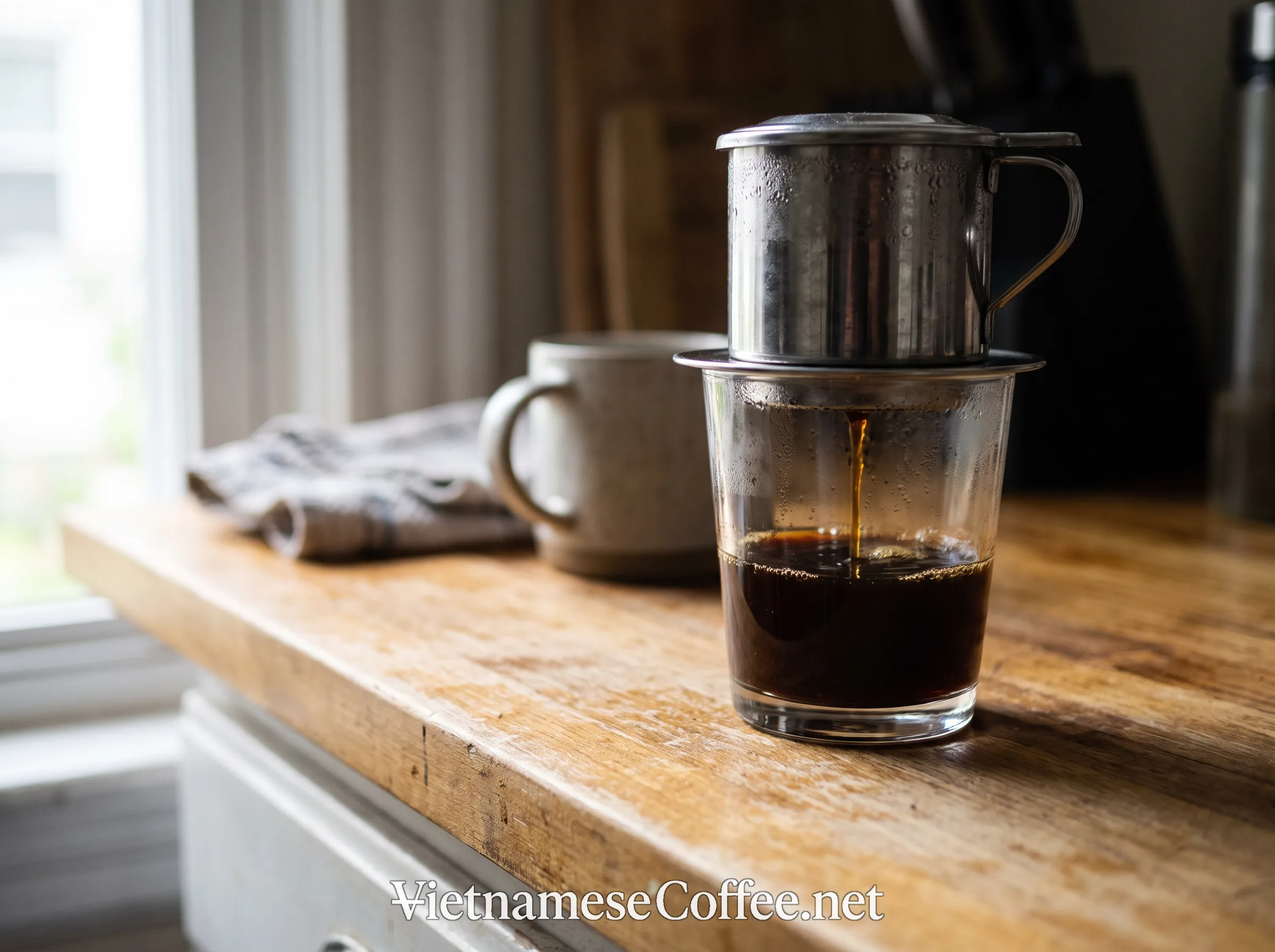
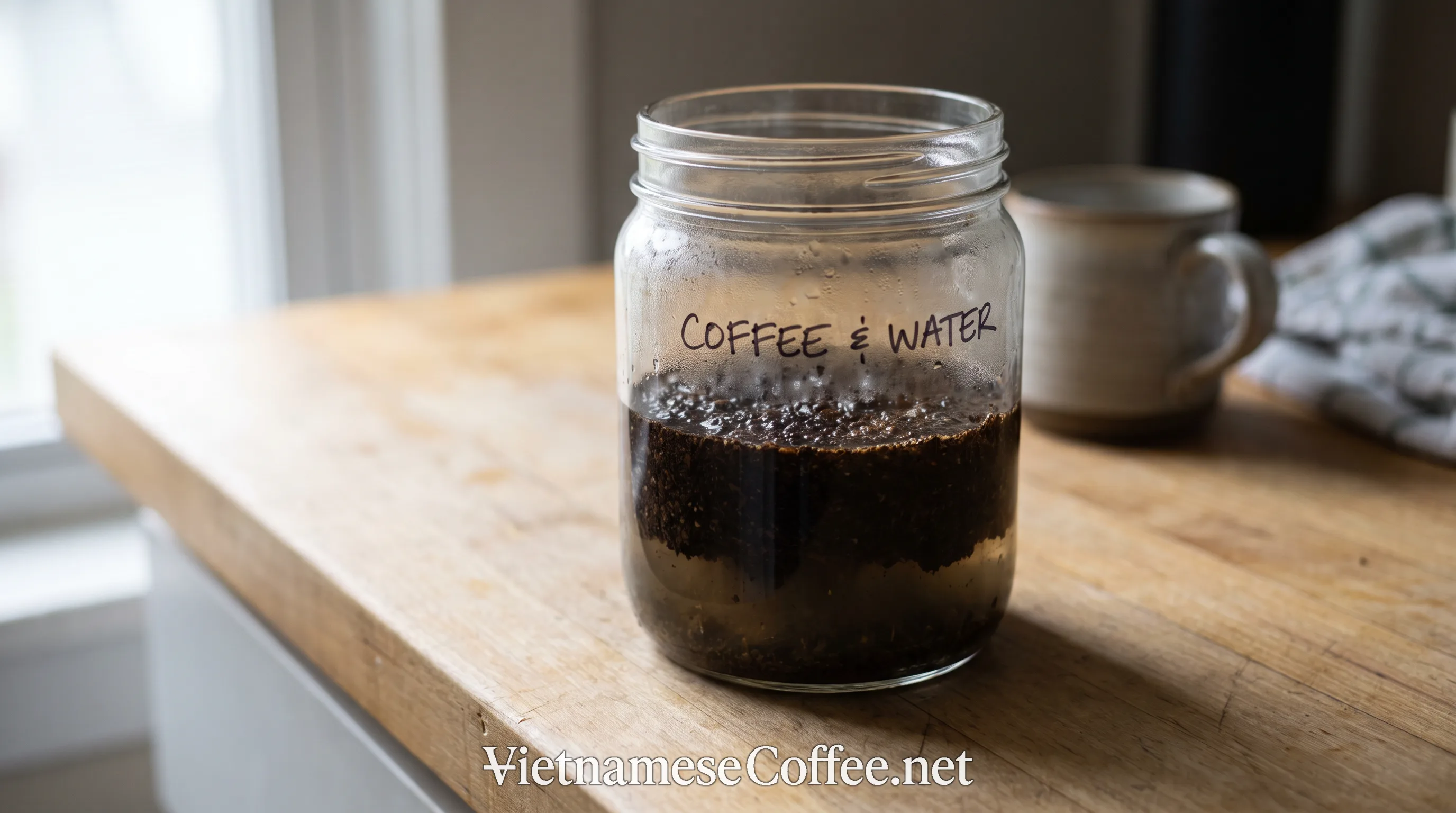
Coffee/FoodNutrify describes a cold immersion method that is functionally separate from the phin's own drip mechanism: coarsely ground coffee steeps in cold water for 12 to 16 hours, then is strained afterward, with the phin's usual hot-water drip process not really part of the extraction at all. Bazan Coffee instead describes steeping "using a phin filter," which suggests at least one version of this method involves the phin as a vessel or straining tool during the process.
Because sources describe the phin's actual role differently, this page does not claim to know exactly how the device is used across every published version. The consistent element is the underlying extraction: coarse grounds sitting in cold water for an extended period. This is different from ordinary Vietnamese iced coffee, or cà phê sữa đá, which is brewed hot through the phin's normal process and then cooled or poured over ice afterward.
How the immersion method works, and what steep time actually does
Recipe sources describing this method give a steep-time range of roughly 12 to 24 hours: Coffee/FoodNutrify cites 12 to 16 hours, Bazan Coffee and Phin Coffee Hoi An both cite 12 to 24 hours, and Deccan Chronicle cites approximately 24 hours. This range reflects what published recipes commonly specify, not a single fixed correct number.
Extraction research complicates the assumption that steeping longer simply produces a stronger or better result. Fuller and Rao found that caffeine and chlorogenic acid concentrations in cold brew reached equilibrium after roughly 6 to 7 hours under the conditions they tested. Angelo and colleagues found that a shorter tested steep, 14 hours, combined with a coarser grind scored better in sensory evaluation than a longer 22-hour steep, which produced higher titratable acidity rather than a more favorably "stronger" cup.
Flavor and serving
Cold brew coffee, including Vietnamese-style versions, is commonly described as smoother and less acidic than hot-brewed coffee, and Bazan Coffee describes its own cold brew phin result this way specifically. Several peer-reviewed studies support a real difference here: multiple comparisons found lower titratable acidity in cold brew than hot brew, and a large sensory study from the Coffee Science Foundation found cold brew scored lower for bitter, sour, and rubbery flavor and higher for floral flavor across the origins and roasts it tested.
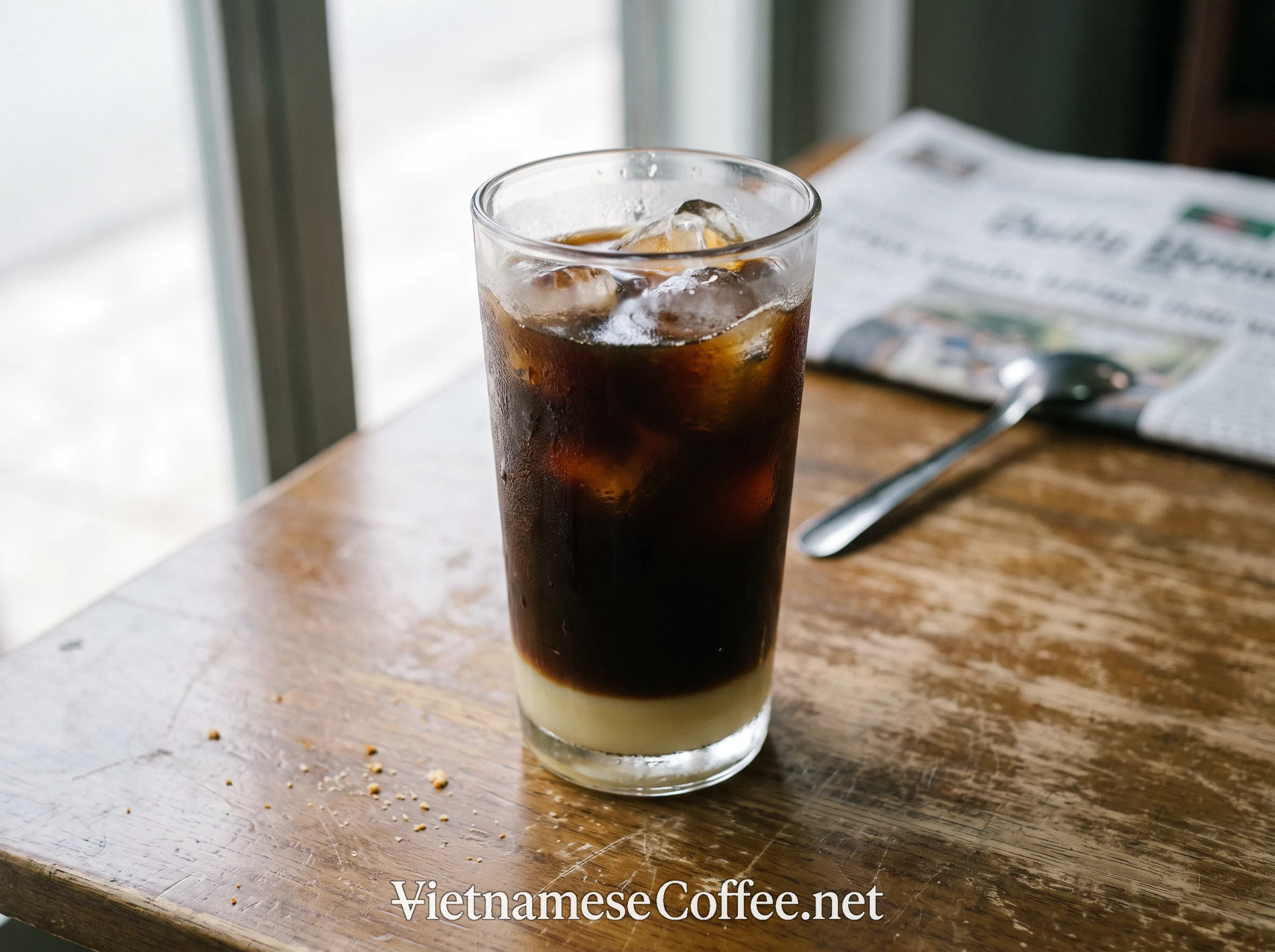
That said, this is not a simple automatic chemical rule. The same research shows pH was often comparable between hot and cold brew despite titratable-acidity differences, and that grind size, extraction time, and coffee origin measurably shifted bitterness and sweetness among cold brews themselves. For serving, the cold-steeped result can be treated as a concentrate and poured over sweetened condensed milk with ice, adjusting sweetness to taste.