
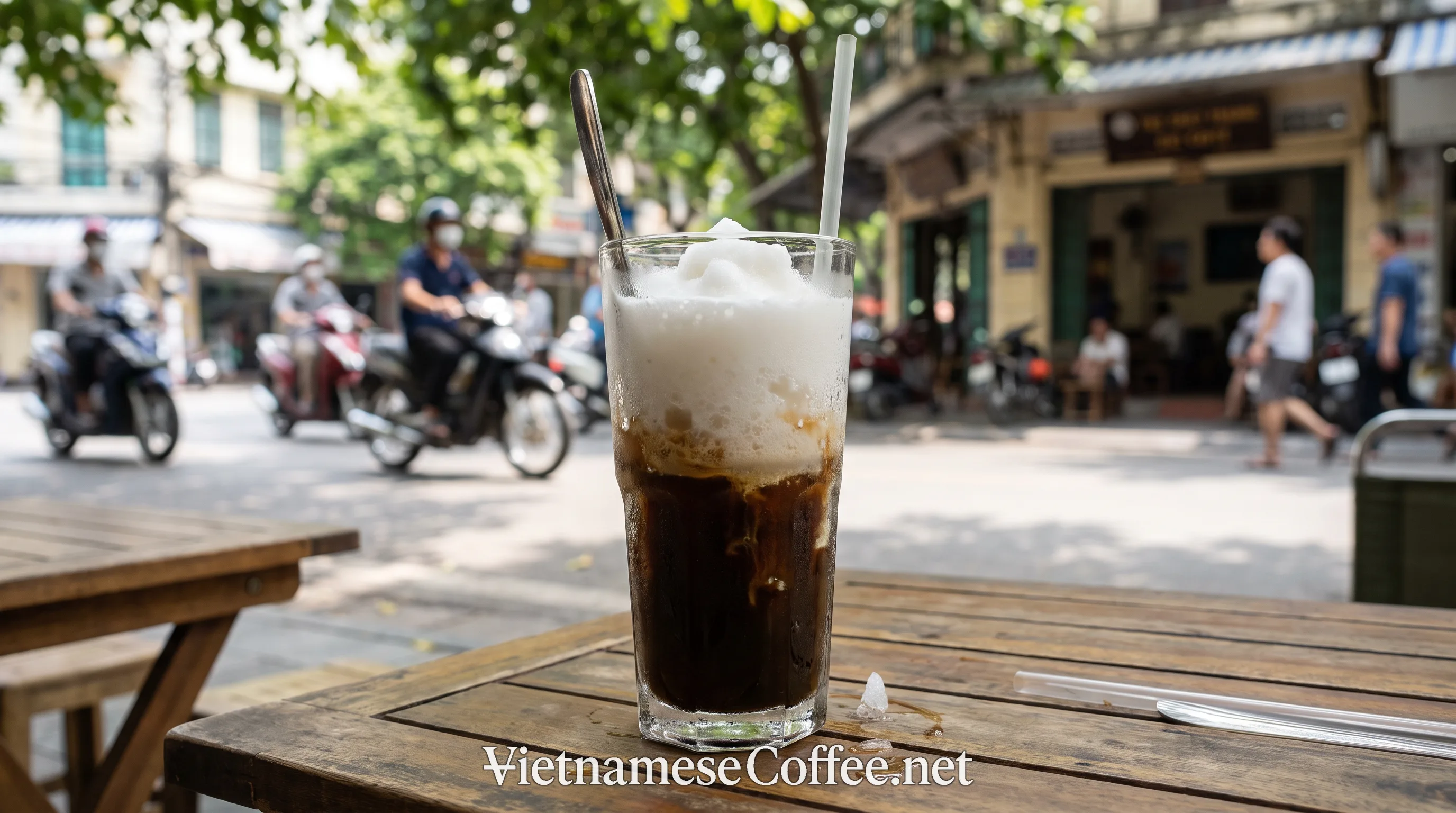
Cà phê cốt dừa at a glance
| Vietnamese name | Cà phê cốt dừa |
|---|---|
| Literal translation | Coffee with coconut cream/extract |
| Also called | Cà phê dừa, coconut coffee |
| Modern popularizer | Cộng Cà Phê, Hanoi, 2010s |
| Coffee base | Phin-brewed dark-roast robusta |
| Coconut layer | Coconut milk or cream, condensed milk, ice |
| Typical serving | Iced blended slush layered with coffee |
Meaning and modern Hanoi identity
The Vietnamese phrase cà phê cốt dừa translates directly as "coffee with coconut cream/extract." The phrase breaks into three parts: cà phê means coffee, cốt means essence or concentrated core, and dừa means coconut.
Unlike a standard coffee made with a small splash of coconut milk, cà phê cốt dừa places a thick, concentrated coconut component at the center of the drink's identity. The beverage is also commonly called cà phê dừa, meaning simply "coconut coffee."
Both names refer to the same broad family of Vietnamese coffee drinks combining dark coffee with coconut milk or coconut cream. The longer cốt dừa form usually signals a richer, more concentrated coconut preparation, particularly the thick frozen coconut slush served in modern cafes.
According to My Home Barista, the iced coconut slushy presentation became widely popular through Cộng Cà Phê, a Vietnamese cafe chain associated with Hanoi, during the 2010s. It is more accurate to describe Cộng Cà Phê as a key popularizer rather than as the uncontested inventor of coconut coffee.
Core ingredients and the coconut slush
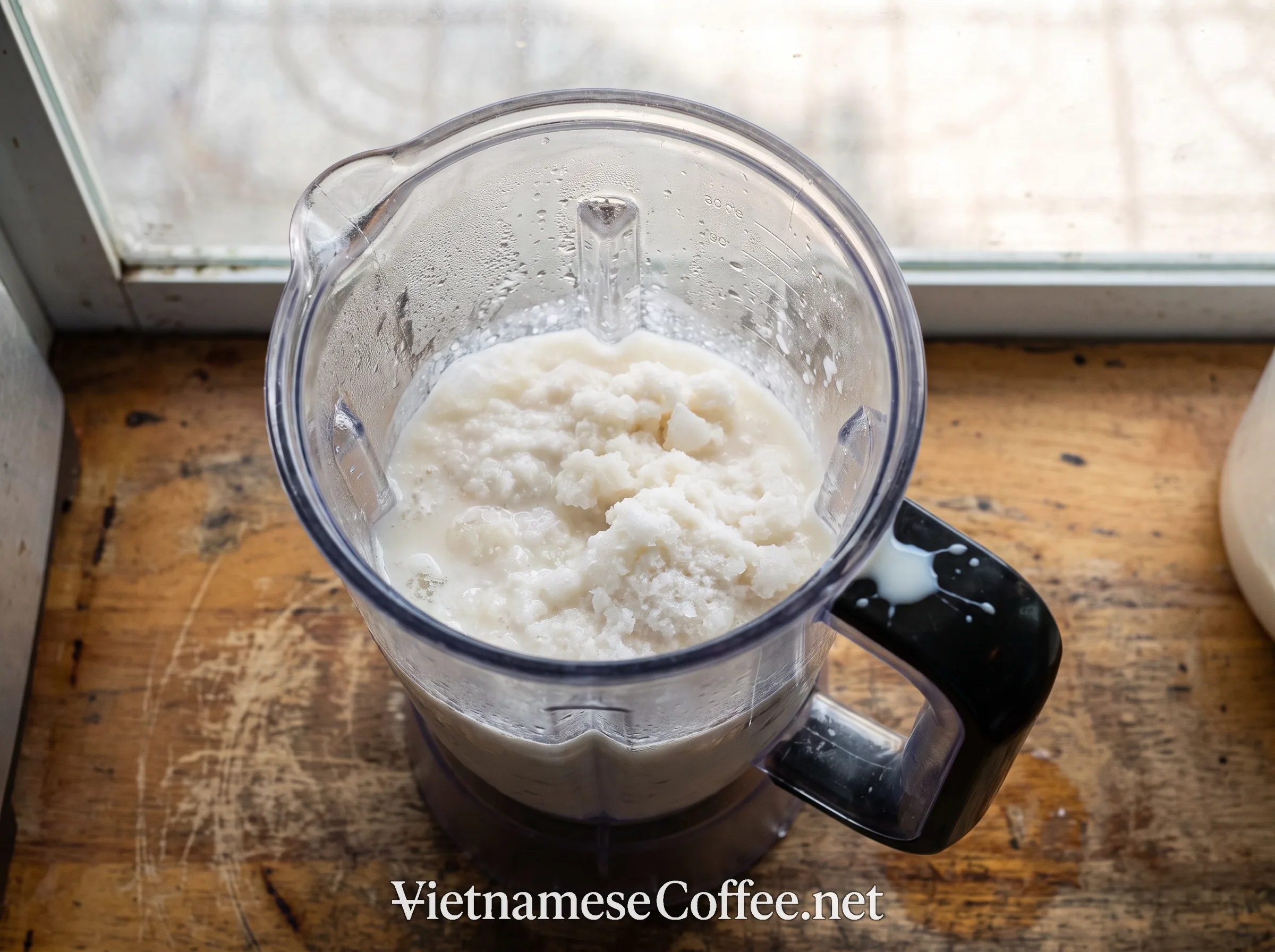
The defining contrast in cà phê cốt dừa is between a dark, concentrated coffee base and a pale, icy coconut topping. Coffee & Tea Culture describes the modern drink as strong phin-brewed coffee paired with a sweet frozen coconut smoothie.
The coconut portion usually combines full-fat coconut milk or coconut cream, sweetened condensed milk, and ice, blended until it reaches a thick, spoonable slush texture. Coconut milk and coconut cream are related but produce different textures.
According to Lacademie, coconut milk provides the familiar tropical flavor and liquid body, while coconut cream contributes a much thicker consistency. Cafes may use either ingredient or combine both, depending on the desired richness.
Sweetened condensed milk serves as the main sweetener and binder in many versions. Several contemporary recipes, including Bazan Coffee and Vicky Pham, use crushed ice rather than whole cubes because it blends more readily into the smooth, snow-like coconut mixture.
The phin coffee base
The coffee component of cà phê cốt dừa is usually prepared with a traditional metal phin filter. Coffee & Tea Culture recommends two to three tablespoons of dark-roasted robusta grounds, steeped with hot water inside the small gravity filter.
The resulting coffee is notably stronger and more concentrated than a standard Western drip coffee, allowing it to retain its character against the rich coconut slush. Robusta is especially well suited to this format because of its naturally heavy body, bitterness, and high caffeine content.
As Coconut Coffee Hanoi notes, a lighter arabica coffee can disappear beneath the sweetness and fat of the coconut mixture. The dark, roasted, slightly bitter robusta base provides the structural contrast that keeps the drink from reading simply as a frozen coconut dessert.
The coffee may be brewed directly into a serving glass, cooled briefly, or prepared separately and refrigerated before assembly. The goal is to preserve a strong, dark coffee concentrate while ensuring that the coconut layer remains thick and frosty.
Assembly and texture
A standard cà phê cốt dừa is built in two distinct stages. First, the coffee is brewed through the phin. Separately, the coconut milk or cream, condensed milk, and ice are blended until smooth, thick, and cold. According to Vicky Pham's recipe, this coconut mixture should resemble a slush rather than a thin liquid.
The drink can be assembled in either direction. Coffee & Tea Culture recommends spooning the coconut slush into a tall glass and slowly pouring coffee over it for streaked layers. Other recipes begin with coffee and ice, then add the coconut mixture on top.
Both approaches are visually appealing, but the second method makes the contrast between the black coffee and white coconut slush particularly clear. The drink is usually served immediately with a long spoon and a straw.
It may be gently stirred to marble the components together, or eaten and sipped in stages while the frozen coconut gradually melts into the coffee. This evolving texture is central to the experience.
Flavor profile and cultural role
The flavor of cà phê cốt dừa sits between iced coffee and dessert. The coconut layer is cold, fatty, sweet, and tropical, while the robusta coffee underneath is dark, bitter, roasted, and caffeinated. According to VietBeans, the combination is refreshing in warm weather because the frozen coconut softens the coffee's intensity.
Compared with cà phê sữa đá, coconut coffee is generally thicker, colder, and more textural. Both drinks use a strong coffee base and condensed milk, but cà phê sữa đá remains a liquid drink after stirring.
In contrast, cà phê cốt dừa includes a blended frozen element that makes it closer to a coffee smoothie or slush. It is usually more substantial and often served with a spoon as well as a straw.
The drink reflects a broader modern trend within Vietnamese coffee culture: established phin-brewed robusta is being paired with new textures and familiar local ingredients. Its growth beyond Vietnam shows how this once-local cafe specialty became a recognizable contemporary Vietnamese coffee style.