
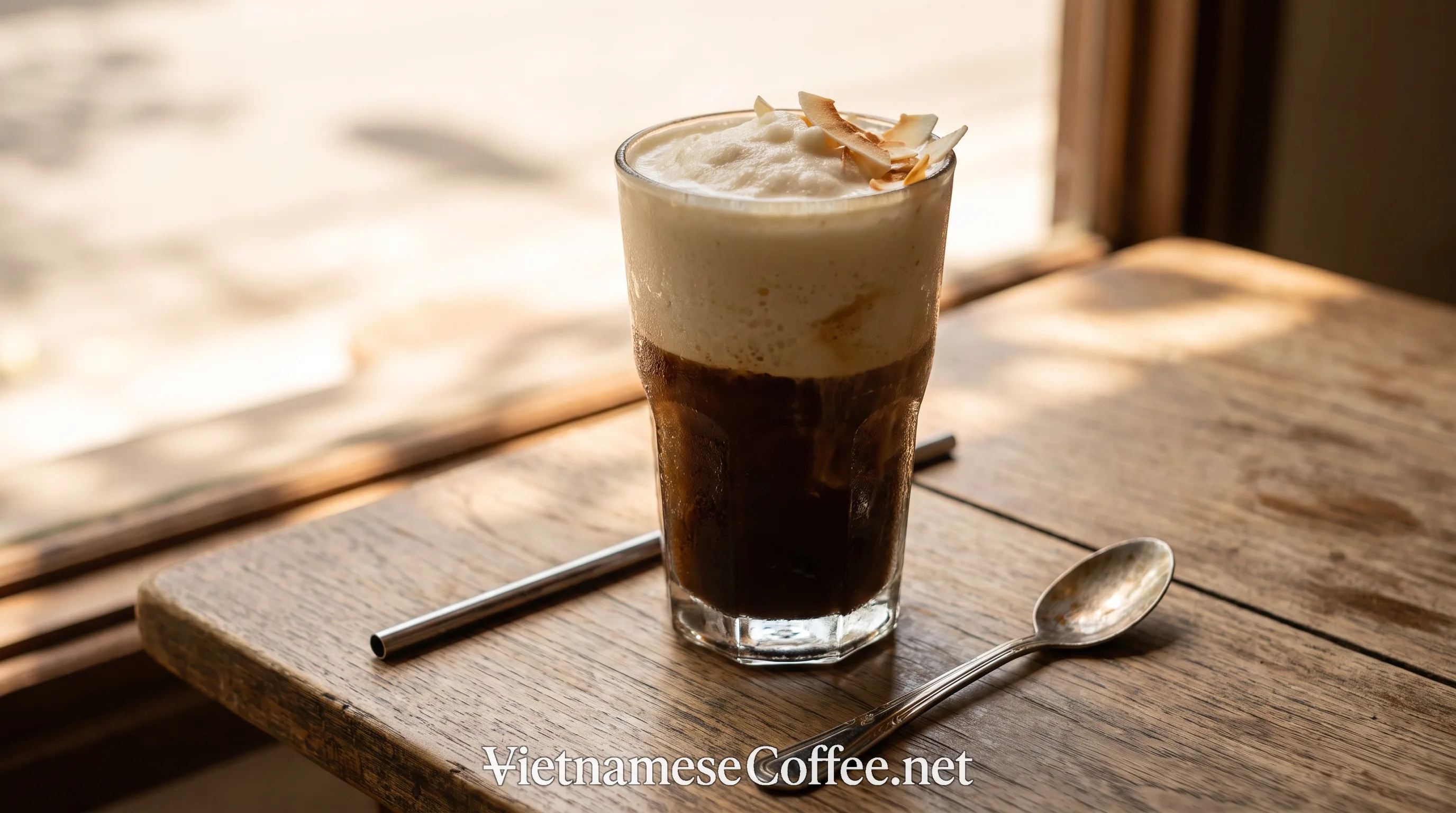
Ingredients
| Ingredient | Amount | Notes |
|---|---|---|
| Vietnamese Robusta coffee, ground medium-coarse | 20g, about 2-3 tablespoons | Dark-roasted Robusta works well as a bold base; sources converge on coffee strength rather than one exact roast |
| Hot water, just off the boil | 90ml, around 93°C/200°F | Slightly below a full boil helps avoid over-extraction |
| Full-fat coconut cream | 3-4 tablespoons | Coconut milk can be substituted for a lighter, less rich topping |
| Sweetened condensed milk | 1-2 tablespoons, divided | Ông Thọ is commonly used in Vietnam |
| Ice | 1 cup | Needed to blend the topping into a thick, frosty slush |
| Toasted coconut flakes | Optional | Adds aroma and texture contrast |
Step-by-step method
Step 1: Set up the phin
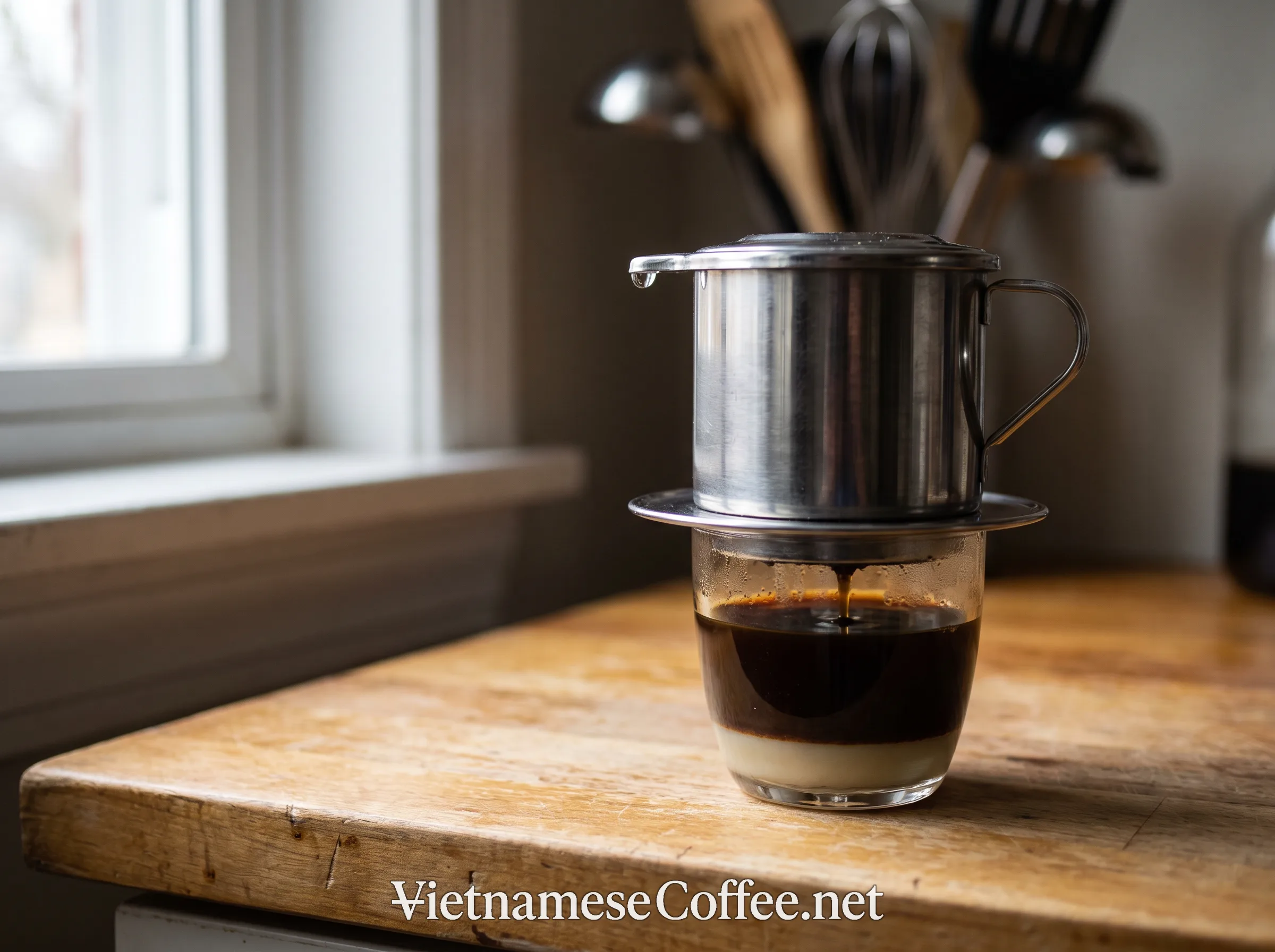
Place a phin filter over a cup. Add the ground coffee to the chamber and shake it level so the bed of grounds sits flat. Use a medium-coarse grind that lets the coffee drip slowly without stalling.
Step 2: Bloom the grounds
Pour a small splash of the hot water over the grounds, just enough to wet them evenly. Wait 20 to 30 seconds. This bloom step lets the coffee release trapped gas before the main pour.
Step 3: Brew the coffee
Add the remaining hot water to the phin chamber, then place the internal press according to your phin's design. Let the coffee drip for about 4 minutes, until it stops. Set the strong coffee aside to cool slightly while you prepare the coconut topping.
Step 4: Blend the coconut cream
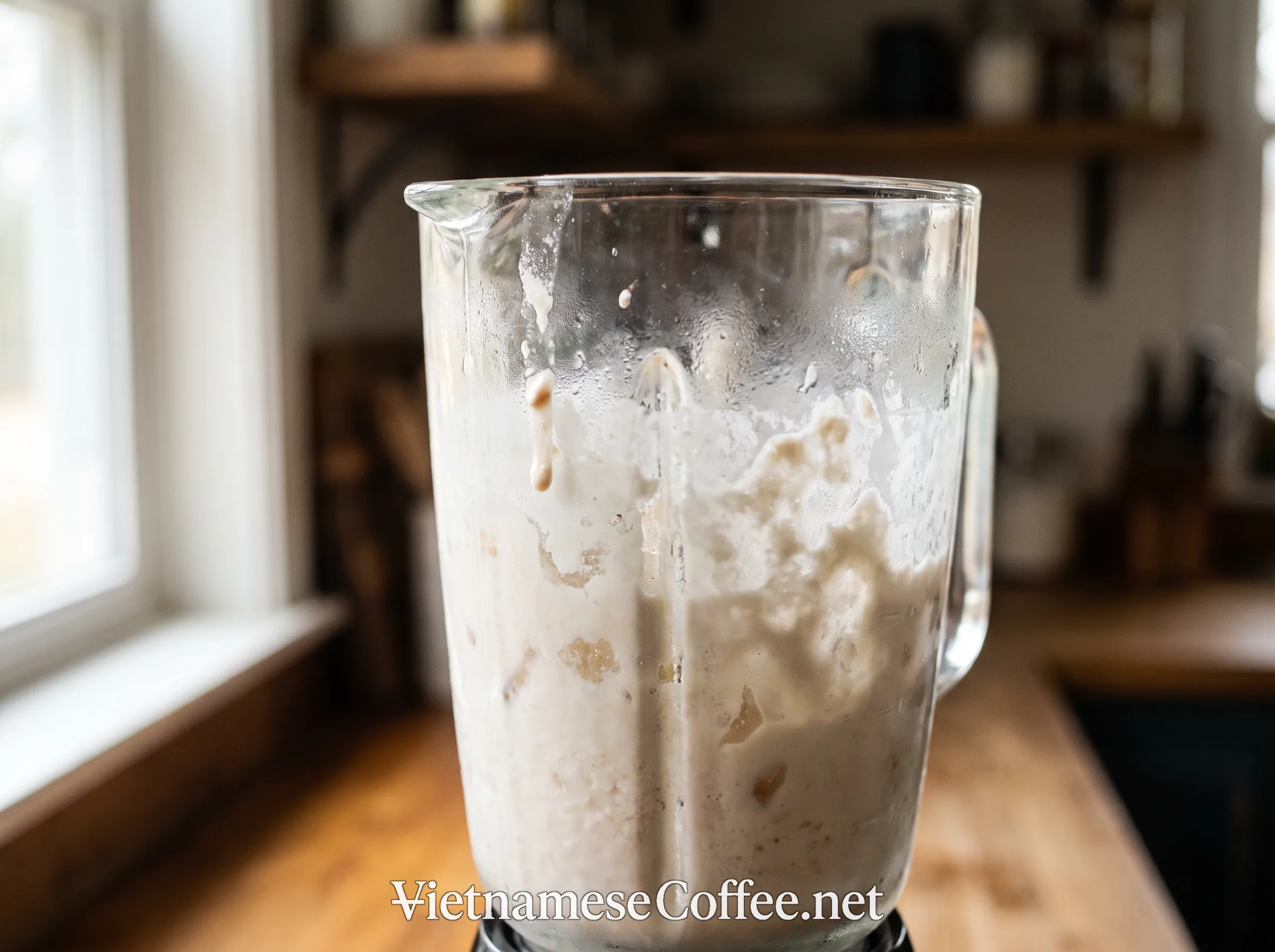
In a blender, combine the coconut cream, 1 tablespoon of the condensed milk, and the ice. If you prefer a lighter topping, substitute coconut milk for some or all of the coconut cream.
Step 5: Blend until frosty
Blend the mixture until it is thick, smooth, and frosty, similar in texture to a coconut slush or shake. Taste and add the remaining condensed milk if you prefer it sweeter.
Step 6: Assemble the glass
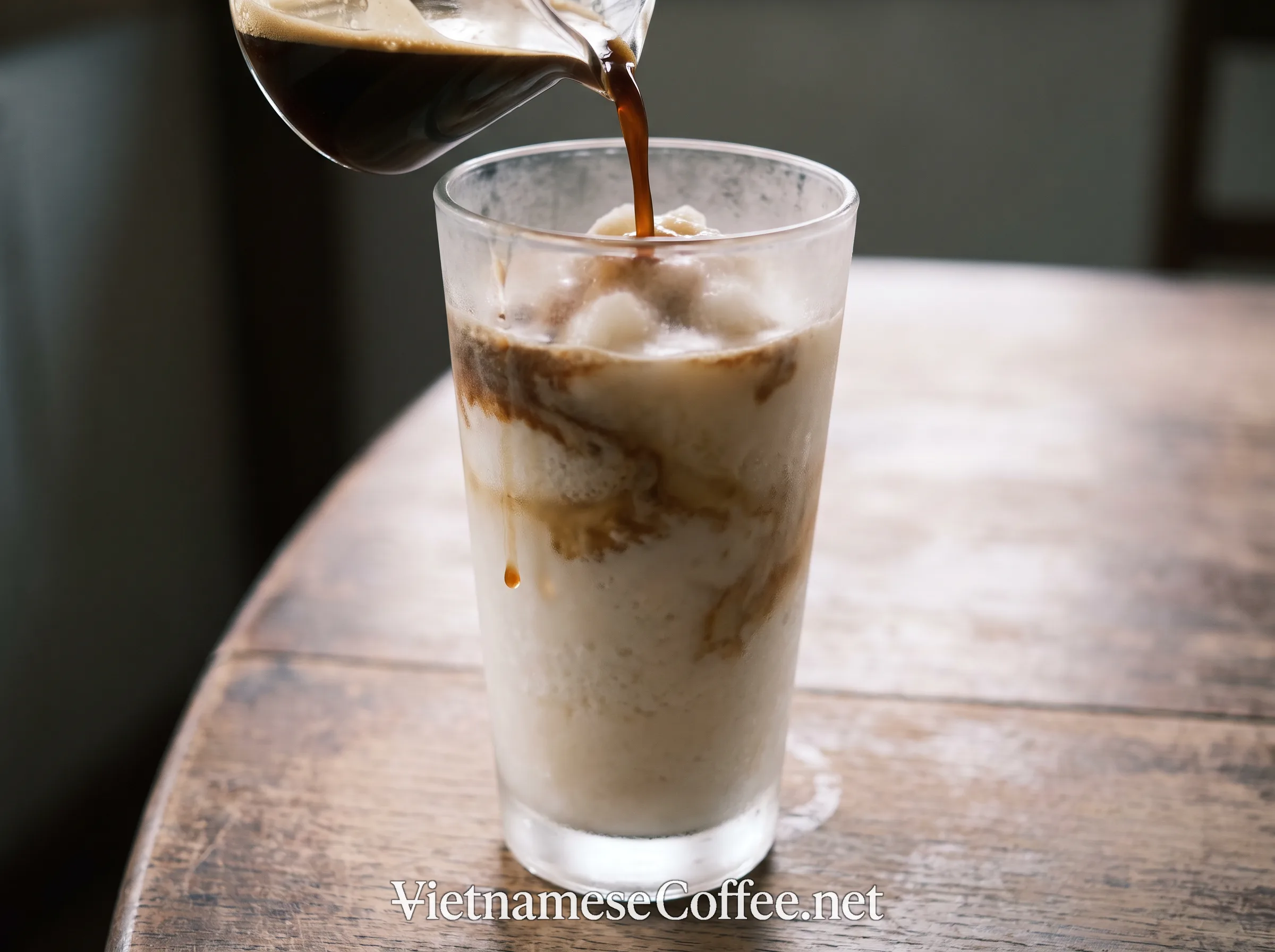
Spoon the blended coconut mixture into a tall glass. Slowly pour the strong, cooled coffee over the top so it streaks down through the pale cream rather than mixing in immediately.
Step 7: Garnish
Sprinkle toasted coconut flakes over the top, if using, for extra aroma and a contrasting texture against the smooth slush. Keep the garnish light so it does not weigh down the frosty topping.
Step 8: Stir and serve
Give the drink a gentle stir just before drinking to marble the coffee and coconut together. Serve immediately with a straw and a spoon, while the slush is still cold and thick.
Variations
Several sources describe a reversed assembly: pouring the coffee into the glass first, then spooning the blended coconut mixture over the top, for a neater layered look before stirring. Either order produces the same finished drink once stirred; the choice mainly affects how the layers look before mixing.
A warm version of this drink also exists, using no ice at all. My Home Barista and Delightful Plate both describe gently heating coconut milk with condensed milk over low heat, without boiling, then stirring it directly into hot brewed coffee instead of blending it with ice. This produces a warm, creamy coconut coffee rather than the iced, slush-topped version described above.
For a lighter topping, coconut milk can replace some or all of the coconut cream; the drink will be less rich and slightly thinner, but still recognizably coconut coffee. Hungry Huy's version also freezes the finished coconut slush briefly before serving for an extra-thick consistency.
How this compares to other Vietnamese coffee drinks
Cà phê cốt dừa shares its Robusta, phin-brewed base with both Vietnamese iced coffee and egg coffee, but its topping sets it apart. Where Vietnamese iced coffee mixes condensed milk directly into the coffee over ice, and egg coffee is topped with a warm whipped egg custard, coconut coffee is topped with a blended, semi-frozen coconut cream slush.
For the classic milk-based iced version, see the Vietnamese Iced Coffee (Cà Phê Sữa Đá) Recipe. For the warm custard-topped version, see the Egg Coffee (Cà Phê Trứng) Recipe.