
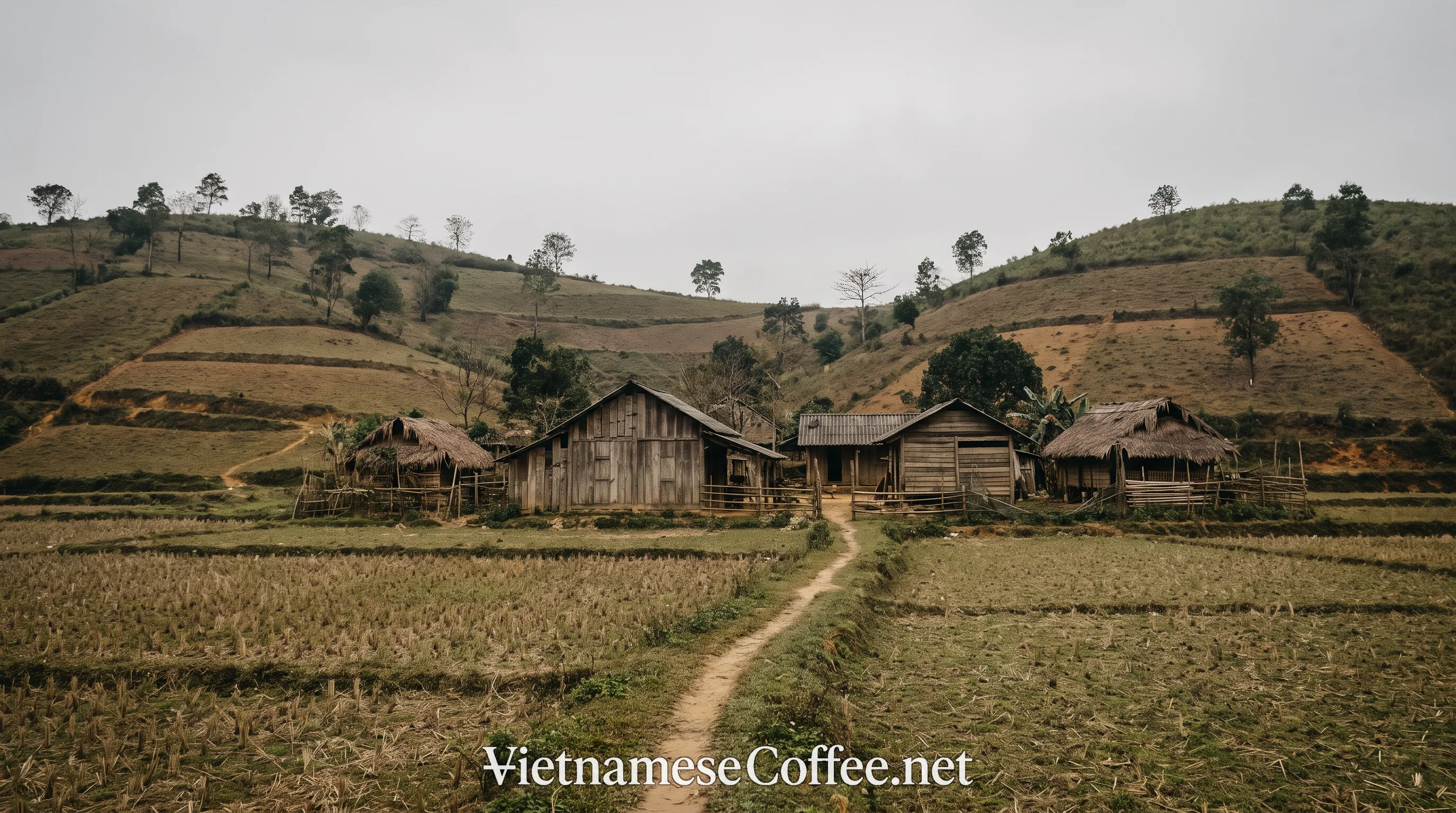
| Province | Quảng Bình, north-central Vietnam |
|---|---|
| Historical significance | Among Vietnam's earliest documented coffee-growing areas |
| Earliest documented cultivation | Recorded in the nineteenth century; exact dates and details vary by source |
| Species grown historically | Mainly Arabica, per multiple sources |
| Regional grouping in coffee history sources | Grouped with Ninh Bình, Nghệ An, and Quảng Trị as part of the historical north-to-central Arabica spread |
| VICOFA's 2013-2017 province coffee-area table | Historical data snapshot from that period; does not list Quảng Bình |
| Current Vietnamese Arabica expansion focus, per Helena Coffee Vietnam | Quảng Trị and Sơn La, not Quảng Bình |
| Present-day production status | Not established by any source located for this profile |
Quảng Bình's place in Vietnam's coffee history
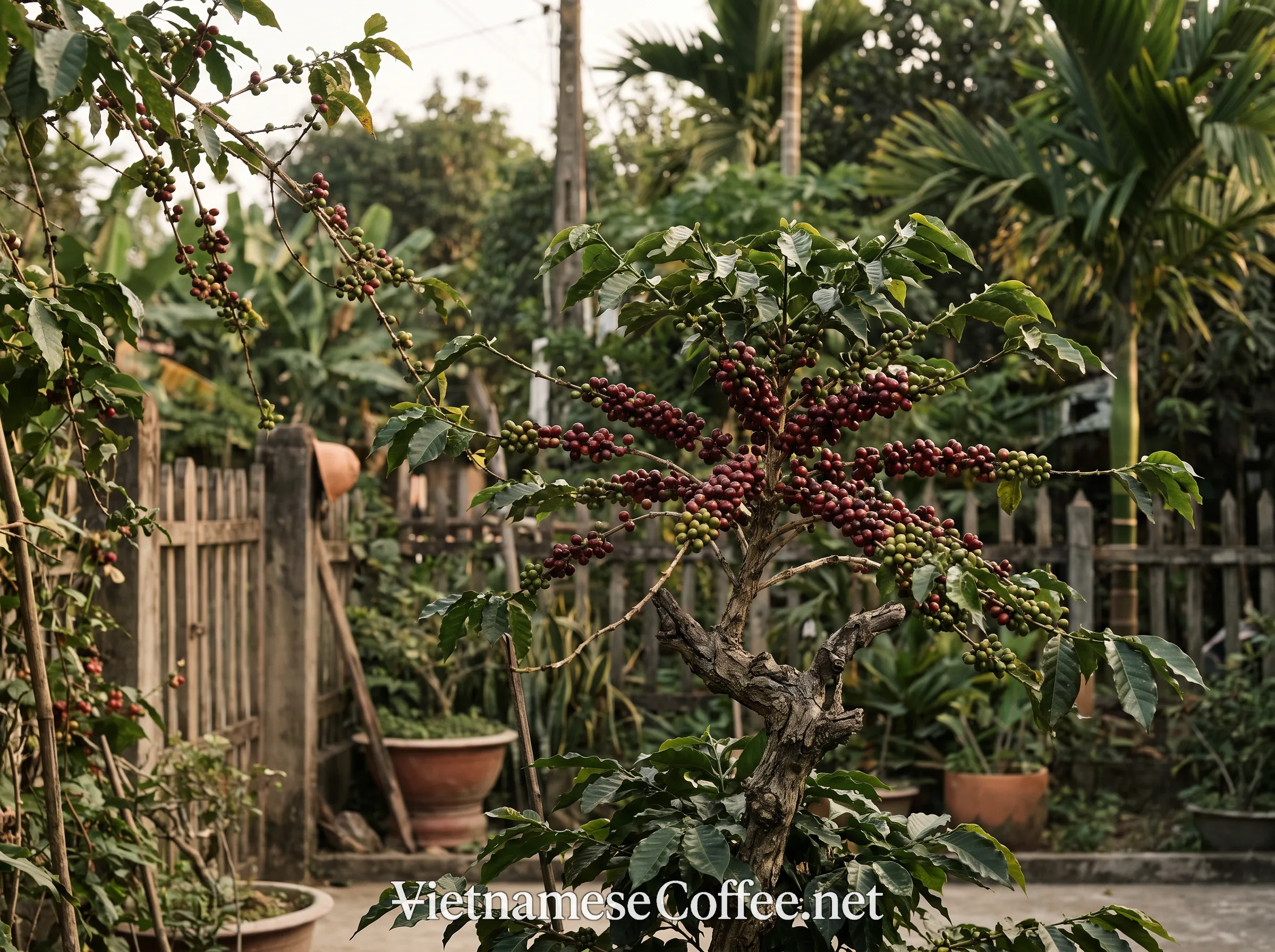
French missionaries introduced coffee to Vietnam in 1857. Sources differ on exactly when and where commercial-scale cultivation followed. Wikipedia's entry on coffee production in Vietnam states that the first coffee plantations in the country were established in 1888, in Ninh Bình and Quảng Bình provinces of what was then Tonkin, with early production mainly Arabica.
Other sources describe a different or less precise chronology. Nam Son Coffee cites a report attributed to the Deputy Governor of Quảng Bình from the 1860s, describing a European priest cultivating coffee seeds in the area, which would place documented coffee activity in Quảng Bình earlier than 1888. VICOFA's ICO-affiliated country profile and Việt Coffee's history both describe Arabica spreading from northern mission provinces such as Ninh Bình, Thanh Hóa, Nghệ An, and Hà Tĩnh to central provinces including Quảng Trị and Quảng Bình, without stating that Quảng Bình was one of exactly two founding plantation provinces in 1888.
Because these accounts do not agree on a single precise date or ranking, this page treats Quảng Bình as one of Vietnam's earliest documented coffee-growing areas rather than asserting a specific "first plantation" claim. What multiple sources do agree on is that coffee reached Quảng Bình, in some documented form, well before the Central Highlands became Vietnam's dominant coffee-growing region in the 1920s, and that early production in the area was predominantly Arabica.
Why the early history matters
Quảng Bình's documented coffee history sits at a transitional point in Vietnam's coffee development. Whether cultivation there began in the 1860s or by 1888, it predates the coffee variety diversification that later shaped Vietnam's industry. According to VICOFA, the French introduced Robusta and Excelsa to Vietnam only in 1908, after coffee had already reached areas such as Quảng Bình.
This makes Quảng Bình's coffee history primarily an Arabica-era chapter, distinct from the Robusta-led expansion that began in the Central Highlands from the 1920s onward and eventually made Vietnam the world's leading Robusta exporter. Available sources describe Quảng Bình's role mainly in general historical terms, grouped with Ninh Bình, Nghệ An, Hà Tĩnh, and Quảng Trị as part of an early Arabica corridor, rather than through detailed estate-level records comparable to some other early growing regions.
The disagreement between sources on exact dates and rankings is itself a useful caution for readers researching Vietnamese coffee history. Multiple secondary sources repeat similar-sounding claims about "the first plantations," but they name different years, different provinces, or different levels of specificity. A claim repeated across several websites is not automatically more reliable than a claim found in one; each account should be read for what it actually states rather than assumed to confirm the others.
What is not established about Quảng Bình today
VICOFA's most detailed available province-level coffee-cultivation table dates to 2013-2017 and covers the Northwestern Mountain, Central Coastal, Central Highlands, and Southeastern regions. That table does not list Quảng Bình. Because the table is now a historical snapshot rather than a current dataset, its omission of Quảng Bình does not establish anything about the province's coffee production status as of September 2026. It simply reflects what one dataset recorded roughly a decade ago.
Helena Coffee Vietnam identifies Quảng Trị and Sơn La, not Quảng Bình, as the focus of Vietnam's more recent efforts to expand Arabica-growing areas. This indicates where recent expansion attention has gone, but it is not itself evidence about whether coffee is still grown in Quảng Bình today, at what scale, or by whom.
This page does not assert a current production volume, an active hectare figure, or named present-day farms or cooperatives for Quảng Bình. No dated, checkable source establishing that information was found during this research. Readers researching present-day Vietnamese Arabica supply should treat Quảng Bình primarily as a historically significant early growing area, and should look to actively documented regions such as Đà Lạt, Khe Sanh in Quảng Trị, or Sơn La for current sourcing information.