
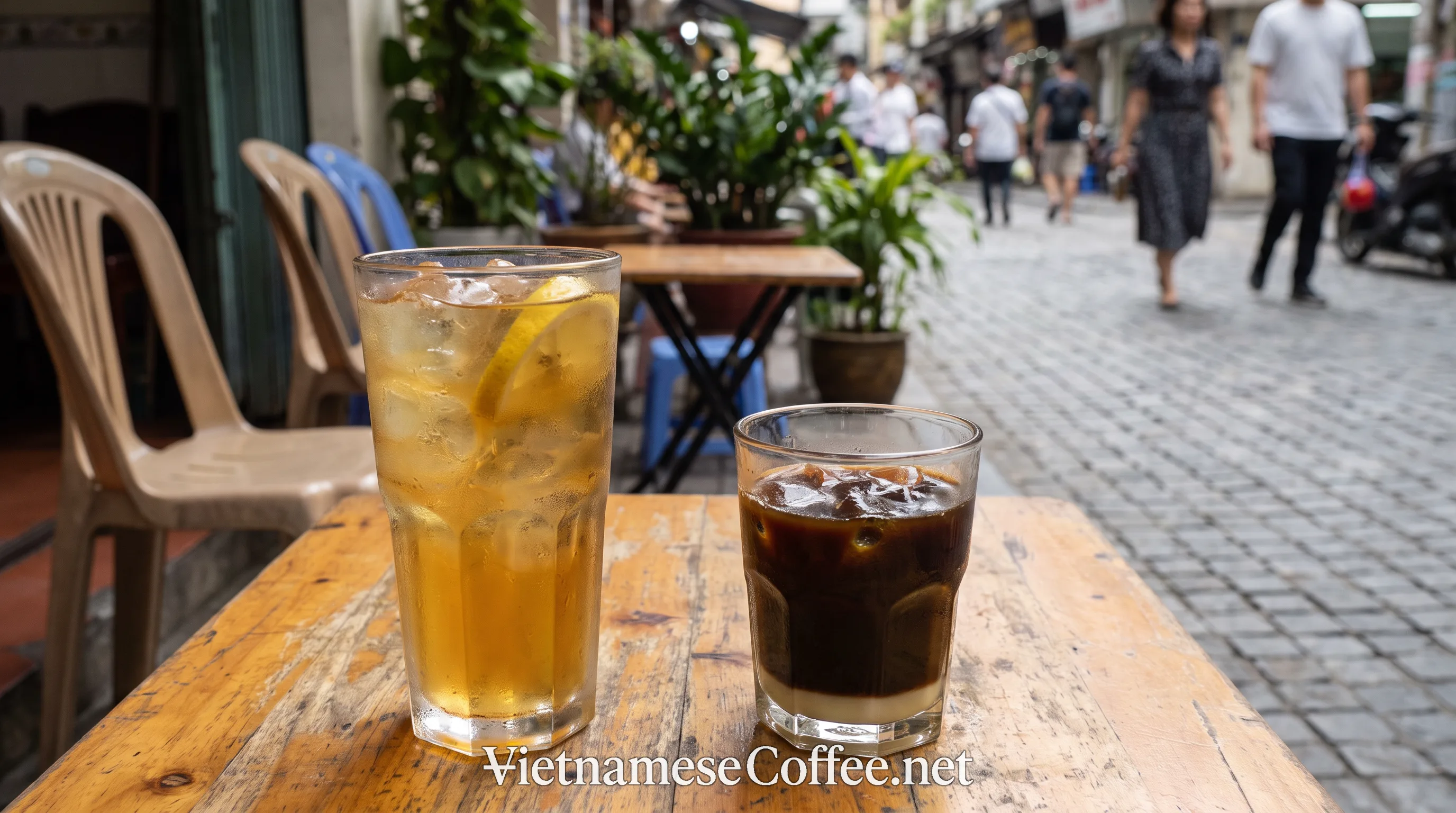
How trà đá is made
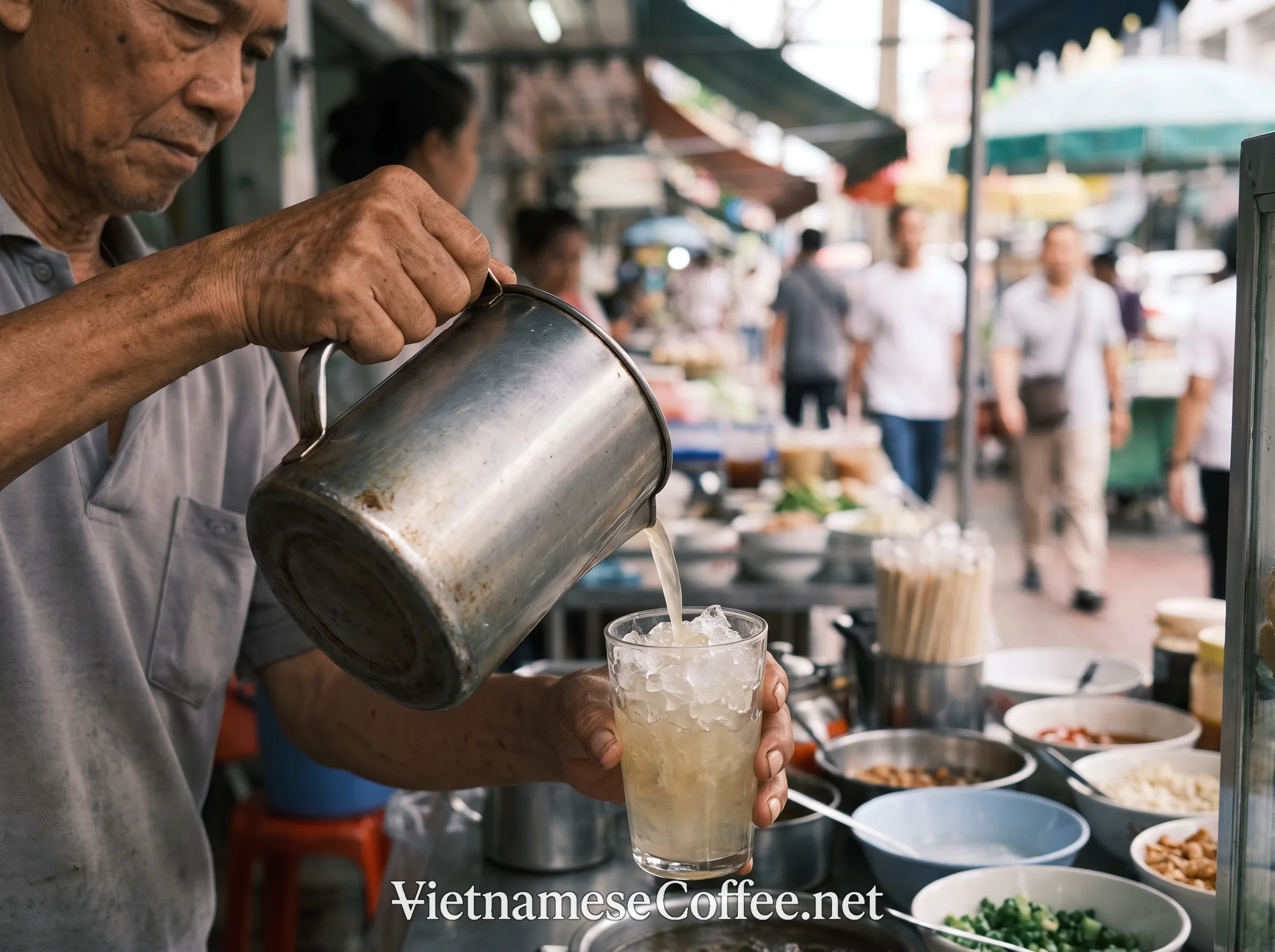
Trà đá is not one fixed tea recipe so much as a serving style: light tea, brewed strong and diluted over ice. Vietnam Coracle names several common bases, including jasmine tea, or trà lài, fresh-leaf green tea, or trà lá tươi, and lotus tea, or trà sen, alongside pandan leaf, lemongrass and ginger, or artichoke flavorings used in some regions and establishments.
Vietnam Knowledge describes a straightforward home preparation: strong green tea brewed hot, then poured over ice, with no particular ceremony involved, sometimes blended with dried chrysanthemum or artichoke. This is different from Vietnam's more deliberate tea traditions, such as small clay or ceramic pot brewing, short infusions, and carefully controlled water temperature.
Commonly free, and widely served
Trà đá is often complimentary or low-cost, though this is not a fixed or universal feature of the drink. Vietnam Coracle describes a long-standing tradition of trà đá arriving at the table before a customer has even sat down and traditionally not appearing on the bill, but the same source is explicit that this is changing: a nominal charge, commonly around 1,000 to 5,000 VND, has become common at many establishments in recent years.
Vietnam Coracle also notes a regional pattern worth knowing: iced tea is more commonly found in Vietnam's lowland, southern, and central regions, where the climate is hot and humid year-round, while hot tea, or trà nóng, is often preferred in the Central Highlands and northern provinces, particularly during cooler months. Vietnamese Notes broadens the picture of complimentary tea generally, noting it is offered beyond restaurants, including banks, government offices, and small shops.
Trà đá as a coffee companion
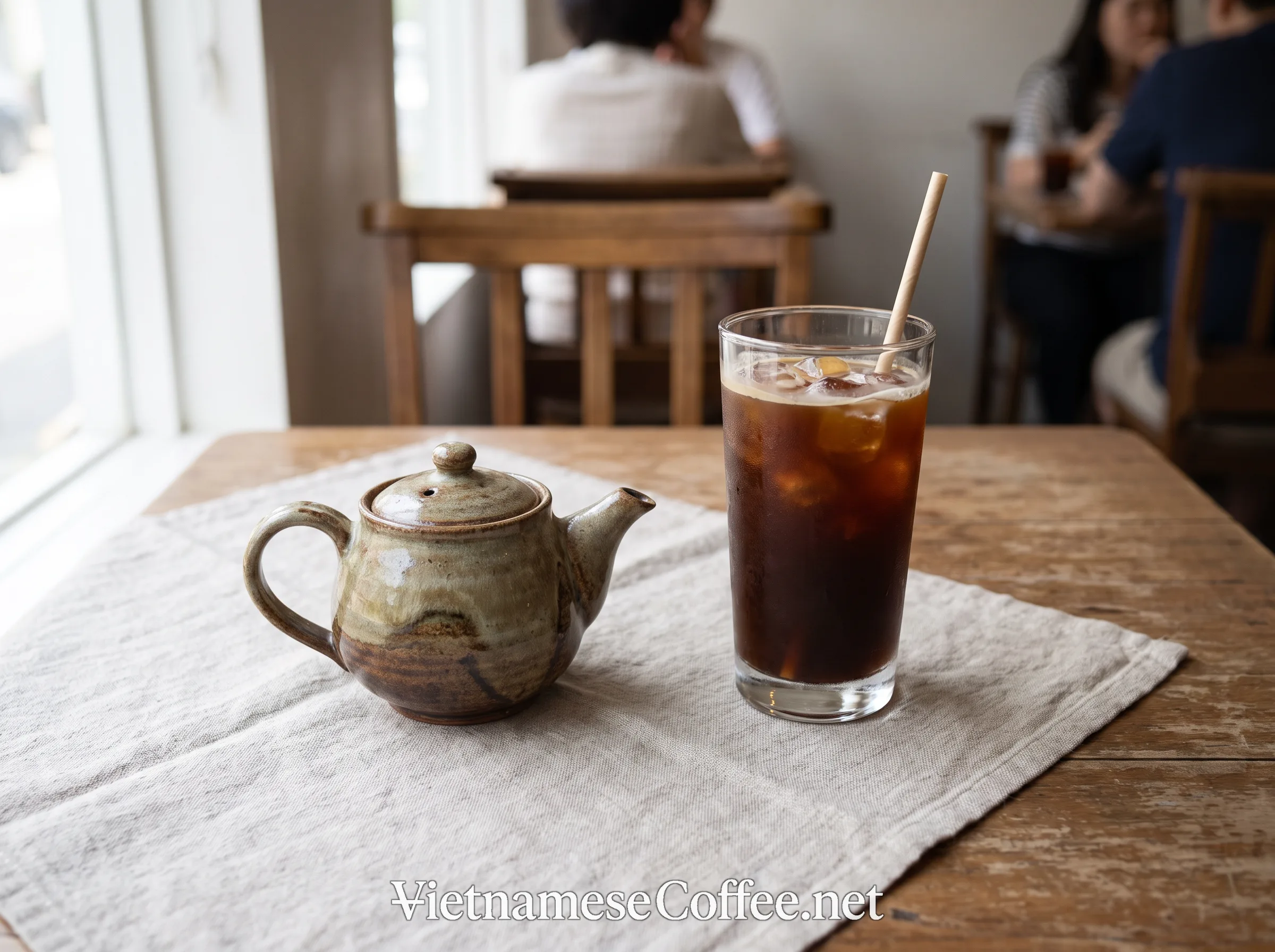
Trà đá's connection to coffee is documented most specifically in a southern Vietnamese context. The Smart Local describes ordering an iced coffee or iced milk coffee in southern Vietnam commonly coming with a small pot of tea on the side, available for refilling the glass once the coffee itself is finished. The Nest Asia similarly describes many cafés, especially in South Vietnam, serving a glass of cold jasmine or green tea alongside a coffee order.
What is consistently documented is the practice itself: tea served alongside a coffee order, sometimes specifically provided as a pot meant for refilling the glass after the coffee is gone. The Nest Asia notes that declining the tea is not considered impolite, though most customers drink it out of habit, since it is there regardless of whether they ordered it.