
Sữa đá at a glance
| Vietnamese phrase | Sữa đá |
|---|---|
| Literal meaning | Milk, ice |
| Milk type in coffee context | Sweetened condensed milk |
| Full drink name | Cà phê sữa đá |
| Northern equivalent term | Nâu / nâu đá |
| Related variant | Bạc xỉu, with a higher condensed milk ratio |
| Word order pattern | Base drink + milk modifier + ice modifier |
Literal meaning and word breakdown
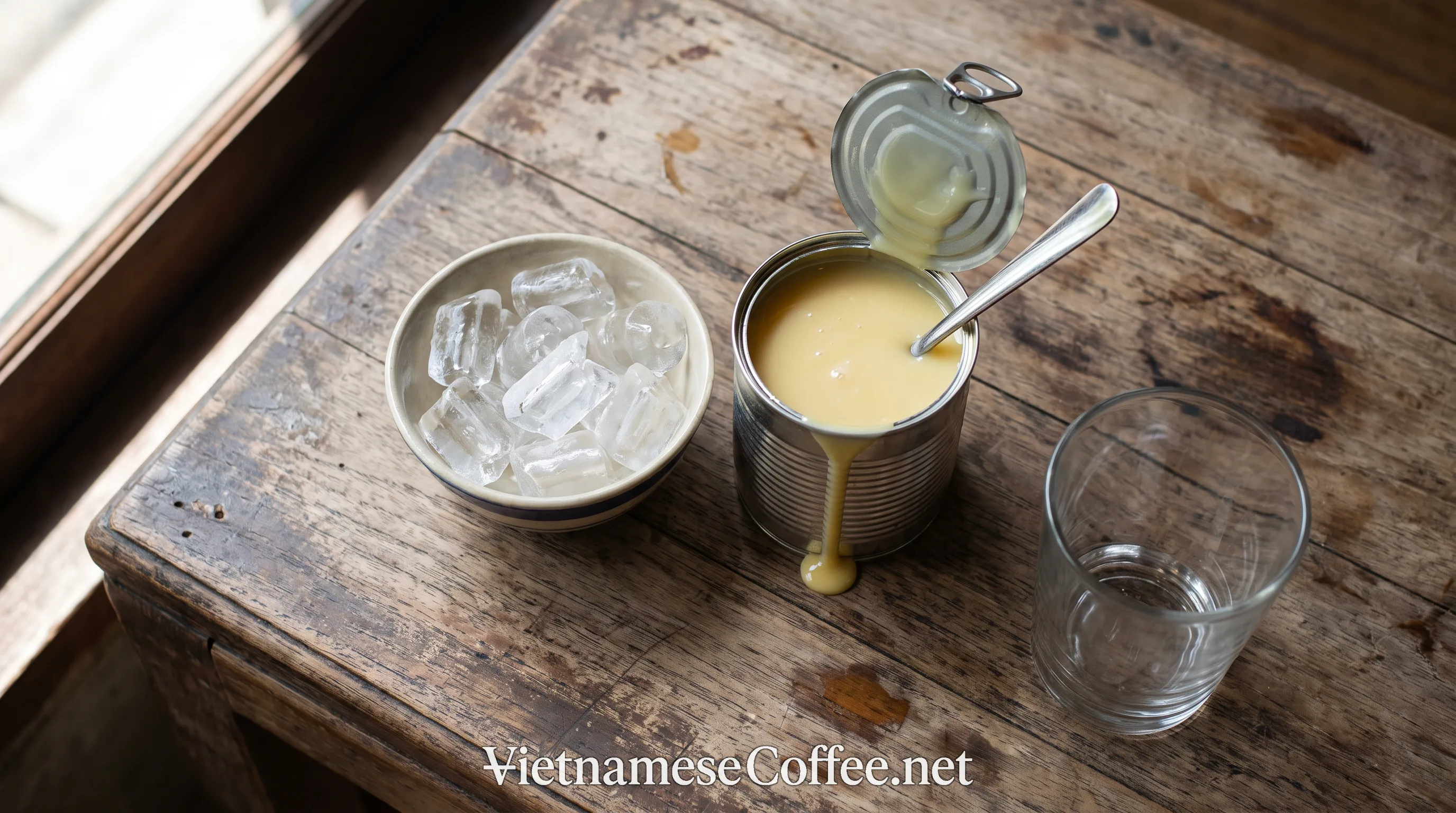
Sữa đá is not itself a single drink. It is a two-word phrase built from two separate Vietnamese terms, combined with a base drink name to describe how that drink is served. According to Coffee Balcony's breakdown of the phrase, sữa translates to "milk," while đá translates to "ice."
This structure reflects a broader pattern in Vietnamese drink naming. A base word, such as cà phê for coffee or trà for tea, is followed by modifiers that specify preparation. Adding sữa signals that milk is included; adding đá signals that the drink is served cold, over ice.
Crucially, in the specific context of Vietnamese coffee, sữa does not usually refer to fresh dairy milk. According to guides published by We Drink Eat Travel and There She Goes Again, the word functions as shorthand for sữa đặc, meaning sweetened condensed milk.
Condensed milk has been the standard dairy product used in Vietnamese coffee since the colonial era, when fresh milk was scarce and difficult to preserve. As a result, "milk" in a coffee context defaults to the sweetened, canned variety unless a customer specifies otherwise.
How sữa đá functions inside cà phê sữa đá
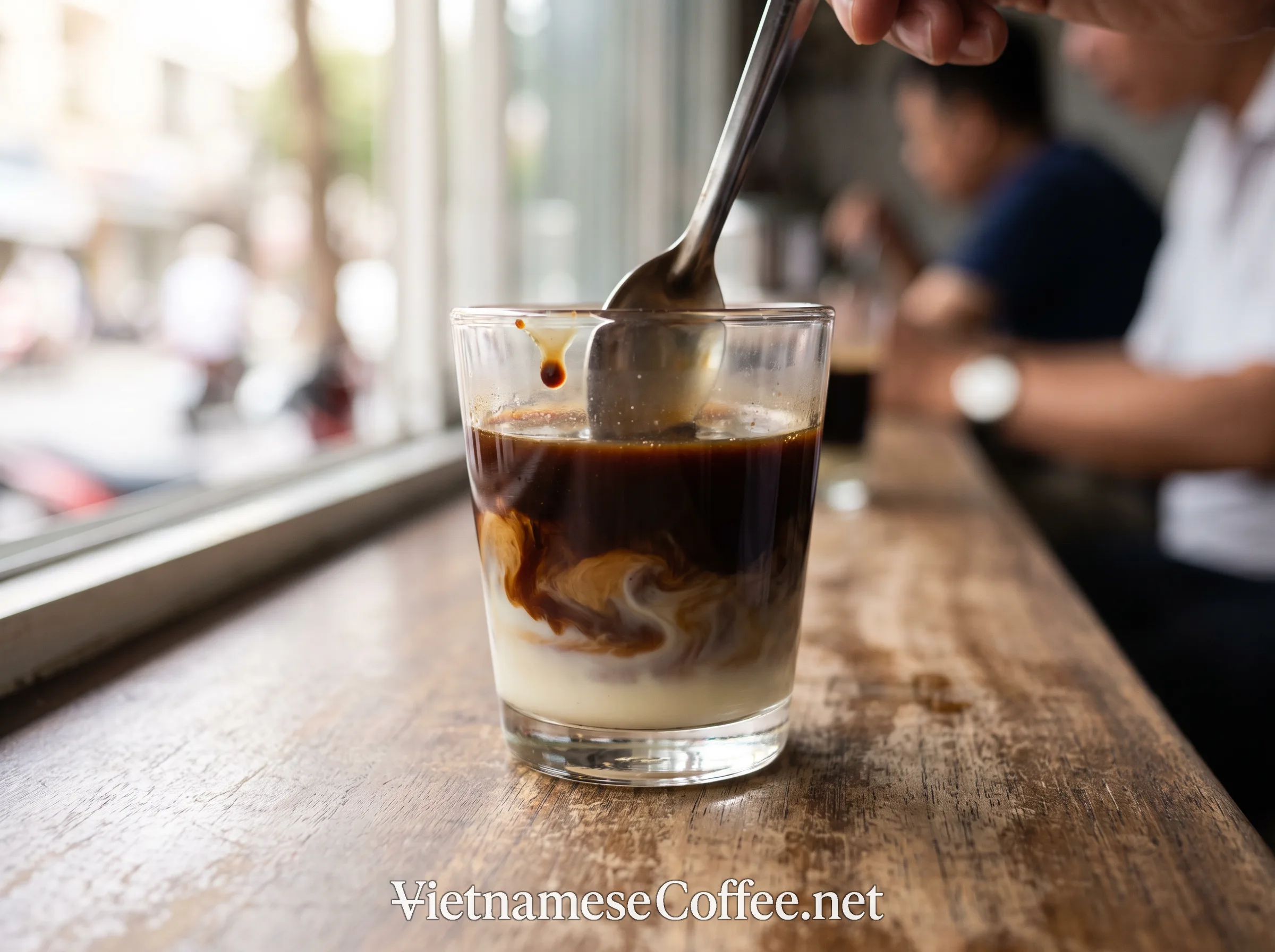
The most common and internationally recognized use of sữa đá appears inside the full drink name cà phê sữa đá. According to Wikipedia's entry on Vietnamese iced coffee, this drink is prepared by placing a layer of sweetened condensed milk at the bottom of a glass.
Dark-roasted robusta coffee then drips through a metal phin filter directly on top of it. Once the coffee finishes dripping, the two layers are stirred together and poured over ice.
Coffee Balcony's guide confirms that the words break down cleanly across the phrase: cà phê means coffee, sữa means milk, and đá means ice. The full sequence describes the finished drink in the order its components are typically prepared.
Removing sữa from the phrase produces cà phê đá, iced black coffee with no milk added. Swapping đá for nóng produces cà phê sữa nóng, the same coffee and condensed milk combination served warm instead of over ice.
Regional variation: sữa versus nâu
Sữa is the standard southern Vietnamese word used in cà phê sữa đá. Northern Vietnam, however, frequently uses a different naming convention for the same basic drink. According to Sort of Legal's comparison of regional Vietnamese coffee terms, the same coffee-and-condensed-milk combination is commonly called cà phê nâu đá in the north, particularly in Hanoi.
This uses nâu, meaning "brown" and describing the drink's resulting color, in place of sữa. The distinction between the two regions is a difference in which word describes the drink, color-based in the north and ingredient-based in the south, rather than two different words for milk itself.
Despite this regional variation in vocabulary, the underlying combination that sữa đá describes remains consistent nationwide. Whether a cafe calls the finished drink cà phê sữa đá or cà phê nâu đá, the customer receives the same essential preparation.
Sữa đá beyond coffee: bạc xỉu and other combinations
The phrase sữa đá is not exclusive to standard coffee proportions. It also describes the milk-and-ice components present in closely related Vietnamese drinks that adjust the ratio of coffee to condensed milk. According to reporting from Tuoi Tre News, bạc xỉu is often described as an "upside-down" version of cà phê sữa đá.
Comparative data published by 7 Kafe illustrates this proportional shift clearly. Standard cà phê sữa đá uses roughly 60 to 70 percent coffee against 30 to 40 percent condensed milk. Bạc xỉu flips that ratio toward 20 to 30 percent coffee and 70 to 80 percent condensed milk.
This same sữa đá naming logic also extends outside of coffee entirely. According to Polyglot Club's Vietnamese vocabulary guide, trà sữa refers to milk tea. It is a separate beverage category built on the same "base drink plus milk" naming pattern used throughout Vietnamese drink culture.
Why the phrase matters for ordering coffee in Vietnam
For visitors unfamiliar with Vietnamese, understanding sữa đá as a modular phrase offers a practical advantage over memorizing entire drink names individually. According to Vietnam Master's travel guide to ordering coffee, simply knowing that sữa means milk and đá means ice is enough to modify many base drinks.
This vocabulary-first approach also helps prevent common ordering confusion. Cà phê đen đá and cà phê sữa đá differ by only a single word. Understanding that sữa specifically signals sweetened condensed milk helps travelers avoid the wrong drink.
Coffee Balcony's guide also notes that English-language menus and search engines frequently drop Vietnamese diacritical marks, rendering the phrase as "sua da" without tone marks. However, the underlying Vietnamese phrase and its precise meaning remain the same regardless of how it is transliterated.