
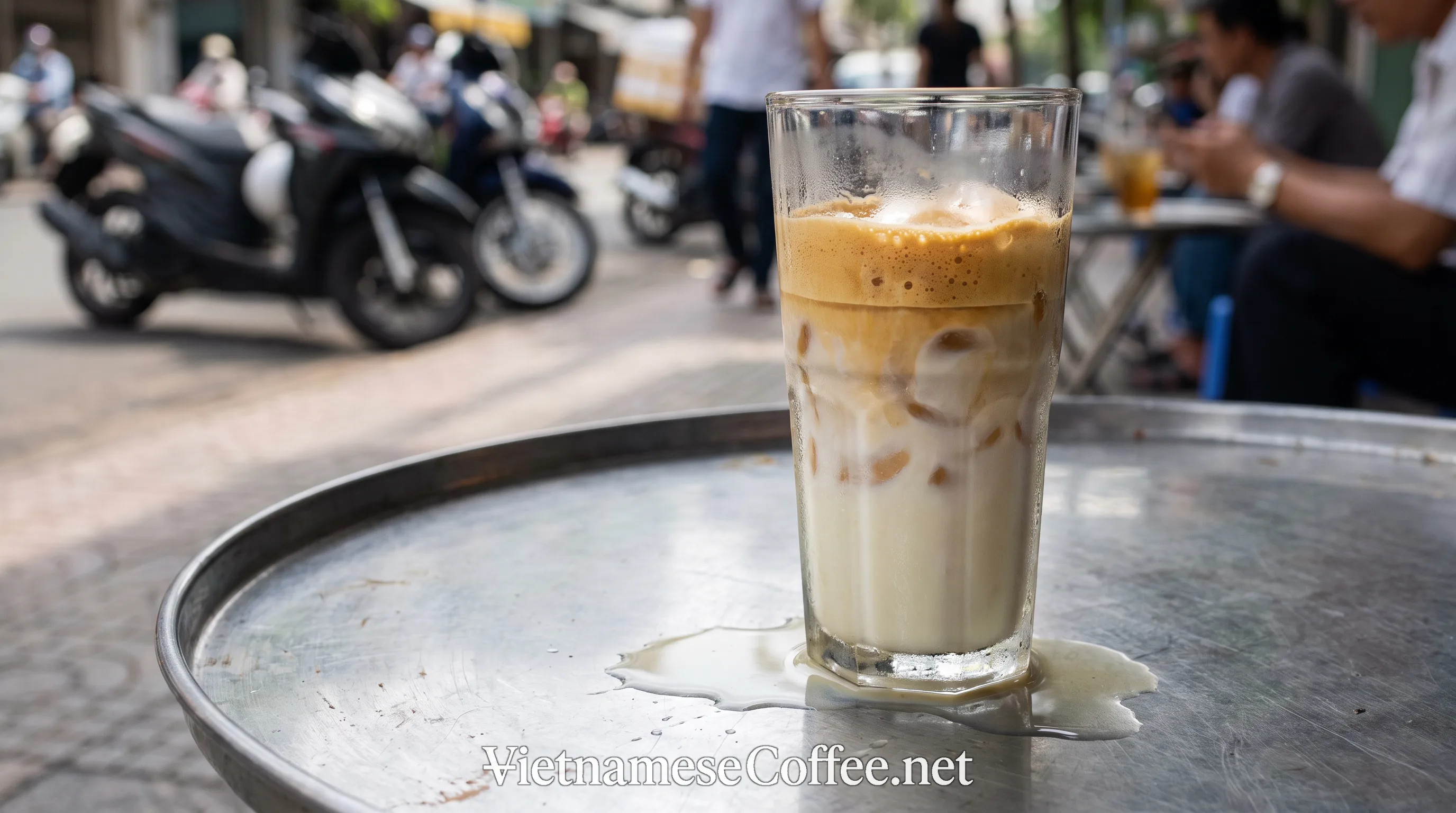
Bạc xỉu at a glance
| Place of origin | Saigon, Ho Chi Minh City |
|---|---|
| Cultural origin | Chinese-Vietnamese, Cantonese community |
| Primary coffee bean | Robusta |
| Key ingredients | Condensed milk, fresh milk, robusta coffee |
| Typical ratio | Approximately 3 parts milk to 1 part coffee |
| Common preparation | Iced bạc xỉu đá or hot bạc xỉu nóng |
History and origins in Saigon
Bạc xỉu is tied to the coffee culture of southern Vietnam and to the Chinese-Vietnamese community of Saigon. Vinpearl places its origin in Saigon in the early 20th century, while modern accounts commonly connect the drink to Cholon, the city's historic Chinese trading district.
Standard Vietnamese milk coffee, or cà phê sữa, puts strong robusta coffee at the center of the drink. Bạc xỉu reverses that structure. It is built as a milk-forward drink lightly flavored with coffee, making it gentler, sweeter, and less intense than classic cà phê sữa đá.
The name is usually traced to the Cantonese phrase Bạc Tẩy Xỉu Phé. Vicky Pham and Savour the Pho both explain the phrase as a white glass with a little coffee. In everyday Saigon speech, the longer phrase was shortened to bạc xỉu.
That name describes the drink accurately. The glass is visually pale because milk makes up most of the serving, while coffee plays a smaller aromatic role. The result is still recognizably Vietnamese because the coffee component is usually dark-roasted robusta, not a mild espresso-style base.
Bạc xỉu vs cà phê sữa
Bạc xỉu and cà phê sữa share a similar ingredient family. Both can use robusta coffee, sweetened condensed milk, and ice. The difference is proportion. Cà phê sữa is fundamentally a coffee drink sweetened with milk. Bạc xỉu is fundamentally a milk drink scented and flavored with coffee.
A typical cà phê sữa uses a full phin brew and a concentrated layer of condensed milk. It tastes dark, bitter, sweet, and heavily caffeinated. Bạc xỉu uses a smaller coffee dose and a much larger dairy base, often including fresh milk as well as condensed milk.
My Home Barista describes a home ratio close to 3 parts milk to 1 part coffee, with about half the coffee dose used for a standard robusta phin drink. That ratio explains the lighter color, softer texture, and dessert-like flavor.
The visual difference is easy to spot. Cà phê sữa is usually dark caramel after stirring. Bạc xỉu is much paler and is often served layered in a tall glass, with a white milk base and a thin amber coffee layer on top.
Key ingredients and flavor profile
The coffee in bạc xỉu still needs to be strong. Even though the volume is small, it must cut through condensed milk, fresh milk, and ice. Vietnamese robusta is a natural fit because its bitterness and roasted aroma remain noticeable inside a rich dairy drink.
Condensed milk supplies sweetness, body, and a caramel-like dairy flavor. Fresh milk softens the condensed milk and gives the drink a smoother, lighter texture. Together, the two milks create the white base that gives bạc xỉu its identity.
When made well, the first impression is creamy and sweet. The coffee follows as a roasted, nutty, dark-chocolate note rather than as a dominant bitter hit. That balance makes bạc xỉu more approachable for drinkers who find cà phê đen too intense.
The drink can be served hot or iced, but the iced version is more visually distinctive. Large ice cubes keep the milk cold and help preserve the layered presentation before the drink is stirred.
How to make bạc xỉu at home

Start with a small robusta concentrate. Add about 7 to 8 grams of medium-coarse robusta coffee to a phin, bloom it briefly with hot water, then brew a compact shot of roughly 30 milliliters. This is smaller than a standard phin serving because milk carries most of the drink.
For an iced serving, add sweetened condensed milk to the bottom of a tall glass, then fill the glass with large ice cubes. Pour fresh milk over the ice. The condensed milk will remain denser at the base, while the fresh milk fills the center of the glass.
Froth the small coffee shot if you want a modern layered look. Pour it gently over the milk and ice so the coffee sits as an amber layer on top. This creates the pale-and-brown contrast often shown in cafe presentations of bạc xỉu.
Serve the drink with a long spoon and stir before drinking. The final mixed color should be pale caramel, with the sweetness of condensed milk, the softness of fresh milk, and a clear but gentle robusta finish.
Modern variations and cultural significance
Bạc xỉu remains closely associated with Ho Chi Minh City coffee culture, but it is now served across Vietnam. Cafes may prepare it hot, iced, layered, frothed, or blended. The format changes, but the basic idea remains the same: more milk than coffee.
Coconut bạc xỉu is a common modern variation. In that version, some or all of the fresh milk is replaced with coconut milk. The coconut adds more body and a tropical flavor that works well with the dark roasted notes of robusta coffee.
Some shops blend bạc xỉu with crushed ice to make a thicker, colder drink. Others keep the traditional tall-glass presentation and emphasize the layers. These variations show how flexible the drink is without changing its milk-forward identity.
In the broader story of Vietnamese coffee, bạc xỉu matters because it records a specific local adaptation. It is not simply a weaker coffee. It is a Saigon drink shaped by Cantonese language, Vietnamese robusta, condensed milk, and the city's cafe habits.