
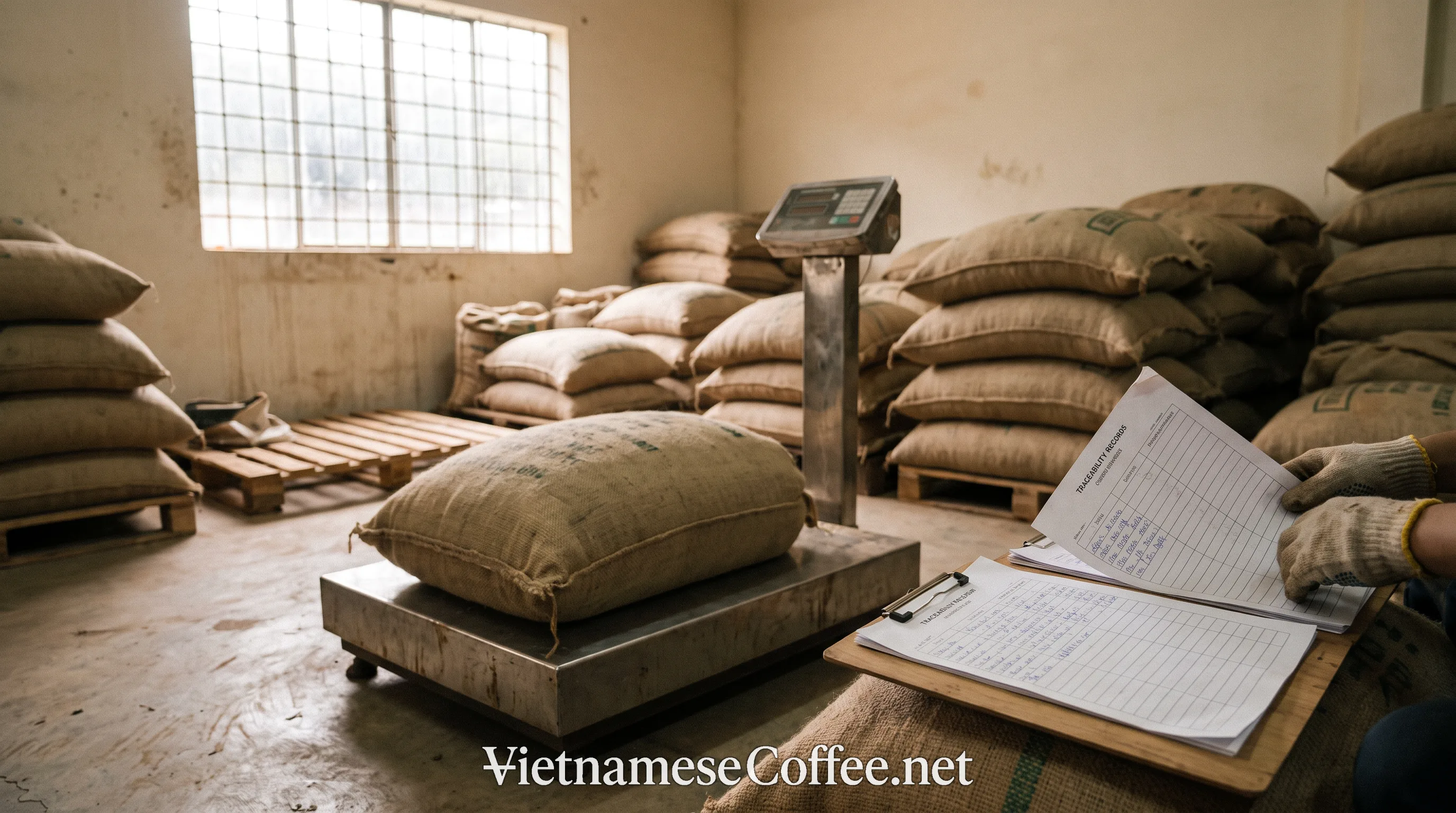
Why certifications differ
"Certified coffee" is not one category. A coffee can be Fairtrade certified, Organic certified, Rainforest Alliance certified, certified under more than one programme, or not certified at all. Each designation makes a different kind of claim.
Fairtrade is concerned with trading conditions and producer benefits. Organic certification addresses production and handling under a defined organic standard. Rainforest Alliance certification addresses environmental, social, and economic requirements across farms and businesses. They can overlap, but they are not interchangeable.
A certification seal should be read as a limited claim. It is not evidence that coffee is universally ethical, sustainable, high quality, or the best choice for every buyer. Standards have specific scope rules, audits, eligibility conditions, and chain-of-custody requirements. Those details matter more than a logo alone.
Vietnamese coffee can carry any of these claims. Robusta, Arabica, country of origin, natural processing, and certification are separate descriptors. One cannot substitute for another.
Fairtrade coffee
Fairtrade coffee is governed by a coffee-specific standard. Under Fairtrade's pricing approach, the applicable price is the reference market price or the Fairtrade Minimum Price, whichever is higher, plus the Fairtrade Premium. The Premium is additional money intended for collective investment by producer organisations, workers, or their communities.
The Fairtrade Minimum Price is not the retail price on a bag of coffee. Roasting, packaging, transport, tax, distribution, and retailer costs also affect the final shelf price. A high retail price does not prove that a grower received a correspondingly high farmgate price.
Timing matters when reading the Fairtrade price documentation. The published table current during September 2026 applies through 30 November 2026. Fairtrade approved revised coffee Minimum Prices in July 2026, with effect for new contracts from 1 December 2026. The Premium and organic differential do not change with that decision.
Fairtrade also distinguishes conventional from certified organic coffee. The organic differential is separate from the Fairtrade Premium. A product can carry both Organic and Fairtrade claims, but the two certifications should not be collapsed into one label.
Organic coffee
Organic coffee is a production and handling claim under a defined legal or certification standard. In the United States, use of the USDA Organic seal requires compliance with National Organic Program requirements. Other countries operate their own legal regimes and certifier systems.
Organic does not mean pesticide-free in an absolute everyday sense. It means the farm and supply chain follow the allowed-input, prohibited-substance, recordkeeping, and certification rules of the named standard. The exact status of a finished product also depends on the relevant chain of custody.
Organic is not a shortcut for other claims. It does not automatically mean Fairtrade, shade-grown, bird-friendly, carbon-neutral, or superior tasting. It also does not identify bean species, processing method, origin, or roast level. Those questions need separate product information.
For Vietnamese coffee, a buyer can treat Organic as one useful piece of evidence. It should be considered with coffee type, source transparency, process, roast date, and intended brew method. Vietnamese Coffee Processing Methods explains why natural, washed, and honey labels answer a different question.
Rainforest Alliance coffee
Rainforest Alliance certification is a sustainability certification. Rainforest Alliance describes its programme as assessing farms and businesses against environmental, social, and economic requirements. It is not a coffee variety, a roast style, or a processing method.
The seal can show that an operation participates in, and has been assessed under, that certification system. It does not mean coffee was grown in a rainforest. It does not mean no environmental impact occurred. It also does not establish Organic certification or Fairtrade pricing.
A blended product may have a complex supply chain. The scope of any certified claim depends on programme rules and the certified operation. The most informative product pages identify the certification, origin, and supply-chain information rather than relying only on a broad sustainability adjective.
What labels can and cannot say
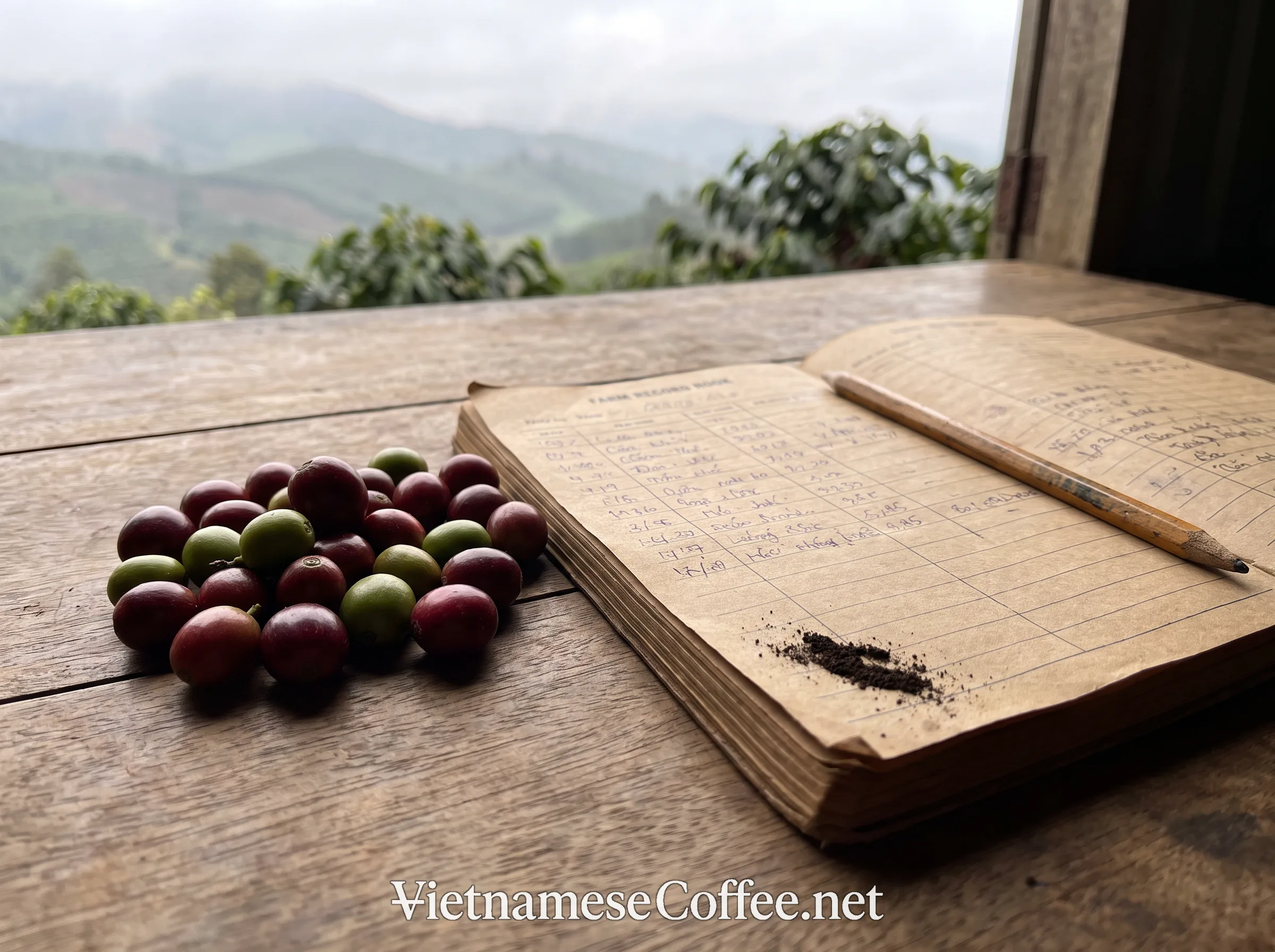
Certification can provide a checkable claim about compliance with a named programme. It cannot settle every buying decision. A seal does not identify roast freshness, bean quality, grind suitability, or whether a coffee will work well in a phin. Those are product-level questions.
The same distinction applies to origin and processing. "Vietnam" identifies the growing country. "Robusta" identifies the species. "Natural" identifies a post-harvest process. Fairtrade, Organic, and Rainforest Alliance identify different certification systems. Each label should be read on its own terms.
A practical label check has four parts: identify the programme, read the exact claim, note what operation is covered, and compare it with origin, species, process, roast, and price. This avoids treating certification as either meaningless marketing or a complete moral scorecard.
Certifications at a glance
| Certification | Primary focus | What it can signal | What it does not guarantee |
|---|---|---|---|
| Fairtrade | Trading terms and Premium | Compliance with Fairtrade requirements | Fixed retail price or identical producer outcomes |
| Organic | Production and handling standards | Certified organic claim under a named standard | Fairtrade terms or a specific flavour |
| Rainforest Alliance | Environmental, social, economic requirements | Assessment under Rainforest Alliance standards | Organic status, Fairtrade pricing, or zero impact |
| No certification | No certification claim | Nothing conclusive either way | Lack of responsible practices or quality |