
A robusta-dominant crop, not an arabica one
Vietnam is the world's second-largest coffee-producing country and the largest producer of robusta coffee. Robusta accounts for roughly 95% of Vietnam's total coffee output, while arabica makes up a much smaller share, grown mainly in cooler highland areas such as Đà Lạt.
That robusta dominance is the main reason Vietnamese coffee tastes and behaves differently from coffee grown in arabica-heavy countries. Robusta beans generally carry more caffeine and a heavier, more bitter body than arabica, which is part of why Vietnamese coffee is traditionally served strong and often cut with sweetened condensed milk.
Most of Vietnam's coffee farms sit in the Central Highlands, including provinces such as Đắk Lắk, Gia Lai, and Lâm Đồng. For a broader origin overview, read the Growing Regions guide and the comparison of robusta vs arabica.
The phin filter: how it is brewed
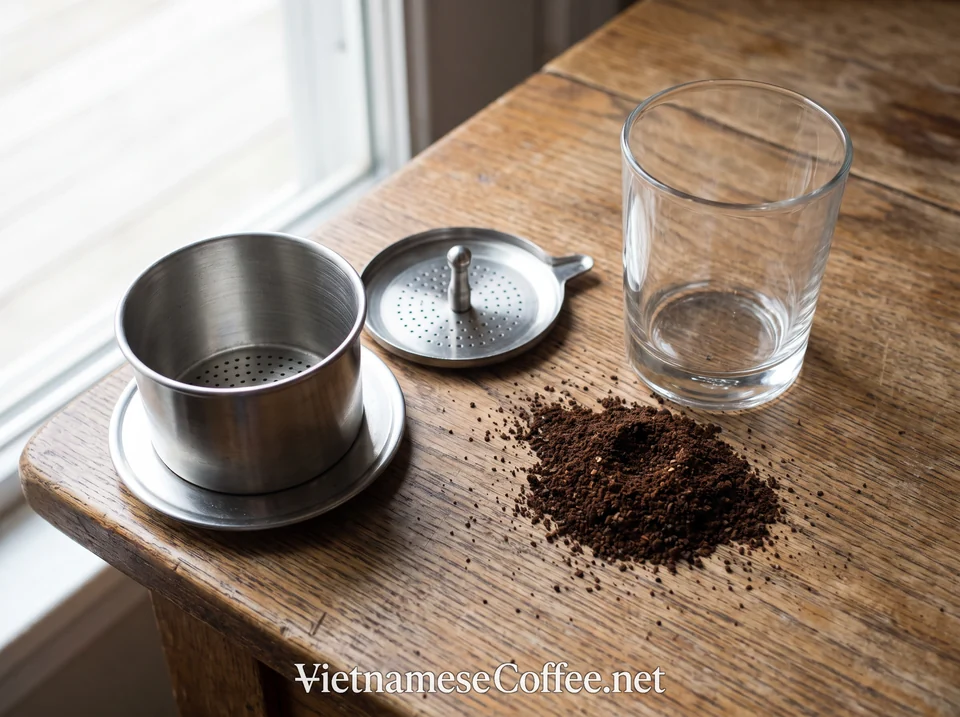
The phin filter is the tool most closely associated with Vietnamese coffee brewing. It is a small metal cup, usually stainless steel or aluminum, that sits directly on top of a glass or cup and drips hot water slowly through a bed of coarsely ground coffee.
A perforated metal disc controls how evenly water passes through the grounds. Brewing with a phin usually takes four to five minutes and produces a small, concentrated cup closer in strength to espresso than to standard drip coffee. Learn more in the phin filter guide.
Sweetened condensed milk and cà phê sữa đá
Sweetened condensed milk is the ingredient that most defines how Vietnamese coffee is consumed. Fresh dairy milk was historically harder to store in Vietnam's climate, so condensed milk became the standard partner for strong coffee.
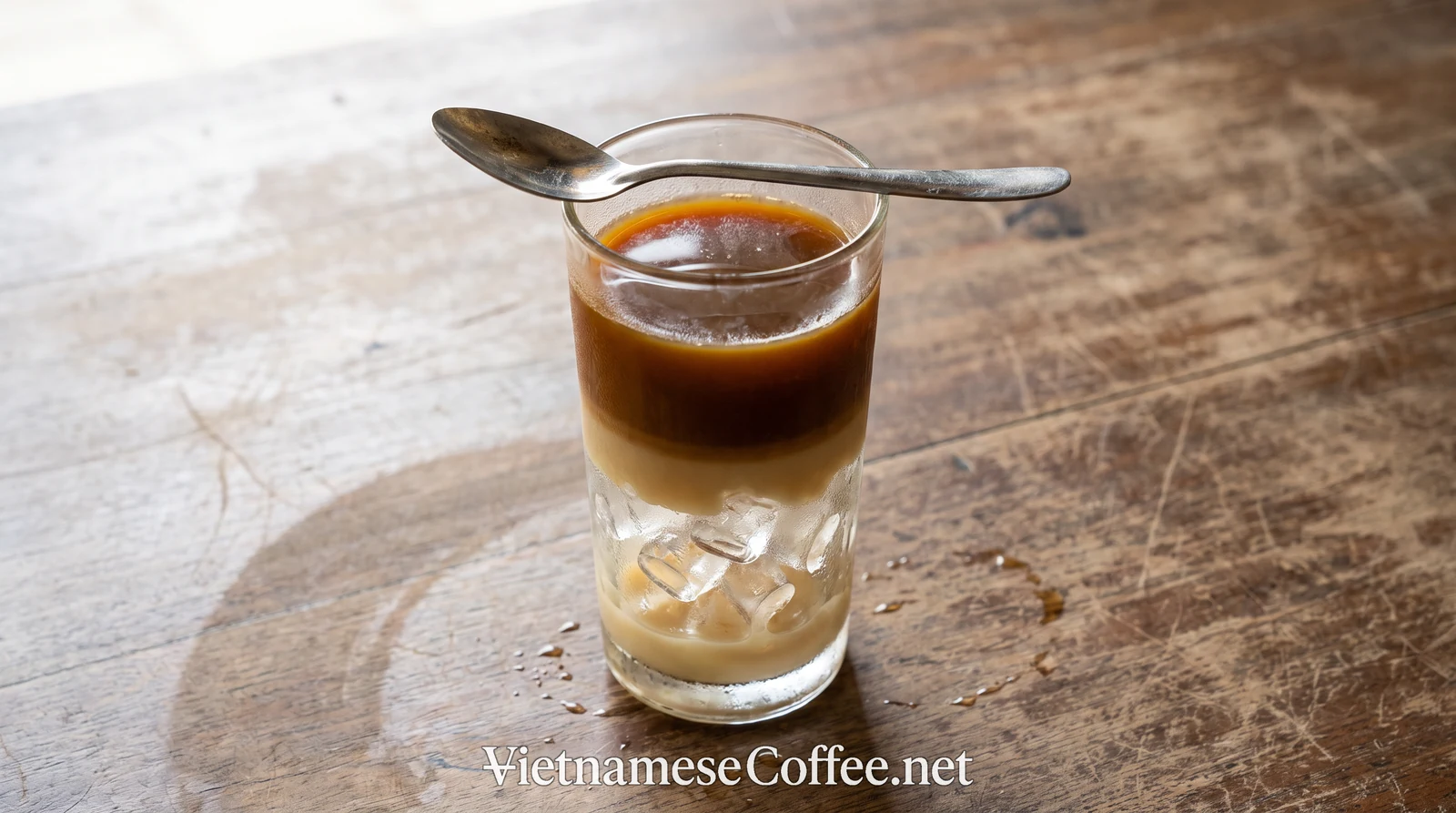
The best-known iced version is cà phê sữa đá: brewed coffee dripped over condensed milk and then poured over ice. Black coffee, called cà phê đen, is also common, but milk-based iced coffee is the version most people outside Vietnam recognize first.
The drink also sits inside a wider cafe culture. Sidewalk cafes, slow conversation, egg coffee, coconut coffee, and regional recipes all shape the category. For more context, read about Vietnamese coffee culture.
From imported crop to global export power
Coffee is not native to Vietnam. It arrived in the nineteenth century during the French colonial period, and robusta later became the dominant crop because it suited Vietnam's heat, humidity, and highland farming zones better than arabica.
The major turning point came after Vietnam's Đổi Mới economic reforms began in 1986. Private land use and market-based farming helped coffee acreage and exports grow quickly through the 1990s, turning Vietnam into one of the most important coffee producers in the world.
Vietnamese coffee compared with coffee elsewhere

Vietnamese coffee differs from coffee traditions built around arabica in several concrete ways: the dominant bean species, the brewing tool, the standard sweetener, and even the usual serving temperature.
| Feature | Vietnamese coffee | Typical Western coffee |
|---|---|---|
| Dominant bean | Robusta | Arabica |
| Common brewer | Phin filter | Drip, espresso, or pour-over |
| Typical sweetener | Sweetened condensed milk | Milk, cream, sugar, or none |
| Serving style | Hot or over ice | Mostly hot |
The pairing of bean, brewing tool, and sweetener works as one system. Changing one element without adjusting the others usually produces a noticeably different cup.