
Colonial introduction and the shift to robusta (1857-1925)
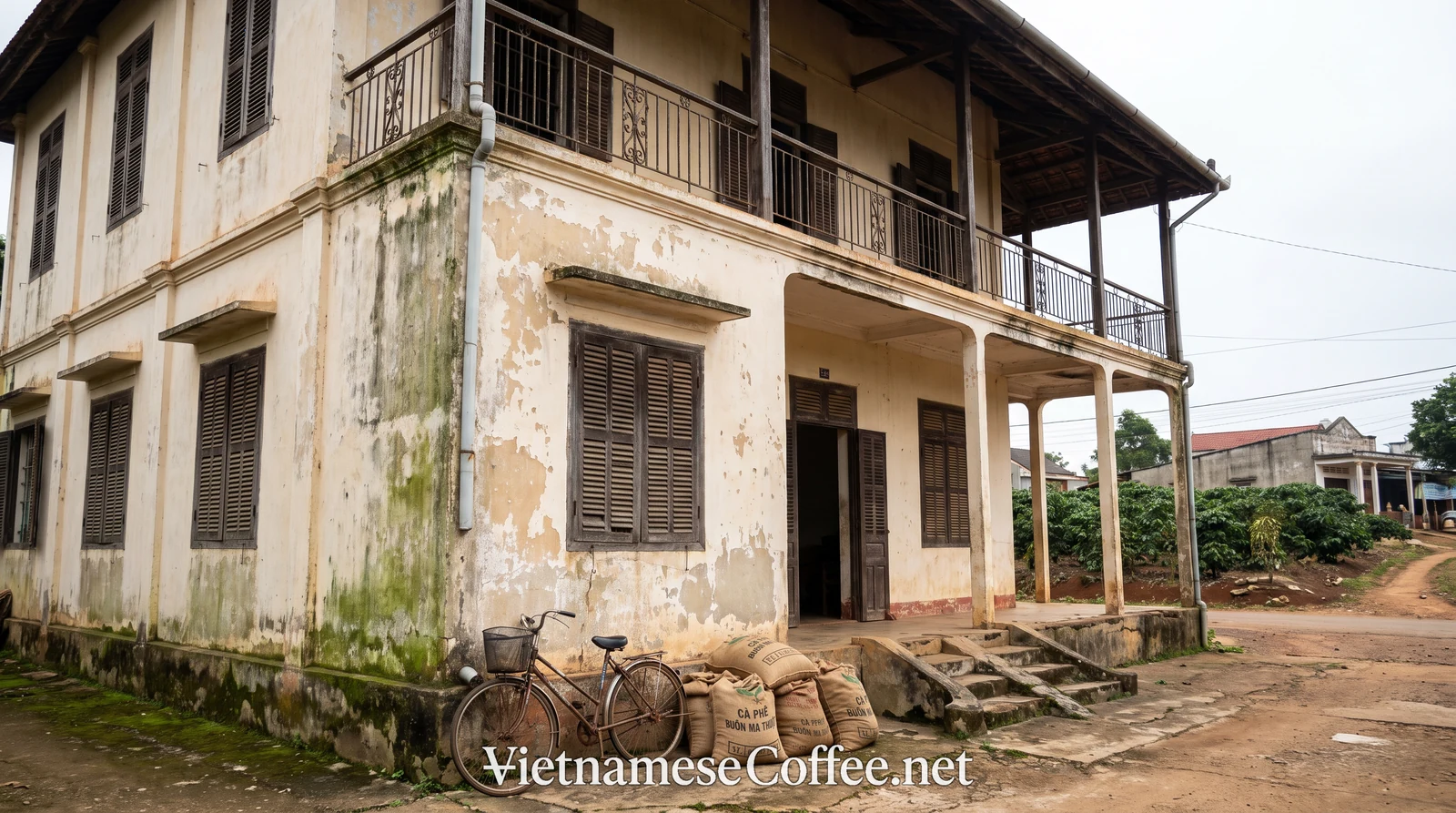
Coffee arrived in Vietnam in 1857. A French Catholic priest brought the first arabica trees to the northern part of the country, then a French colonial territory.
Cultivation began small and was aimed at supplying French colonists rather than the local population. Coffee was foreign to Vietnam's existing tea-drinking culture.
French administrators soon looked for a hardier alternative better suited to Vietnam's climate. In 1908 they introduced robusta, which tolerated lowland heat and humidity far better than arabica.
Plantation development accelerated over the next two decades. French-run plantations expanded through Ha Tinh, Thanh Hoa, Nghe An, and Tay Nguyen.
Tay Nguyen, the Central Highlands region, would later become Vietnam's largest coffee-producing area. Read more about Vietnam's coffee growing regions and why Vietnam grows mostly robusta.
From plantation to processing plant (1930s-1975)
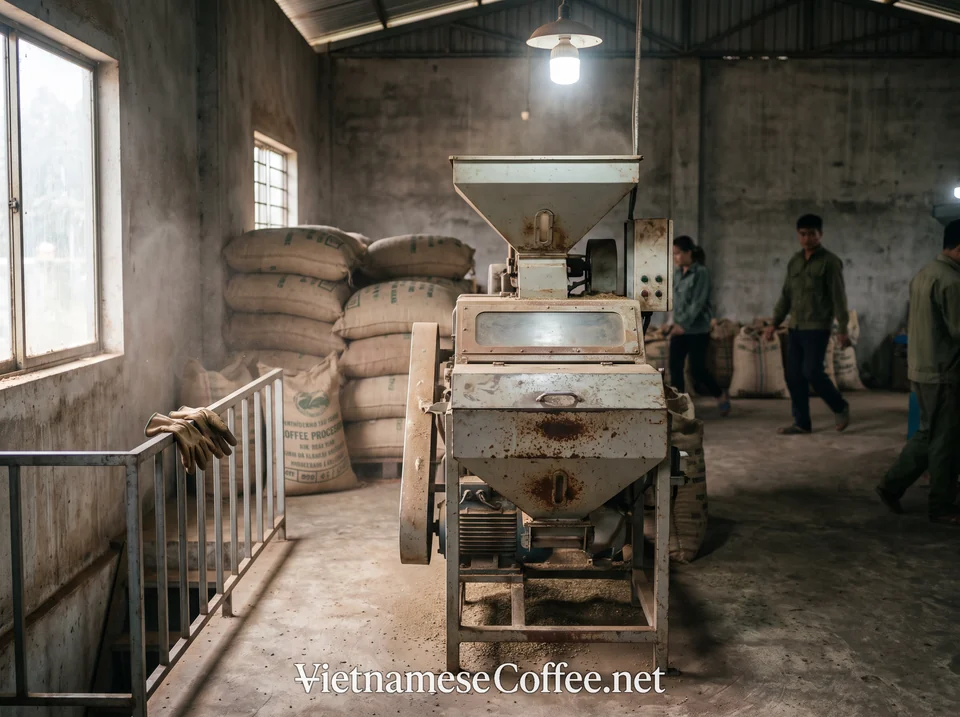
Coffee processing in Vietnam industrialized before the country became a major exporter. In 1969, French engineer Marcel Coronel built a coffee processing plant in Bien Hoa.
His goal was to produce inexpensive coffee for export back to France. The Coronel Coffee Plant produced Vietnam's first instant coffee batches in 1977.
Renamed the Bien Hoa Coffee Factory, the plant kept producing instant coffee under state ownership. It introduced the Vinacafe brand name in 1983.
The war years slowed coffee expansion considerably. Agricultural investment and labor were diverted, and parts of the Central Highlands saw direct fighting.
State control and central planning (1975-1986)
After national reunification in 1975, Vietnam's coffee sector came under state control. The government regulated harvesting and exports through central planning.
Farmland during this period was organized through collectivized structures rather than private ownership. This limited incentives for individual farmers to expand or improve their plots.
Coffee exports were also centrally controlled. Beans were exported directly by state foreign-trade agencies rather than by producers or private companies.
This system kept Vietnam a minor player in global coffee markets through the late 1970s and early 1980s. Soil and climate were not enough without market access.
Đổi Mới, the US embargo, and the export boom (1986-2007)
Vietnam's Đổi Mới economic reforms launched in December 1986. They replaced central planning with market-based mechanisms and changed the coffee sector quickly.
Private households could lease and farm land directly. Coffee growers gained a direct financial stake in expanding production for the first time.
Export access expanded after the United States lifted its 19-year trade embargo against Vietnam on February 3, 1994. This opened a major coffee-consuming market.
Vietnam applied to join the World Trade Organization in January 1995 and was admitted in 2007. By then, it was already a global coffee power.
From state control to the world's second-largest exporter
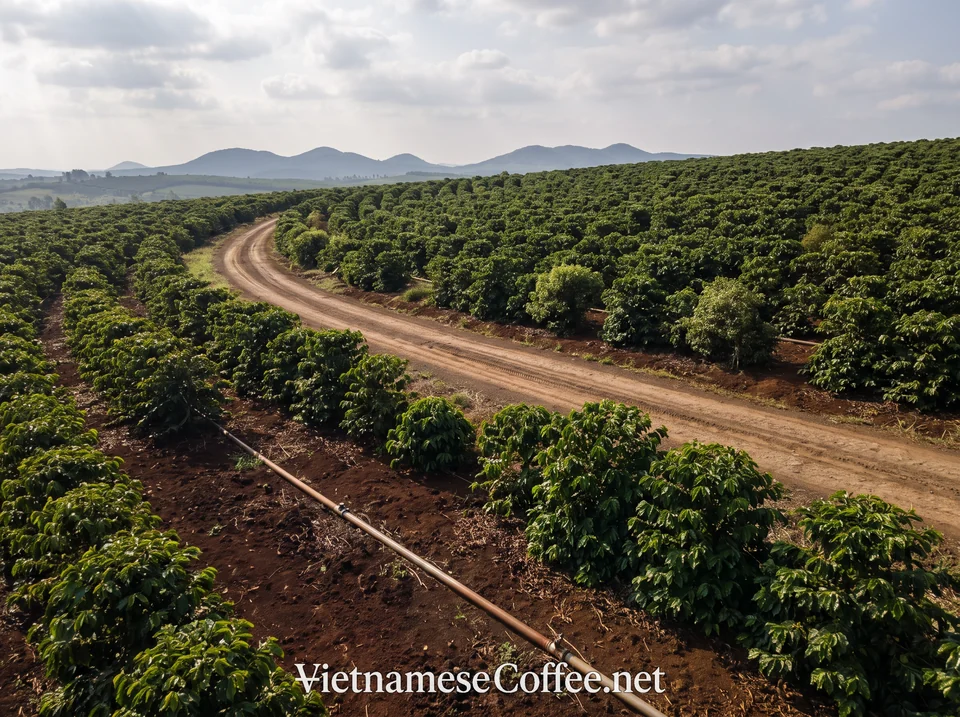
Vietnam is now the world's second-largest coffee producer after Brazil, and the largest producer of robusta specifically. USDA data forecast roughly 30.8 million 60-kilogram bags for 2025/26.
| Era | Period | Key development |
|---|---|---|
| French colonial | 1857-1954 | Arabica arrived, then robusta and plantation expansion. |
| War and disruption | 1954-1975 | Processing capacity grew, but cultivation expansion slowed. |
| Central planning | 1975-1986 | State control limited market-driven growth. |
| Đổi Mới boom | 1986-2007 | Land reform, export access, and WTO entry accelerated growth. |
That scale did not come from a single policy or decade. It is the result of colonial introduction, robusta adaptation, war, collectivization, reform, and global trade access.