
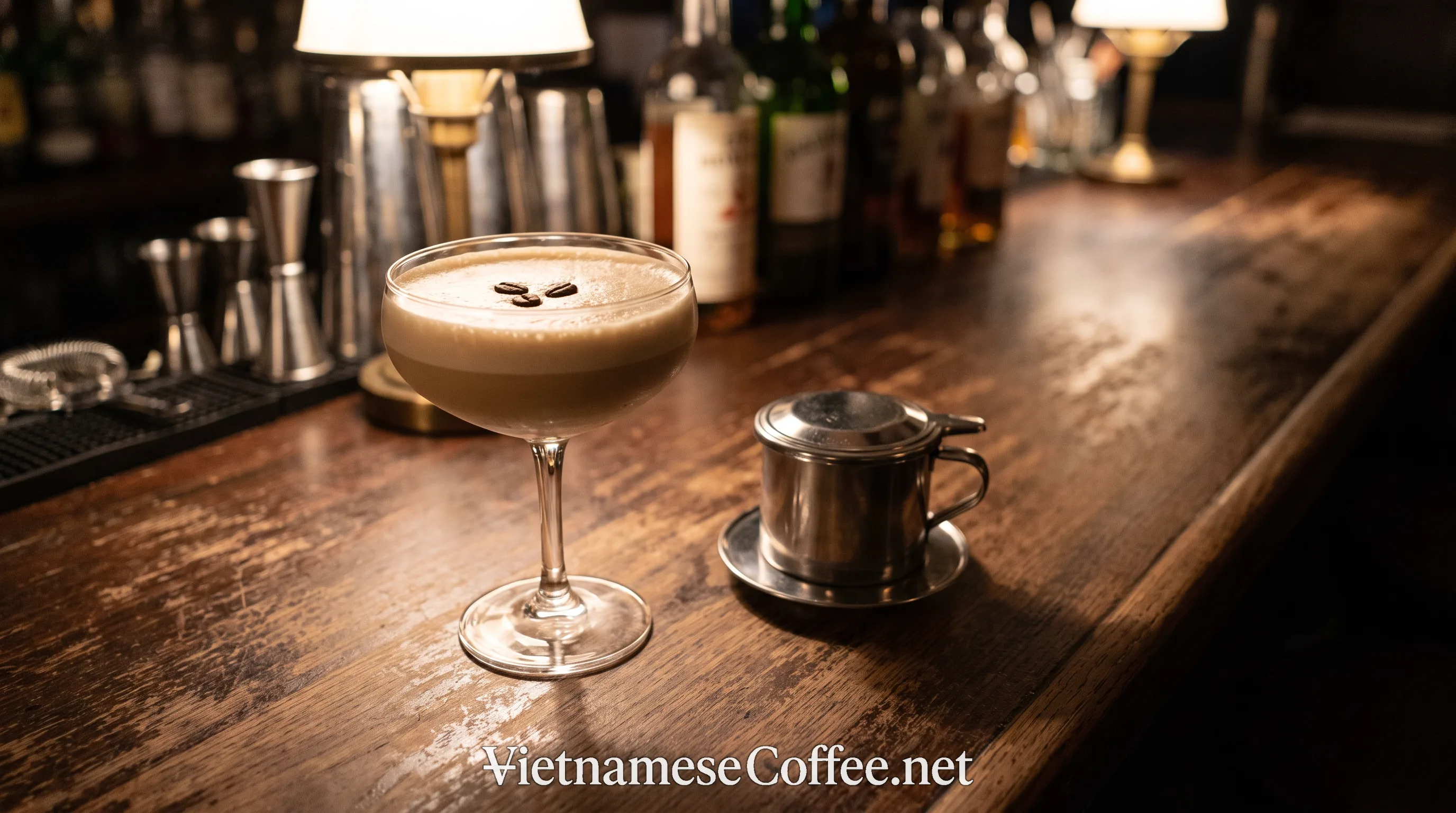
Vietnamese espresso martini
The Vietnamese espresso martini is the most widely documented variation, built on the standard espresso martini format but replacing simple syrup with sweetened condensed milk. Published formulas differ, so the main version below follows TRAN Coffee Lab's measured recipe.
| Ingredient | Amount | Notes |
|---|---|---|
| Vietnamese coffee | 30ml, phin-brewed and cooled completely | Hot coffee will melt the shaker ice too quickly |
| Vodka | 45ml | The base spirit in TRAN Coffee Lab's version |
| Coffee liqueur | 15ml | Kahlúa or a similar coffee liqueur |
| Sweetened condensed milk | 15ml | Replaces simple syrup in this Vietnamese-inspired format |
| Ice and coffee beans | As needed | Shake with ice; garnish with three coffee beans |
Method
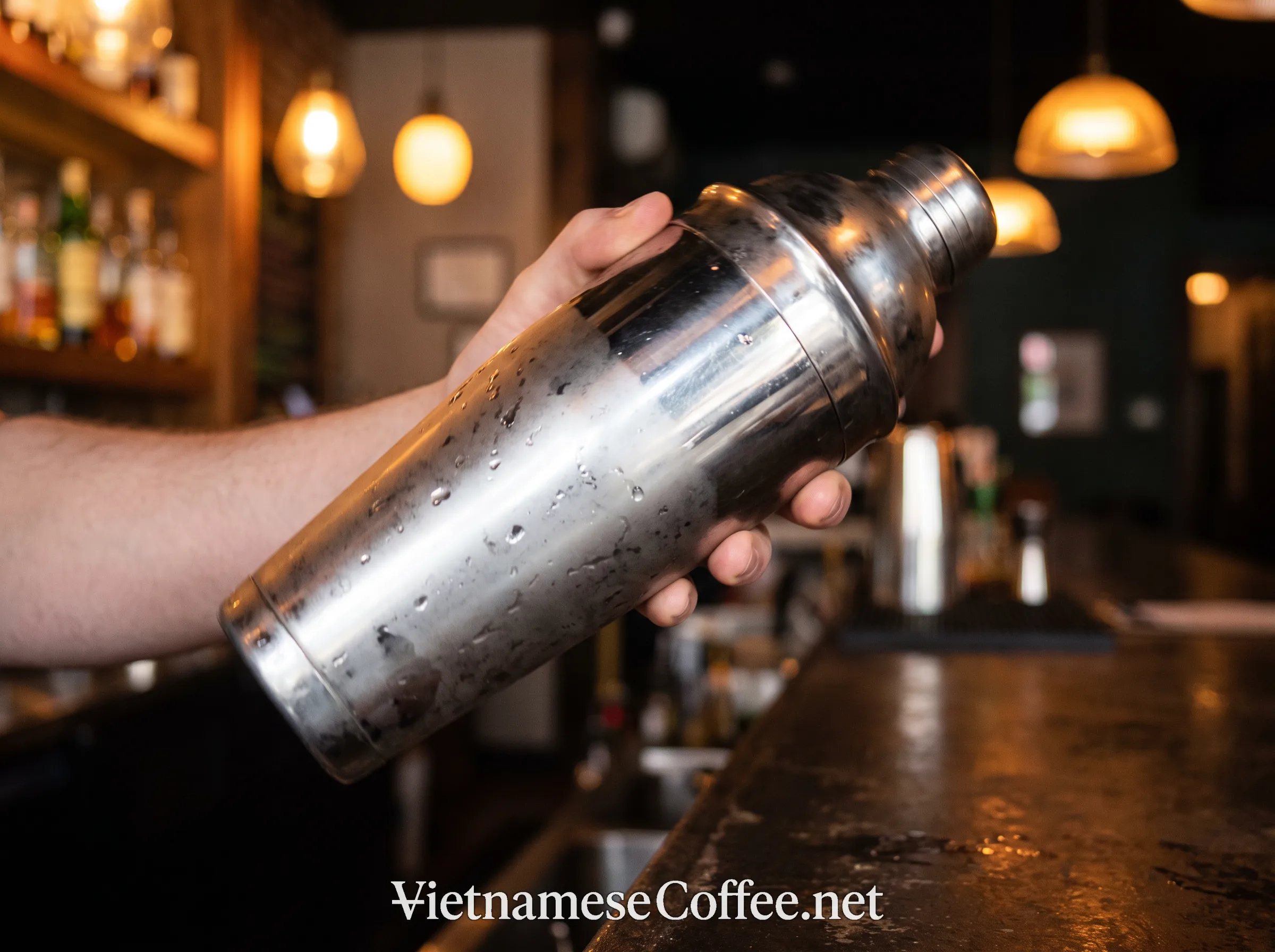
Brew Vietnamese coffee using a phin filter and let it cool completely before use. Fill a cocktail shaker with ice, then add vodka, coffee liqueur, cooled coffee, and condensed milk. Shake vigorously for 15 to 20 seconds, double-strain into a chilled coupe or martini glass, garnish with three coffee beans, and serve immediately.
Other published versions vary this formula. The Buslife Kitchen skips coffee liqueur and uses vodka, espresso, and condensed milk. Difford's Guide takes the opposite approach, using coffee liqueur, espresso, and condensed milk without vodka. Those alternatives are documented differences, not a basis for ranking one version as stronger or smoother than another.
Vietnamese coffee with rum
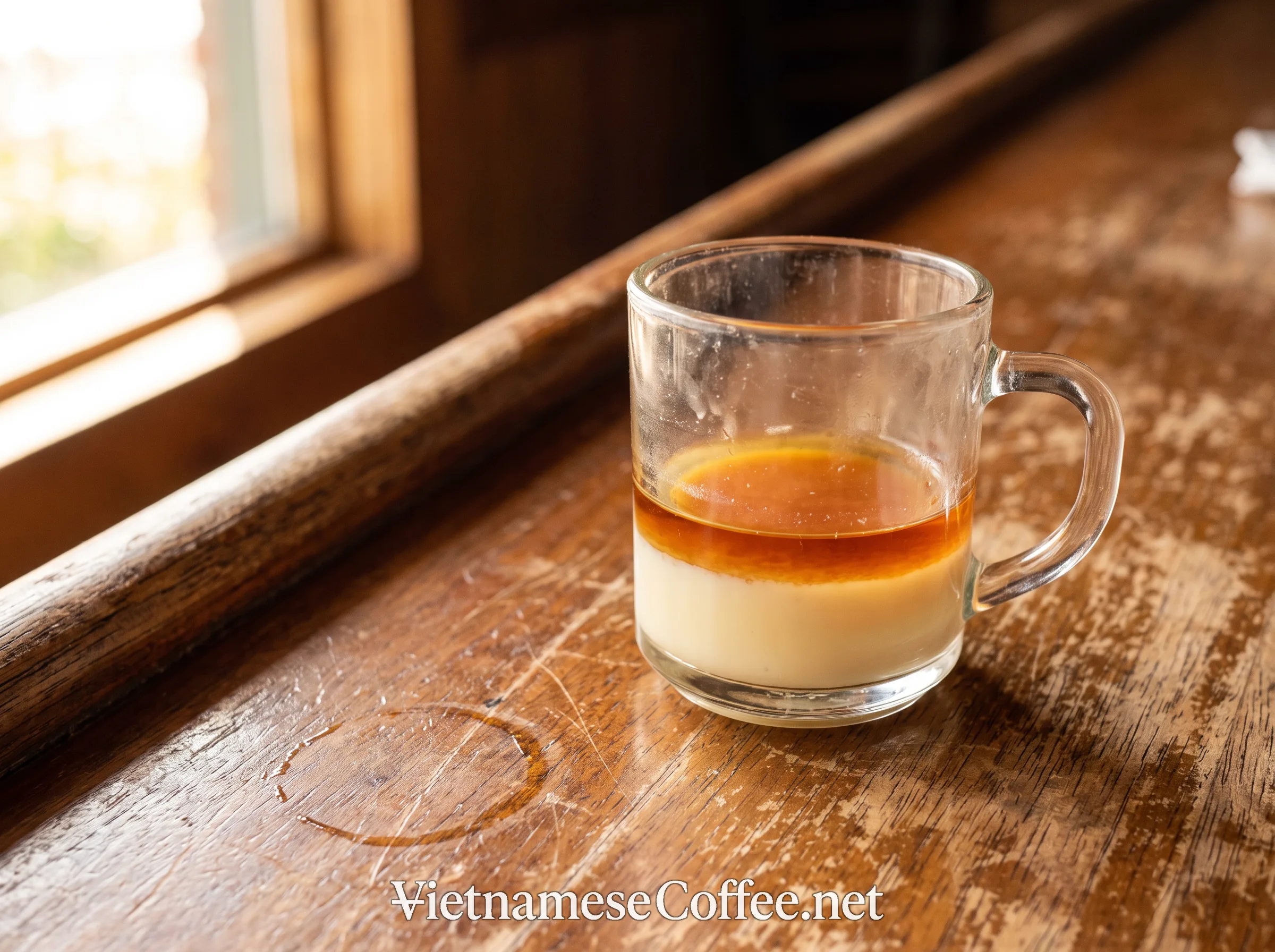
A simpler, warmer variation swaps the shaken martini format for a layered hot drink, closer to Vietnamese coffee's phin-and-glass presentation. CUT Cooking describes this as its own fusion spin, not as traditional Vietnamese coffee.
| Ingredient | Amount |
|---|---|
| Brewed espresso or dark roast coffee | 1oz |
| Sweetened condensed milk | 1/2oz |
| Rum | 1/2oz |
| Cinnamon stick | 1 |
Method
Brew a dark roast coffee or espresso. Add the condensed milk to a glass or small mug first, then optionally layer the rum over the condensed milk before adding coffee. Pour in the hot coffee, add the cinnamon stick, let the drink sit for a couple of minutes, and stir with the cinnamon stick before serving.
Vietnamese whiskey iced coffee
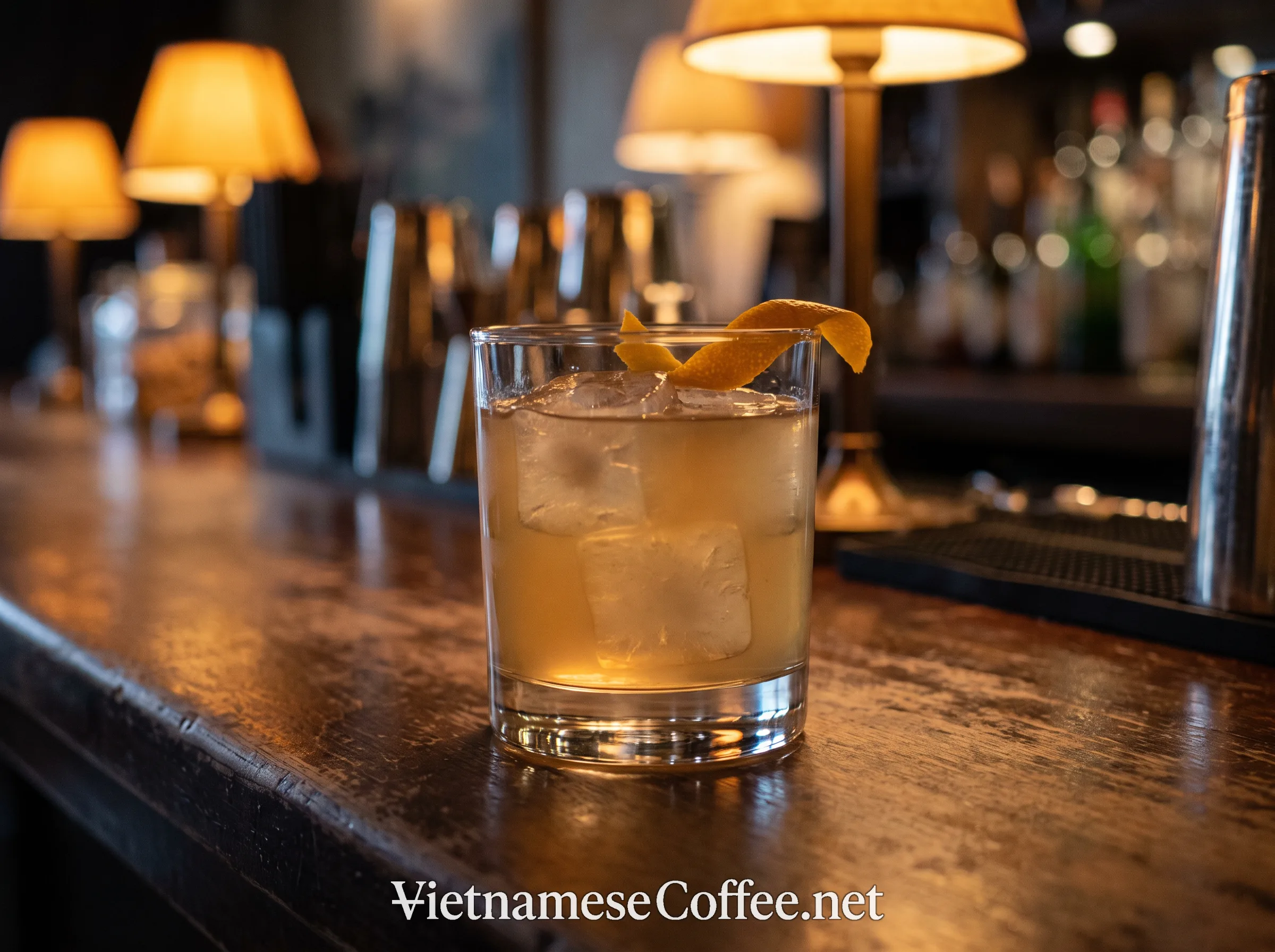
For a cold, stirred version with whiskey instead of rum or vodka, Chivas Regal's recipe adds a pinch of salt to sharpen the coffee flavor against the whiskey and condensed milk.
| Ingredient | Amount |
|---|---|
| Whisky | 50ml |
| Sweetened condensed milk | 20ml |
| Fresh espresso | 25ml |
| Salt, orange zest, grated hazelnut | To finish |
Method
Add the whisky, sweetened condensed milk, and salt to a rocks glass filled with ice. Stir until combined and chilled, add the espresso, then stir again. Finish with orange zest and grated hazelnut over the top.
For a simpler Irish-whiskey-based alternative, Set the Table Photography brews dark roast coffee directly over condensed milk using a phin filter, then combines the resulting coffee with Irish whiskey over ice.
Choosing a spirit
Across all three recipes, condensed milk plays the same role it does in traditional Vietnamese iced coffee: sweetening the drink while adding body and richness. Since condensed milk brands and personal sweetness preferences vary, start with the lower end of any recipe's stated amount and add more to taste.
The three cocktails in this guide use three different spirits: vodka, rum, and whiskey. Each source treats that spirit as central to the drink's identity rather than as an interchangeable base. This page does not rank them by smoothness, sweetness, or ease of pairing because the cited sources do not provide comparable tasting data across all three.