
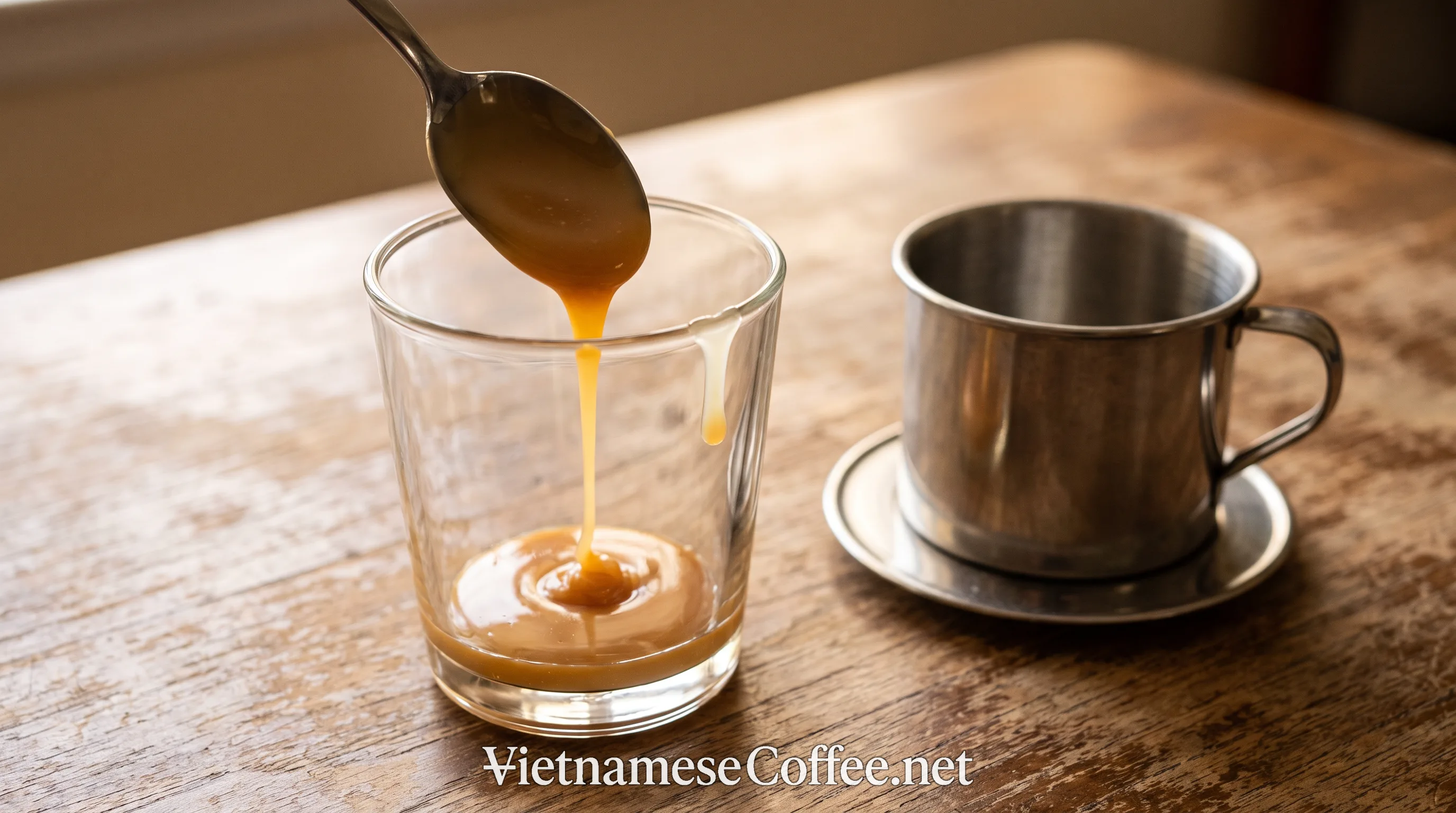
Why Vietnamese coffee uses condensed milk
Vietnam's climate and colonial-era supply chains made fresh milk an unreliable everyday ingredient. Fresh milk was historically scarce and expensive, and fresh dairy spoiled quickly in Vietnam's tropical heat, making a shelf-stable alternative practical rather than merely a matter of taste.
Canned condensed milk did not need refrigeration, had a long shelf life, and could be stored and transported far more easily than fresh dairy in a hot, humid climate with limited cold storage infrastructure at the time. Once paired with Vietnam's strong Robusta coffee, the combination became the country's defining coffee drink, cà phê sữa.
This general pattern is well supported: fresh milk was difficult to supply reliably, and condensed milk filled that gap. More specific historical claims, such as exact pre-1975 manufacturers, need more caution and are not treated here as settled fact.
What condensed milk actually is
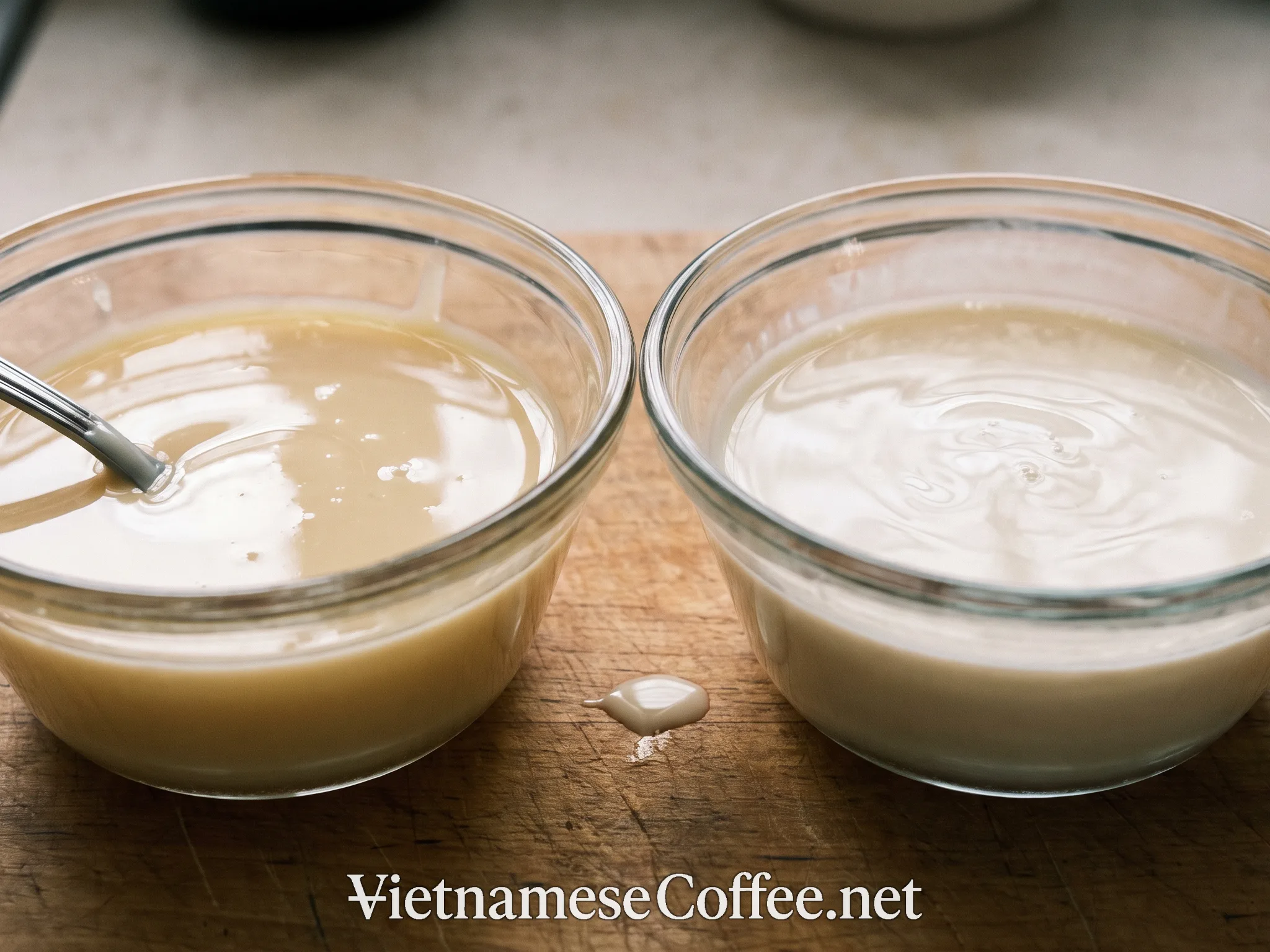
Sweetened condensed milk and evaporated milk are often confused, but they are meaningfully different products. Both start as milk with much of the water removed by simmering, but condensed milk has a large quantity of sugar added, while evaporated milk has no added sugar.
That sugar content gives condensed milk its thick, syrupy, pudding-like texture compared with evaporated milk's thinner, pourable consistency. Illinois Extension, citing USDA FoodData Central, states that sweetened condensed milk contains approximately 40-45% added sugar by weight.
USDA FoodData Central's SR Legacy record for "Milk, canned, condensed, sweetened" reports 321 kcal, 7.9g protein, 8.7g fat, and 54.4g carbohydrate per 100g. Scaled to a standard 19g tablespoon, that is roughly 61 kcal and 10.3g carbohydrate per tablespoon.
The Sữa Ông Thọ brand and its history
The most recognizable condensed milk brand in Vietnamese coffee culture is Sữa Ông Thọ, meaning "Mr. Longevity's Milk." The Longevity Brand was widely consumed in southern Vietnam before 1975, including in coffee and as a substitute for fresh milk for children, since imported fresh milk was expensive.
After the 1975 Fall of Saigon, relevant production facilities were collectivized along with other commercial and private property, and production continued afterward under the state company Vinamilk, which kept the Sữa Ông Thọ name. Báo Nghệ An reports that Sữa Ông Thọ has been a traditional Vinamilk product since the company's founding in 1976 and is exported to 21 international markets.
Other brands, including Southern Star, are also used in Vietnamese coffee and desserts, though Sữa Ông Thọ remains the brand most closely associated with Vietnamese coffee culture.
Using condensed milk in a phin recipe
In a standard phin-based recipe, condensed milk is usually added directly to the bottom of the serving glass before the coffee is brewed on top of it. The concentrated coffee drips directly onto the condensed milk, and the two are stirred together once brewing finishes.
A typical starting point is 1 to 2 tablespoons of condensed milk per serving, though the right amount depends on personal preference and brew strength. Because condensed milk is both a sweetener and a dairy component, changing the amount changes sweetness, creaminess, and body all at once.
For full measurements and technique, see the How to Brew with a Phin Filter guide, which covers dose, grind, and brew time for phin coffee.
Condensed milk versus other Vietnamese coffee sweeteners
Not every Vietnamese coffee drink uses condensed milk. Cà phê đen, Vietnamese black coffee, uses no dairy at all and is sweetened with plain sugar if desired, or left unsweetened. Egg coffee, cà phê trứng, uses condensed milk inside its whipped egg yolk topping rather than mixing it directly into the coffee.
Condensed milk's sweetness and rich texture are commonly paired with, and contrast against, the bitterness and intensity associated with strong Vietnamese Robusta preparations. This is a popular pairing rather than a requirement; other bitter or strong coffees can be enjoyed without added sweetness.
Condensed milk at a glance
| Attribute | Detail |
|---|---|
| Added sugar content | Approximately 40-45% of total weight |
| Macronutrients per 100g | 321 kcal, 7.9g protein, 8.7g fat, 54.4g carbohydrate |
| Historical role | Shelf-stable substitute for scarce, expensive fresh milk |
| Most-cited brand | Sữa Ông Thọ, continued by Vinamilk since 1976 |
| Not interchangeable with | Evaporated milk, which has no added sugar and a thinner texture |
| Typical phin amount | 1-2 tablespoons per serving, adjustable to taste |