

Cà phê trứng at a glance
| Place of origin | Hà Nội, Vietnam |
|---|---|
| Year invented | 1946 |
| Original creator | Nguyễn Văn Giảng |
| Base coffee variety | Robusta |
| Key topping ingredients | Egg yolk, sweetened condensed milk |
| Typical caloric range | Varies by recipe, about 130 to 280 calories per serving |
The 1946 origins of Cà phê trứng
Cà phê trứng originated in Hà Nội during a period of severe national rationing. In 1946, the First Indochina War caused widespread shortages of imported goods, including fresh dairy milk. At the time, a bartender named Nguyễn Văn Giảng worked at the Sofitel Legend Metropole Hotel.
Because fresh milk was practically unavailable during the conflict, Giảng needed a functional substitute for European milk-based coffee drinks. He discovered that whisked egg yolk, sugar, and sweetened condensed milk could mimic the rich texture of steamed milk.
When spooned over strong dark coffee, the dense egg cream gave the drink a cappuccino-like mouthfeel. Its sweetness also balanced the heavy bitterness of local robusta beans.
The drink became popular among hotel patrons and local residents. Giảng eventually left the Metropole Hotel and opened Café Giảng, the Hà Nội café still closely associated with the original egg coffee story.
Key ingredients for traditional egg coffee
Traditional cà phê trứng uses a short ingredient list. The base is strong Vietnamese coffee, usually dark-roasted robusta. Robusta gives the drink the bitterness and weight needed to cut through the rich egg foam.
The foam depends on egg yolks, not egg whites. Yolks provide fat and emulsifiers that create a velvety texture when aerated. The whites contain more water and do not produce the same dense, custard-like topping.
Sweetened condensed milk is the third essential ingredient. It sweetens the drink and gives the egg yolks the viscosity needed to form a stable cream. Some recipes also add sugar, vanilla, or a small amount of butter for structure and aroma.
How to make Cà phê trứng at home
Preparing cà phê trứng requires attention to foam texture and coffee strength. A home method starts with concentrated robusta coffee, egg yolks, condensed milk, and optional sugar.
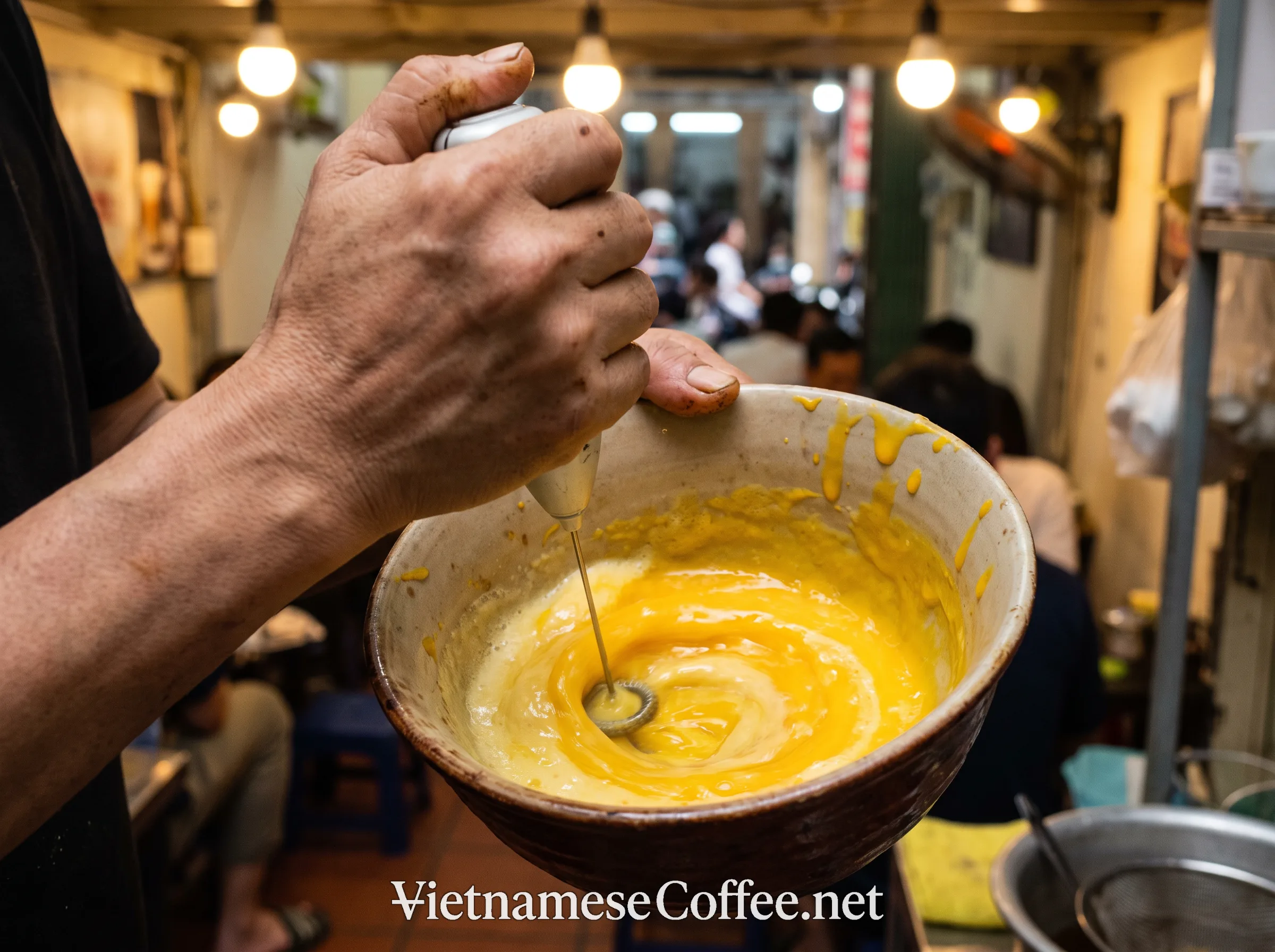
Brew the coffee first, ideally with a phin filter or another method that produces a dense cup. While it drips, separate the egg yolks from the whites and place the yolks in a deep mixing bowl.
Add condensed milk to the yolks, then whisk until the mixture is pale, thick, and airy. The foam should form soft peaks and hold its shape long enough to sit on top of the hot coffee.
Hà Nội cafés often serve egg coffee in a cup set inside a shallow bowl of hot water. The water bath keeps the coffee warm while the foam rests on the surface. Spoon the cream over the coffee and serve immediately.
Flavor profile and drinking technique
Cà phê trứng is often compared to liquid tiramisu or warm coffee custard. The topping is sweet, creamy, and slightly vanilla-like. The coffee underneath is dark, bitter, and earthy.
The contrast is the point. Egg yolk coats the palate and softens the sharpness of robusta. Strong coffee keeps the egg cream from becoming too heavy.
Drinkers usually use a spoon to fold a small amount of foam into the coffee below. Stirring aggressively destroys the aerated structure. Gentle folding lets the hot coffee pull through the sweet foam while keeping the layered texture intact.
Calories, egg safety, and modern variations
Nutritionally, cà phê trứng is closer to dessert than black coffee. Calorie estimates vary by recipe and serving size. Open Spice Box lists one recipe at 130 calories per serving, while Vietnam Spot estimates a standard cup at roughly 200 to 280 calories.
Because traditional cà phê trứng uses raw egg yolks, home preparation requires care. Food writers often recommend pasteurized eggs. The US Food and Drug Administration explains that in-shell pasteurization destroys Salmonella bacteria without cooking the egg.
Modern cafés serve several variations. Iced cà phê trứng layers the egg foam over chilled robusta coffee. Some cafés dust the foam with cocoa powder, reinforcing the tiramisu comparison.